public health
bipartisan health policy, Brad Wenstrup, chronic disease, chronic disease flexible coverage act, congressional health legislation, Earl Blumenauer, food quality regulation, global health bipartisanship, H.R. 3800, health care costs, high-deductible health plans, Jason Smith, Make America Healthy Again, metabolic health, nutrition policy, obesity prevention, PEPFAR, pesticide exposure, Robert F. Kennedy Jr.
Carolyn Stinnett
0 Comments
7 Powerful Wins in Bipartisan Chronic Disease Prevention Push
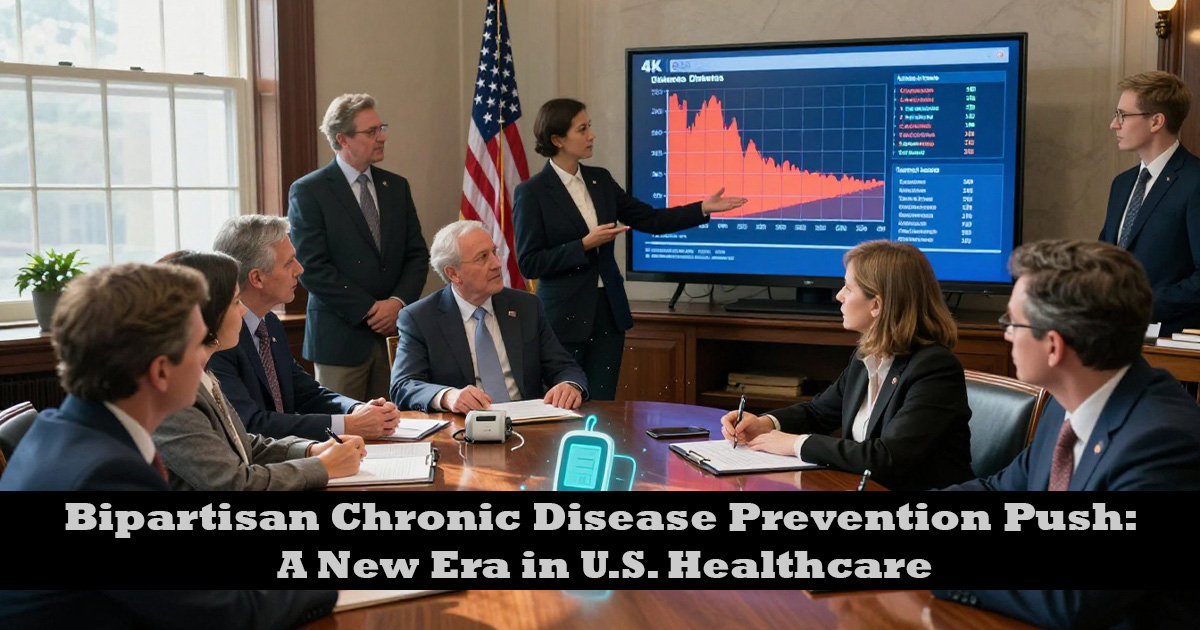
Bipartisan Chronic Disease Prevention Push: A Turning Point in U.S. Health Policy
The bipartisan chronic disease prevention push is quietly becoming one of the most important shifts in American healthcare policy in years. While it may not grab headlines like sweeping reform bills or political showdowns, it represents something far more practical—and potentially far more impactful: a shared agreement that preventing long-term illness is cheaper, smarter, and more humane than endlessly treating it.
At a time when diabetes, obesity, and heart disease continue to strain both families and the federal budget, lawmakers from both parties are finding rare common ground. And although the policy changes so far are incremental, they signal a deeper transformation in how Washington thinks about health.

What Is Driving the Bipartisan Chronic Disease Prevention Push
The bipartisan chronic disease prevention push didn’t appear overnight. It emerged from years of rising healthcare costs and worsening public health data that no longer fit neatly into partisan debates.
Lawmakers from both parties now acknowledge a simple but uncomfortable truth: chronic diseases are draining the U.S. economy. More importantly, they are shaping the lives of millions of Americans in ways that feel increasingly unavoidable.
Organizations like the Centers for Disease Control and Prevention have consistently reported rising rates of obesity and diabetes, while independent researchers point to lifestyle, food systems, and access to preventive care as key drivers.
The result? A rare political alignment around prevention rather than just treatment.
The Policy Behind the Movement: H.R. 3800 Explained
At the center of the bipartisan chronic disease prevention push is a modest but meaningful bill: H.R. 3800, known as the Chronic Disease Flexible Coverage Act.
Sponsored by Brad Wenstrup and Earl Blumenauer, the bill allows employers with high-deductible health plans to cover essential chronic care services before patients meet their deductible.
This includes:
- Blood pressure monitors
- Diabetes testing supplies like glucometers
- Asthma inhalers
- Heart medications
- Cholesterol monitoring tools
The idea is simple: make it easier for patients to manage chronic conditions early, before complications become expensive emergencies.
This approach builds on earlier federal guidance introduced during the Trump administration in 2019, which already moved in this direction informally.
Why Chronic Disease Became a Fiscal Emergency
The scale of the problem is staggering.
According to policymakers like Jason Smith, nearly 90% of the country’s $4.1 trillion annual healthcare spending is tied to chronic disease management.
That includes conditions such as:
- Type 2 diabetes
- Heart disease
- Obesity-related complications
- Chronic respiratory illness
And the burden is growing. High-deductible insurance plans now cover more than half of U.S. workers, according to research from the Kaiser Family Foundation.
These plans often require patients to pay thousands of dollars out-of-pocket before insurance fully kicks in—leading many to delay care or skip medications entirely.
This is where the bipartisan chronic disease prevention push finds its moral argument: prevention is not just cheaper for government budgets—it’s life-changing for patients.

The Role of Insurance in Everyday Health Decisions
One of the most overlooked realities of American healthcare is how insurance design shapes behavior.
When people avoid filling prescriptions or buying monitoring tools due to cost, small health problems can escalate quickly into medical emergencies.
The bipartisan chronic disease prevention push aims to fix this by reducing upfront financial barriers.
For example:
- A $40 blood pressure monitor may prevent a $40,000 hospital stay
- Regular glucose testing may reduce severe diabetes complications
- Preventive asthma care reduces emergency room visits
These are not abstract savings—they are real-world outcomes that affect families every day.
The “MAHA” Influence and Political Realignment
An interesting undercurrent in the bipartisan chronic disease prevention push is the influence of the “Make America Healthy Again” movement, often associated with Robert F. Kennedy Jr..
While Kennedy remains controversial due to his stance on vaccines, some lawmakers have adopted parts of his broader messaging on metabolic health, ultra-processed foods, and environmental exposures.
This has created an unusual political overlap:
- Conservatives emphasize cost control and personal responsibility
- Progressives focus on food systems and health equity
- Both sides agree chronic disease is worsening
However, most lawmakers are careful not to fully align with Kennedy’s broader political identity, keeping the focus strictly on nutrition and prevention.
The result is a cautious but realignment-friendly environment.
Data Behind the Chronic Disease Crisis
The urgency behind the bipartisan chronic disease prevention push is backed by hard data:
- Over 40% of U.S. adults are obese
- Type 2 diabetes is rising sharply among younger populations
- Chronic diseases account for the majority of healthcare spending
- Millions of Americans live with multiple conditions simultaneously
These trends are tracked closely by institutions like the Centers for Disease Control and Prevention and independent health researchers.
The takeaway is clear: without intervention, the problem will continue to grow.
What Makes This Bipartisan Chronic Disease Prevention Push Different
Unlike past healthcare debates, this effort is not centered on expanding coverage or restructuring insurance systems.
Instead, it focuses on small, targeted changes that improve day-to-day health management.
That includes:
- Lowering upfront costs
- Improving access to monitoring tools
- Supporting preventive medication use
- Encouraging early intervention
It’s not a sweeping reform. But it’s politically feasible—and that matters in today’s Congress.
This practicality is what gives the bipartisan chronic disease prevention push its momentum.
Challenges That Could Stall Progress
Despite growing support, several obstacles remain:
1. Political Complexity
Food regulation, agricultural policy, and healthcare reform are deeply tied to lobbying interests.
2. Limited Scope of Current Bills
H.R. 3800 is narrow and does not address root causes like diet or environmental factors.
3. Senate Uncertainty
A companion bill has not yet been introduced, and timelines remain unclear.
4. Ideological Tensions
Some policymakers want stronger regulation, while others prefer market-based solutions.
These tensions could slow or fragment the broader movement.

What Happens Next in Congress
The future of the bipartisan chronic disease prevention push depends on whether momentum survives the legislative calendar.
A Senate hearing is expected, but major action is unlikely before the next session. Meanwhile, a House task force is reviewing broader nutrition and prevention strategies.
Some states are also experimenting with pilot programs that incentivize healthier food choices through public assistance programs.
For now, the movement is best described as “in progress”—not yet a fully formed policy agenda, but no longer just a discussion.














Post Comment