New Ebola Emergency 7 Critical Facts
New Ebola Emergency : 7 Critical Facts About the New Ebola Emergency and U.S. Airport Screenings
What Is the New Ebola Emergency?
New Ebola Emergency is quickly becoming a serious concern for global health officials. As cases continue to rise in parts of Central Africa, the United States and several other countries are tightening airport screening procedures to prevent the virus from spreading internationally.
Unlike previous outbreaks that many people remember from headlines years ago, this situation involves a lesser-known strain of Ebola called Bundibugyo. While it may appear less deadly on paper, experts say it presents a different and potentially dangerous challenge.
The concern is not just about how deadly the virus is. The bigger issue is that existing tools are limited. Current vaccines and rapid testing systems were mainly designed for another strain known as Zaire Ebola. That means health workers may struggle to detect and contain this outbreak quickly.
As a result, governments around the world are taking precautionary steps before the virus spreads further.
Ebola outbreak in Central Africa declared a ‘Public Health Emergency of International Concern’
Why This Ebola Outbreak Is Different
One reason The New Ebola Emergency is drawing so much attention is because the Bundibugyo strain behaves differently from previous Ebola outbreaks.
Historically, the Zaire strain received most of the global focus because of its extremely high death rate. In some outbreaks, it killed up to 90% of infected patients.
Bundibugyo is different.
Its fatality rate is estimated to range between 25% and 50%, which is still extremely serious. But experts worry that lower lethality can create a false sense of security.
The biggest challenge is the lack of reliable medical tools.
New Ebola Emergency : Major Concerns About the Bundibugyo Strain
- No approved vaccine specifically designed for it
- No proven targeted treatment
- Limited rapid testing accuracy
- Possible undetected community spread
- Long incubation period of 2 to 21 days
That final point matters a lot.
A person exposed to the virus may travel internationally before showing symptoms. This makes early detection incredibly difficult, especially in busy travel hubs.
Health officials believe the virus may have circulated quietly for weeks or even months before the first confirmed cases were identified.
Why U.S. Airports Are Increasing Health Screenings
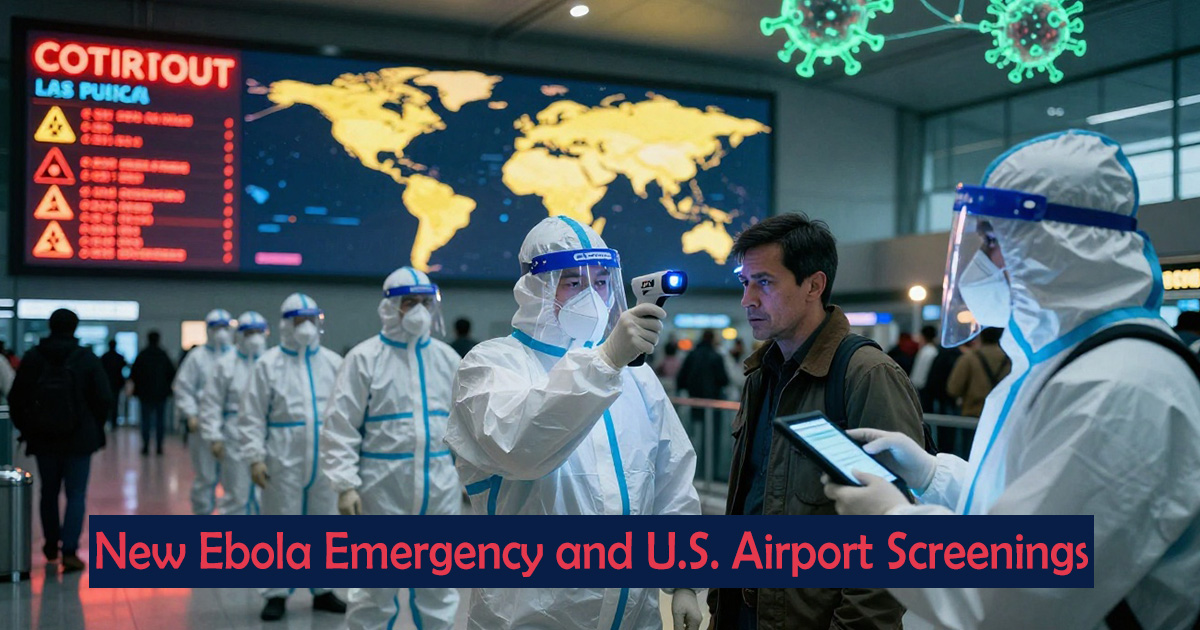
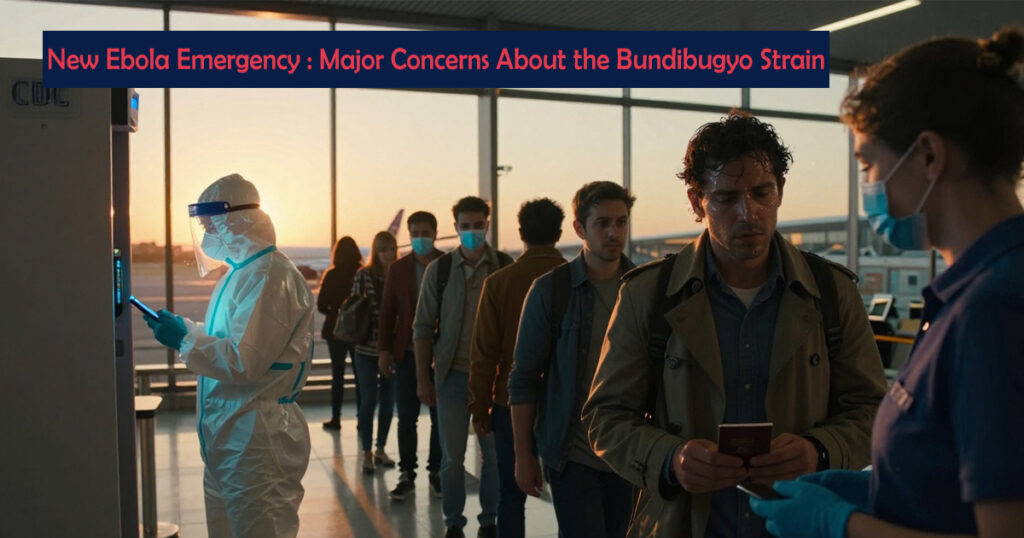
As part of the response to The New Ebola Emergency, the United States has introduced stronger health screening procedures at major airports.
Travelers arriving from affected regions, including the Democratic Republic of the Congo, Uganda, Congo, and South Sudan, now face enhanced checks.
New Airport Screening Measures Include:
- Temperature screenings
- Exposure questionnaires
- Detailed travel history reviews
- Observation for visible symptoms
- Additional medical evaluation if necessary
Many travelers may notice public health officers and thermal imaging systems operating near international arrival zones.
These steps are designed to identify potential cases before infected individuals enter communities.
The U.S. government has also temporarily restricted entry for some non-citizens who recently traveled through affected regions.
At the same time, officials have emphasized that there are currently no confirmed Ebola cases inside the United States.
The goal is prevention, not panic.
The Dangerous Challenge Behind the Bundibugyo Strain
One of the most troubling aspects of The New Ebola Emergency is the diagnostic gap.
In many outbreaks, rapid testing plays a critical role in stopping transmission early. But with Bundibugyo, existing field tests may not reliably detect infections.
That creates serious risks in regions already struggling with conflict and weak healthcare systems.
Conditions Complicating the Outbreak
Armed Conflict
Violence in affected regions has damaged hospitals, clinics, and transportation systems.
Cross-Border Movement
People frequently move between neighboring countries, increasing transmission risks.
Limited Healthcare Access
Many infected individuals may never receive medical attention or testing.
Delayed Detection
Symptoms can resemble flu-like illnesses during early stages.
This combination makes containment far more difficult.
Public health experts believe official numbers may significantly underestimate the true scale of infections.
Can Travel Restrictions Really Stop Ebola?
Travel restrictions often sound reassuring during global health scares. But history shows they are not always effective.
During the 2014 Ebola outbreak, infected travelers still reached countries outside Africa despite restrictions and monitoring efforts.
That is why many infectious disease specialists say the real battle against The New Ebola Emergency must happen at the source.
Why Travel Bans Have Limits
- Sick travelers may avoid official checkpoints
- Countries may hesitate to report outbreaks quickly
- Medical aid delivery can slow down
- Health workers may struggle to access affected communities
Airport screening can help reduce risk, but it cannot create a perfect barrier.
The most effective strategy remains:
- Rapid testing
- Contact tracing
- Medical support
- Community education
- International cooperation
Stopping outbreaks early in affected regions protects the rest of the world far more effectively than relying only on border controls.
What Is the Actual Risk in the United States?
Despite growing headlines around The New Ebola Emergency, health officials continue to stress that the current risk to the average American remains extremely low.
Ebola does not spread like airborne viruses such as COVID-19 or influenza.
Transmission typically requires direct contact with infected bodily fluids, including:
- Blood
- Vomit
- Diarrhea
- Saliva
- Other bodily secretions
A person becomes most contagious after symptoms begin appearing.

Common Ebola Symptoms
Early Symptoms
- Fever
- Severe headache
- Muscle pain
- Weakness
- Fatigue
Later Symptoms
- Vomiting
- Diarrhea
- Stomach pain
- Internal or external bleeding in severe cases
People who have not traveled to affected areas or had direct exposure to infected individuals face almost no realistic risk.
Still, awareness matters.
If someone recently returned from affected regions and begins feeling sick within 21 days, health officials advise contacting medical providers before visiting crowded healthcare facilities.
This allows safe evaluation procedures to be arranged.
What Travelers and Families Should Know Right Now
For most people, there is no need for fear. But staying informed is important during The New Ebola Emergency.
Simple preventive habits still make a big difference.
Practical Safety Tips
Follow Official Health Updates
Rely on trusted sources like the CDC and WHO instead of social media rumors.
Check Travel Advisories
Review international travel recommendations before flying abroad.
Practice Good Hygiene
Frequent hand washing remains one of the best protections against many infections.
Avoid Contact With Sick Individuals
Especially when traveling internationally.
Monitor Symptoms After Travel
Pay attention to any illness after returning from affected regions.
Panic often spreads faster than viruses online. Staying calm and informed is the best approach.
Why Global Cooperation Matters More Than Ever
One major lesson from The New Ebola Emergency is that infectious diseases do not respect borders.
An outbreak in one region can quickly become a global issue when health systems are weak and international travel remains constant.
That is why global cooperation is essential.
Countries, health agencies, and humanitarian organizations must work together to support:
- Faster diagnostic testing
- Medical supply distribution
- Healthcare worker protection
- Vaccination research
- Safer treatment centers
The strongest protection for every country begins with helping outbreak zones contain the virus successfully.
Public health experts continue to emphasize that long-term safety depends on investment in global disease surveillance and healthcare infrastructure.
Conclusion
The New Ebola Emergency has reminded the world that infectious disease threats can evolve quickly and unexpectedly. While the Bundibugyo strain may not be as widely known as earlier Ebola variants, its lack of reliable vaccines and testing tools has created serious concern among global health officials.
The United States has responded with enhanced airport screenings and travel restrictions designed to reduce the risk of imported cases. However, experts agree that the most important fight is still happening inside affected regions of Central Africa.
For most Americans, the current risk remains extremely low. Ebola spreads through direct contact, not casual everyday interaction. Still, staying informed, following trusted health guidance, and understanding the realities behind the headlines are important steps during any public health emergency.
As The New Ebola Emergency continues to develop, global cooperation, rapid response systems, and strong healthcare support will play the biggest role in preventing wider spread and protecting communities worldwide.
7 Powerful AI-Driven Breast Cancer Breakthroughs Changing Care











Post Comment