7 Powerful AI-Driven Breast Cancer Breakthroughs Changing Care
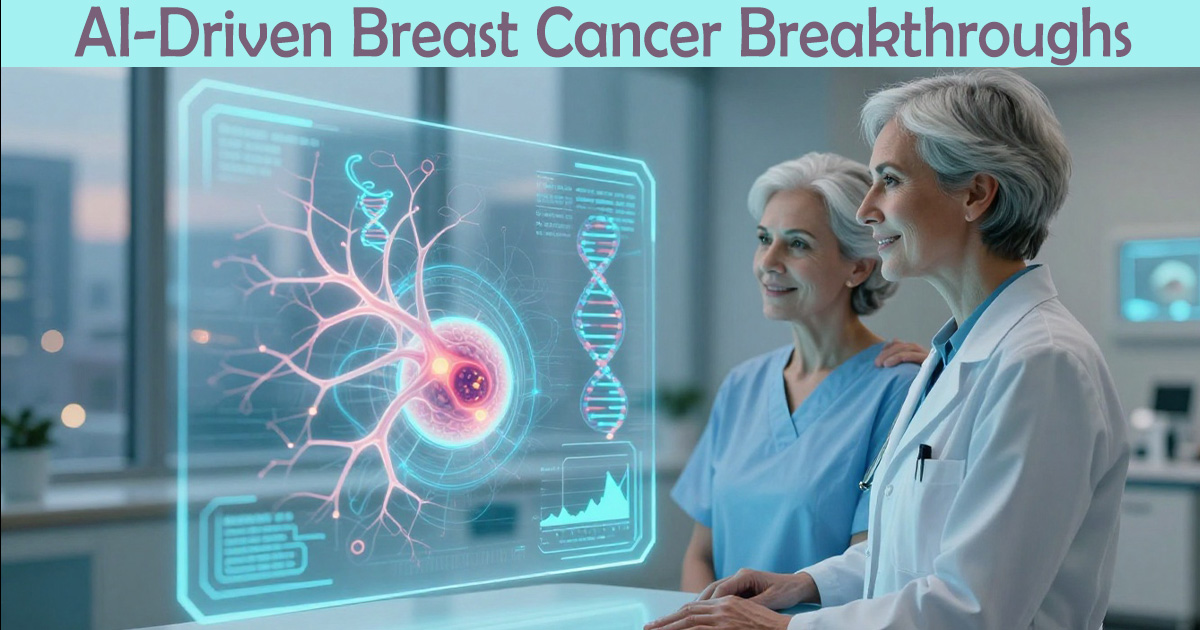
AI-Driven Breast Cancer Breakthroughs: A New Era of Smarter Cancer Care
Introduction : AI-driven breast cancer breakthroughs
AI-driven breast cancer breakthroughs are quietly reshaping how doctors understand, diagnose, and treat one of the most common cancers in the world. For decades, breast cancer care has relied on pathology reports, tumor staging, and gene expression tests. But ev
en with all this progress, one area has remained emotionally and medically uncertain — whether a patient truly needs chemotherapy after surgery.
That uncertainty often sits in what doctors call a “gray zone.” And for patients, that gray zone feels like waiting inside a storm with no clear direction.
Now, artificial intelligence is stepping in — not to replace doctors, but to sharpen clarity where medicine has long struggled. These innovations are not just about faster computing. They’re about better decisions, fewer unnecessary treatments, and more personalized care.
Let’s explore how AI-driven breast cancer breakthroughs are changing the future of oncology in a deeply meaningful way.
Table of Contents
- What Makes AI in Breast Cancer Different
- FDA Approval and What It Actually Means
- Evolution of AI-Driven Breast Cancer Breakthroughs
- Why Chemotherapy Decisions Are Changing
- Myths and Limitations of AI in Cancer Care
- What Patients Should Ask Their Doctors
- What We Still Don’t Know
- Final Thoughts
FDA Approval and the Meaning of AI-Driven Breast Cancer Breakthroughs
One of the most significant moments in modern oncology came when the FDA approved an autonomous AI-based diagnostic tool designed to help decide whether chemotherapy is needed after breast cancer surgery.
Unlike traditional imaging AI that scans mammograms for tumors, this system goes deeper. It analyzes tumor DNA and molecular signals within surrounding tissue — without requiring manual slide-by-slide interpretation by a pathologist.
This is a major leap in AI-driven breast cancer breakthroughs because it moves beyond detection into decision-making.
The system has been compared to the widely used 21-gene assay, a tool oncologists have relied on for years. However, the AI approach shows something different: it can better classify patients in the “intermediate-risk” group — the group where treatment decisions are often the hardest.
This includes:
- Premenopausal women
- Hormone receptor-positive, HER2-negative cases
- Patients with 1–3 positive lymph nodes
For these patients, decisions about chemotherapy can feel like guessing in the dark. Now, AI is helping reduce that uncertainty.

How AI-Driven Breast Cancer Breakthroughs Have Evolved Over Time
To understand how far we’ve come, we need to look back.
Early breast cancer diagnostics focused on:
- Tumor size
- Lymph node involvement
- Basic hormone markers (ER, PR, HER2)
Then came gene expression tools like the 21-gene recurrence score, which helped doctors estimate cancer risk more precisely.
But AI-driven breast cancer breakthroughs go even further.
Modern AI models don’t just analyze genes. They study:
- Tumor microenvironments
- Collagen structure
- Immune cell interactions
- Stromal tissue patterns
In simple terms, AI doesn’t just “read the tumor.” It interprets the ecosystem around it.
Recent studies even show that the physical structure of collagen — how organized or disordered it is — can strongly predict survival outcomes, especially in aggressive cancers like triple-negative breast cancer.
That’s something traditional methods could easily miss.
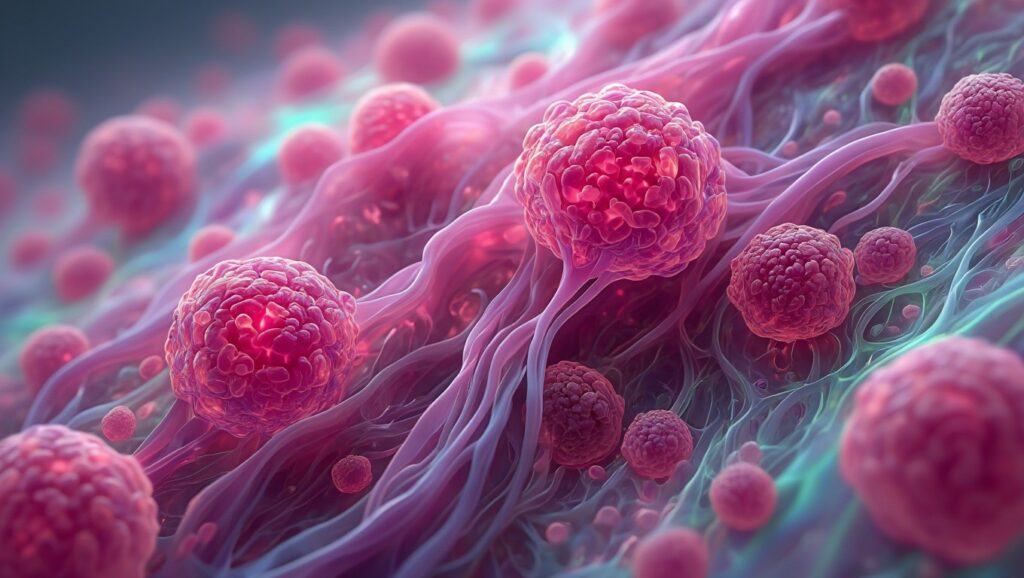
Why Chemotherapy Decisions Are Being Rewritten
Chemotherapy is powerful, but it is also physically and emotionally demanding. For decades, doctors have used broad indicators to decide who needs it.
But here’s the problem: those indicators are not always precise.
This is where AI-driven breast cancer breakthroughs are making a difference.
They help identify:
- Which patients can safely avoid chemotherapy
- Which patients may benefit more than previously thought
- Which “intermediate” cases actually lean high or low risk
In some studies, AI tools have reclassified a meaningful portion of patients who would have otherwise been stuck in uncertainty.
This matters deeply because chemotherapy decisions affect:
- Long-term quality of life
- Fertility in younger patients
- Emotional stress and anxiety
- Physical recovery time
When AI reduces guesswork, it also reduces emotional burden.
Myths and Limitations of AI-Driven Breast Cancer Breakthroughs
Despite the excitement, it’s important to stay grounded.
AI is not replacing doctors. It is supporting them.
Here are some key limitations:
1. It is not perfect
Even advanced AI models have accuracy ranges around 0.92–0.98 AUC. That is strong, but not flawless.
2. False predictions still exist
Some aggressive tumors may appear low-risk, and some slow-growing ones may be flagged as high-risk.
3. Real-world data is still evolving
Most approvals are based on retrospective studies, not long-term real-world trials.
4. Access is uneven
Not all hospitals or clinics have access to advanced AI diagnostic systems yet.
So while AI-driven breast cancer breakthroughs are powerful, they are not absolute truth machines. They are decision-support tools.
What Patients Can Ask Their Doctors

If you or someone you know is navigating breast cancer treatment decisions, conversations with doctors matter more than ever.
Here are helpful questions:
- Can my tumor be analyzed using AI-based diagnostic tools?
- How does my AI risk score compare to traditional tests like the 21-gene assay?
- Am I in a category where AI tools are especially useful (like node-positive, hormone-receptor-positive cases)?
- Are there clinical trials or research programs available?
These questions help patients become active participants in their care, not passive recipients.
AI-driven breast cancer breakthroughs are most powerful when combined with open communication between patients and doctors.
Artificial intelligence in breast cancer: applications and advancements
What We Still Don’t Know About AI-Driven Breast Cancer Breakthroughs
Even with all the progress, science still has unanswered questions.
For example:
- Will AI models perform equally well across all populations?
- Can results remain consistent across different hospitals and labs?
- Will insurance systems support widespread adoption?
- Will real-world outcomes match clinical trial expectations?
These uncertainties matter because medicine doesn’t happen in controlled environments. It happens in busy clinics, under time pressure, with real human complexity.
The true test of AI-driven breast cancer breakthroughs will come when they are used routinely, not experimentally.
Final Thoughts
The rise of AI-driven breast cancer breakthroughs represents one of the most meaningful shifts in modern healthcare.
We are moving from broad treatment decisions to more personalized, data-informed care. From uncertainty to clearer guidance. From emotional guessing to structured insight.
But perhaps the most important truth is this: AI does not remove the human side of medicine. It enhances it.
Patients still sit with doctors. They still make decisions based on values, fear, hope, and life circumstances. AI simply adds another layer of clarity to support those choices.
And while the technology continues to evolve, one thing is already clear — the future of breast cancer care is becoming more precise, more personalized, and more hopeful.
AI-driven breast cancer breakthroughs are not just a scientific milestone. They are a step toward giving patients something every medical journey deserves: clarity in moments of uncertainty.










Post Comment