7 Powerful Insights into Flexible Visual Thinking That Will Amaze You

Why Your Brain Sees More Than Eyes Show
Have you ever looked at something—like a shadow on the wall or a random cloud—and briefly thought it was something completely different? Maybe a face, a creature, or even an object that wasn’t really there?
That moment is not confusion. It’s your brain doing something incredibly advanced called flexible visual thinking.
Recent neuroscience research from 2026 reveals something fascinating: your brain doesn’t just “see” the world. It actively decides what you are seeing before you even become aware of it. In other words, perception is not passive—it is constructed, edited, and constantly updated in real time.
This discovery changes how we understand vision, memory, and even imagination. Let’s explore how this hidden brain circuit works and why flexible visual thinking is one of the most powerful features of the human mind.
What Is Flexible Visual Thinking?
At its core, flexible visual thinking is the brain’s ability to interpret the same visual input in multiple ways.
For example:
- A shadow can look like a hole or a puddle
- A sketch can appear as either a face or a landscape
- A blurry object can shift meaning depending on context
This ability is not random. It is deeply rooted in how your brain predicts reality.
Instead of waiting for perfect visual data, your brain fills in gaps using memory, expectation, and context. That’s why flexible visual thinking is less about eyesight and more about interpretation.
The Hidden Brain Circuit Behind Perception
Scientists have long believed vision works like a camera: light enters the eye, travels to the brain, and forms a picture.
But the 2026 findings reveal something very different.
The brain uses a two-way communication system:
- Lower visual areas receive raw sensory input
- Higher brain regions send feedback signals back down
This top-down system is where flexible visual thinking becomes possible.
The prefrontal cortex—responsible for decision-making and attention—actively sends instructions to the visual cortex. These signals can:
- Enhance certain visual patterns
- Suppress others
- Reorganize interpretation in milliseconds
So instead of passively viewing reality, your brain is constantly rewriting it.

How Your Brain Chooses What You See
The most surprising discovery is speed.
Within just 100–200 milliseconds, your brain creates multiple interpretations of the same image. Then something remarkable happens: a decision is made.
One interpretation wins. Others disappear.
This is flexible visual thinking in action.
For example:
- You see a blurry object in the dark
- Your brain considers “bag” vs “animal”
- Based on context, experience, and emotion, one option is selected
You don’t consciously choose this. It happens before awareness even kicks in.
This means your reality is not just seen—it is selected.
Why Vision Is Not as Objective as We Think
Many people believe vision is the most reliable sense. But research shows it is heavily influenced by expectation.
This is where flexible visual thinking plays a huge role.
Your brain constantly asks:
“What is most likely here based on past experience?”
That means:
- A shadow near your bed might become a “threat” at night
- A cloud might become a familiar shape
- A vague face in a crowd becomes someone you recognize
Your brain prefers speed over perfection. It would rather guess correctly most of the time than process slowly for perfect accuracy.
So what you see is often a best guess, not raw reality.
The Fast Reconfiguration Loop Explained
One of the most important discoveries in neuroscience is the “reconfiguration loop.”
This loop connects:
- The prefrontal cortex (decision-making center)
- The visual cortex (image processing center)
- Inhibitory neurons (filters of perception)
Here’s how flexible visual thinking works inside this loop:
- The brain receives visual input
- Multiple interpretations are generated
- Higher brain areas compare them with memory
- A top-down signal strengthens one version
- The brain locks that version into perception
This process repeats constantly throughout the day.
What feels like a single stable image is actually a continuous negotiation inside your brain.
Stress, Sleep, and Visual Interpretation
Your ability to maintain flexible visual thinking is deeply affected by your mental state.
When you are:
- Sleep-deprived
- Stressed
- Mentally overloaded
Your brain struggles to switch interpretations smoothly.
This can cause:
- Getting “stuck” on one interpretation
- Difficulty recognizing ambiguous shapes
- Slower mental flexibility in perception
That’s why tired people often misinterpret simple visuals or feel visually “foggy.”
Sleep and calm mental states restore balance in the brain’s reconfiguration system.
Training Your Brain for Better Flexible Visual Thinking
The good news? This system is trainable.
You can improve flexible visual thinking with simple habits:
1. Visual puzzles
Optical illusions and ambiguous images force your brain to switch interpretations.
2. Mindful observation
Look at everyday objects and try to reinterpret them in different ways.
3. Verbal reinforcement
Saying what you’re searching for helps your brain filter visual input more effectively.
4. Creative drawing or sketching
Art encourages your brain to break fixed interpretations and explore alternatives.
Over time, these exercises strengthen your brain’s adaptability in perception.
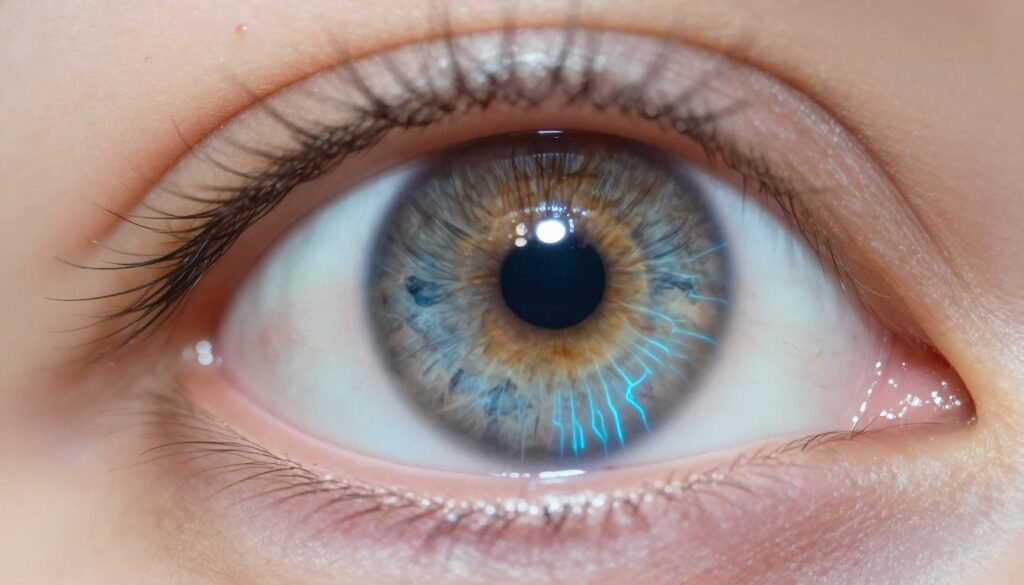
Hallucinations and the Bigger Neuroscience Picture
In some neurological conditions, this system becomes imbalanced.
When top-down signals become too strong, the brain may:
- Overwrite real sensory input
- Generate false perceptions
- Create hallucinations
This is not “broken vision.” It is flexible visual thinking without proper grounding.
Understanding this mechanism helps researchers develop better treatments for conditions like schizophrenia and Parkinson’s disease.
It also helps scientists design AI systems that mimic human perception more closely.














Post Comment