ebola travel restrictions
airport quarantine procedures
public health alert 2026
airport quarantine procedures, bundibugyo virus, cdc airport screening, democratic republic of congo ebola, designated airports for ebola, dhs customs border protection, ebola containment us, ebola monitoring, ebola travel restrictions, enhanced public health screening, infectious disease travel restrictions, public health alert 2026, returning to us after exposure, south sudan travel, uganda ebola outbreak
Carolyn Stinnett
0 Comments
Ebola Airport Screening Rules: 5 Urgent & Serious Powerful Updates
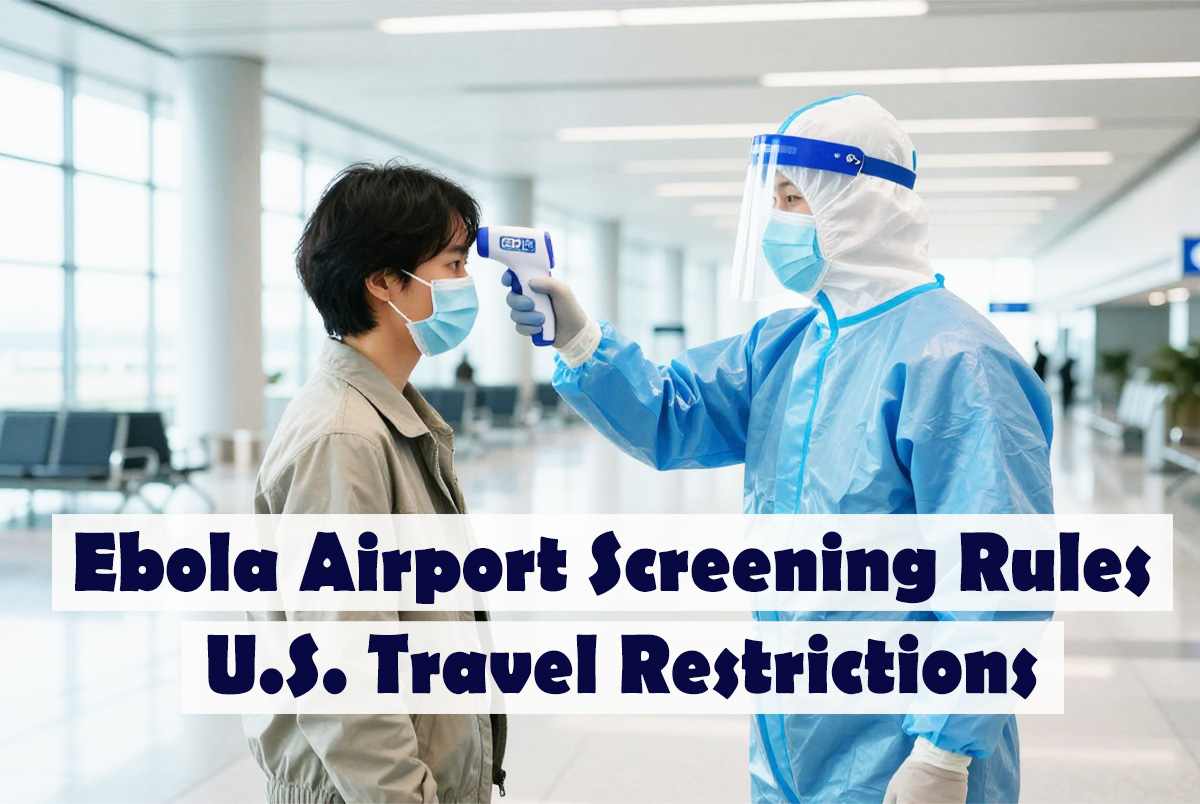
Public Health Strict New Airport Containment Active –
U.S. Diverts All Central Africa Travelers to Three Airports for Ebola Screening
Ebola Airport Screening Rules : If you’ve been in the Democratic Republic of the Congo, Uganda, or South Sudan within the past three weeks, your trip home just got a major reroute. Federal officials now require anyone who set foot in those countries to enter the U.S. exclusively through Washington Dulles, Atlanta Hartsfield-Jackson, or Houston Bush Intercontinental.
No side doors. No small regional reception. The policy, rolled out by the CDC and DHS after a severe outbreak of the Bundibugyo Ebola strain, took effect in stages starting May 21. And it’s an enforceable arrival restriction, not a health advisory. Airlines have to comply. The government will not cover your rebooking costs.
I’ve covered airport health screenings since the 2014 outbreak, and I’ve never seen domestic port-of-entry restrictions tighten this fast. The speed itself tells you how seriously the modeling looks.
Worldwide Caution: Public Health Arrival Restrictions and Enhanced Ebola Screening
Why the Bundibugyo strain has health officials moving fast
Ebola Airport Screening Rules : Most people know the Zaire strain, the one that tore through West Africa in 2014–2016 and killed up to 90% of those it infected. Bundibugyo surfaced in western Uganda in 2007 and causes a similar hemorrhagic fever but with a case fatality rate of roughly 25 to 40%. That lower lethality sounds almost reassuring, but it’s precisely what makes the virus harder to notice early.
People stay mobile. They run a fever, feel achy, maybe chalk it up to a bad flu, and board a plane. The incubation period can stretch to 21 days. A person who feels fine in Entebbe can develop symptoms in a Houston apartment two days later, and the contact tracing window is already wide open.
The CDC still says the immediate risk to the average American is low. I don’t dispute that. But the people making these decisions are spending less time debating the baseline odds and more time looking at worst-case introduction scenarios. They’ve run the exercise. A single missed case at a suburban ER could mean dozens of exposed staff and a community lockdown that costs far more than the inconvenience of a few diverted flights.
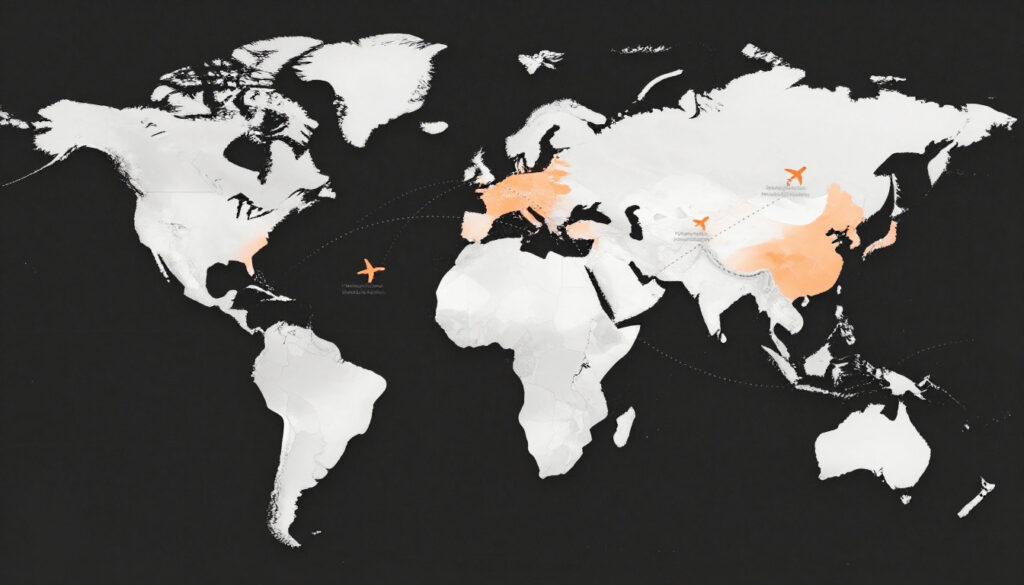
The real risk on a 14-hour flight
I keep hearing the same objection: Ebola isn’t airborne, so why the whole travel apparatus? True, Bundibugyo spreads through direct contact with infected bodily fluids or contaminated surfaces. It doesn’t float in the cabin air like measles. But public health containment at airports isn’t built around airborne transmission. It’s built around that long, slow incubation period and the idea that one sick traveler can use a shared lavatory, touch multiple surfaces, and disperse a virus to three connecting cities before anyone realizes anything is wrong.
The goal is to intercept that person at the first port of entry, where isolation can happen fast and the local health department is already on alert. That’s a lot harder to do if the same traveler clears customs in Chicago Midway and drives to a rural county where no one knows to look.
How the airport routing works
According to the State Department alert issued May 24, all U.S. citizens and lawful permanent residents who have been present in DRC, Uganda, or South Sudan within the 21 days before arrival must use only these airports: Ebola Airport Screening Rules :
- Washington Dulles International (IAD), for flights arriving after 11:59 p.m. on May 21
- Hartsfield-Jackson Atlanta International (ATL), for flights arriving after 11:59 p.m. on May 22
- George Bush Intercontinental in Houston (IAH), for flights departing after 11:59 p.m. on May 26
The requirement covers everyone—vaccinated travelers, aid workers, diplomats, children. If you try to route through Los Angeles or Miami, your airline is obligated to divert you. CBP and CDC quarantine officers are stationed at those three airports to handle the influx, and they’re not granting waivers for convenience.
What enhanced screening involves
Ebola Airport Screening Rules : Once you land at a designated airport, you’ll be separated from the regular deplaning flow. A CBP officer will verify your travel history, then a CDC quarantine officer—these people are stationed at major ports of entry all the time—will take your temperature with a no-touch infrared thermometer and ask about symptoms. Fever, chills, headache, muscle pain, diarrhea, vomiting, unexplained bruising.
They’ll also ask about funeral attendance, hospital visits, or direct contact with sick individuals. These aren’t casual questions; they’re rapid risk stratification.
If you’re symptom-free, you’ll get a care kit with a thermometer and instructions for twice-daily self-monitoring for 21 days. You’ll give a phone number and address so your local health department can check in. In some cases you’ll be told to avoid mass transit or large gatherings for that three-week window.
If you have a fever or other concerning symptoms, you won’t go home. You’ll be isolated, probably in a designated area at the airport or transferred by ambulance to a pre-identified hospital facility. I’ve watched this process go from a quiet temperature check to a sealed isolation room in under ten minutes. It’s efficient because it has to be.
What to do if you’re traveling
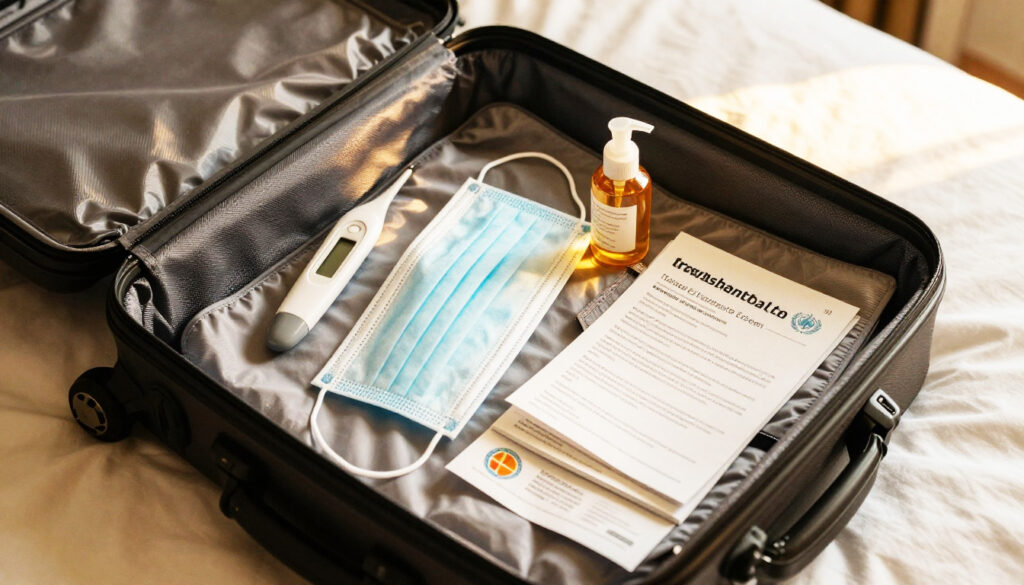
What Enhanced Screening Involves
Ebola Airport Screening Rules
Under the new Ebola Airport Screening Rules, travelers arriving from high-risk regions will go through strict health screening procedures immediately after landing at designated U.S. airports. These Ebola Airport Screening Rules are designed to identify possible infections early and reduce the risk of community spread.
Once you arrive, you’ll be separated from the standard passenger deplaning process. A Customs and Border Protection officer will first verify your recent travel history. After that, a CDC quarantine officer will conduct enhanced screening under the current Ebola Airport Screening Rules protocol.
The screening process includes a no-touch infrared temperature check and detailed symptom questions. Officials may ask whether you’ve experienced fever, chills, headache, muscle pain, vomiting, diarrhea, unexplained bruising, or fatigue. These questions are part of the official Ebola Airport Screening Rules risk assessment system used at approved entry airports.
Travelers may also be asked about:
- Funeral attendance
- Hospital or clinic visits
- Contact with sick individuals
- Exposure to bodily fluids
- Travel through outbreak zones
These are not routine airport questions. Under the latest Ebola Airport Screening Rules, they help health officials rapidly determine possible exposure risk.
If you are symptom-free, the Ebola Airport Screening Rules require travelers to begin a 21-day self-monitoring period. Most passengers will receive a care kit containing a thermometer, monitoring instructions, and guidance from local health departments. Travelers must also provide contact information and a temporary address for follow-up communication.
Some individuals may be advised to avoid crowded events, public transportation, or large gatherings during the monitoring window as part of the expanded Ebola Airport Screening Rules safety measures.
However, if a traveler shows symptoms such as fever or severe illness, the response becomes immediate. Under emergency Ebola Airport Screening Rules, the individual may be isolated inside a designated airport screening area or transferred directly to a specialized medical facility by ambulance.
The transition from screening checkpoint to medical isolation can happen within minutes. Health officials have designed the current Ebola Airport Screening Rules to move quickly because early containment remains one of the most effective tools in preventing larger outbreaks.
Ebola Airport Screening Rules: 3 Powerful New U.S. Travel Restrictions
he public health rationale behind the crackdown – Ebola Airport Screening Rules :
Government officials are moving hard because the downside of a miss is enormous. An undetected Bundibugyo case in a suburban ER doesn’t just mean a few isolated patients. It means weeks of contact tracing, possible exposures among healthcare workers, and a public anxiety that can take months to settle. The airport filter isn’t perfect—no public health tool is—but it buys time and keeps cases clustered in facilities that are already drilled for them.
Ebola Airport Screening Rules : Low risk isn’t zero risk. And the current approach reflects a calculation that the temporary disruption of a three-airport choke-point is a lot more manageable than the disruption that would follow a single missed infection in a region with no warning. The next few weeks will show whether anyone who transited through unrestricted airports in the days before this policy took effect starts running a fever.











Post Comment