Multi-Cancer Early Detection
MCED
blood test for cancer, cancer screening, Cancerguard, circulating tumor DNA, early cancer detection, Galleri test, genetic testing for drugs, health screening advances, liquid biopsy, MCED tests, multi-cancer early detection, OncoSeek test, personalized medicine, pharmacogenomics, Precision Medicine
Carolyn Stinnett
0 Comments
Precision Medicine & Multi-Cancer Early Detection: 7 Powerful Breakthroughs
Precision Medicine & Multi-Cancer Early Detection (MCED)
Precision Medicine & Multi-Cancer Early Detection
For years, the question has been: isn’t there a blood test that catches cancer early? For most malignancies, the honest answer was no. That’s finally changing. We’re moving beyond the rigid one-size-fits-all playbook toward something more personal—a single blood draw that can screen for dozens of cancers at once, and drug dosing tailored to your DNA. This is where Precision Medicine & Multi-Cancer Early Detection is reshaping the future of healthcare. It’s not science fiction; it’s precision medicine, and it’s arriving in clinics right now.
The rise of Precision Medicine & Multi-Cancer Early Detection marks a shift from reactive treatment to proactive detection, where disease is identified earlier and therapies are tailored to individual biology.
What precision medicine means
For decades, medicine practiced like a chef who seasons every dish the same way. A statin dose was identical for almost everyone. Cancer screening schedules depended only on age and sex.
Precision Medicine & Multi-Cancer Early Detection flips that entirely.
It pulls data from your genes, your proteins, your environment, and the molecular chatter of your cells to customize your care. Two areas where this is most tangible today are pharmacogenomics—using genetic markers to pick the right drug and dose—and multi-cancer early detection, where a single blood test hunts for hidden tumors long before you feel sick.
Both pillars of Precision Medicine & Multi-Cancer Early Detection are moving from pilot programs into real-world clinical use.
The promise of a single blood draw: MCED
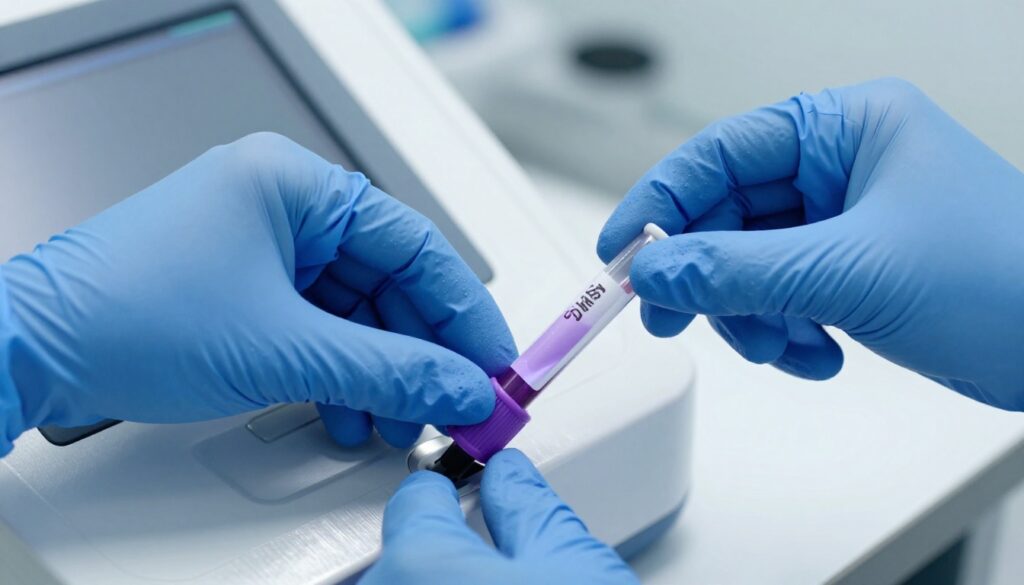
Multi-cancer early detection tests, or MCEDs, are the headline grabbers inside the world of Precision Medicine & Multi-Cancer Early Detection.
The idea is elegant: a routine blood draw that can flag cancer signals from over 50 different cancer types simultaneously, including many for which no screening currently exists—pancreatic, ovarian, liver, and others.
These liquid biopsies look for circulating tumor DNA, specific DNA methylation patterns, or protein biomarkers. A few platforms, like Galleri (from GRAIL) and emerging options such as Cancerguard, are now being studied in large trials and offered in some clinics.
What makes Precision Medicine & Multi-Cancer Early Detection so compelling is its potential to identify disease before symptoms appear, when treatment is often more effective.
The data is promising but grounded
A 2025 multicountry study of over 15,000 people tested a multi-cancer blood assay called OncoSeek. It showed an overall sensitivity of 58.4% at 92.0% specificity—meaning it correctly flagged cancer in nearly six out of ten patients who had it, while keeping false alarms around 8%.
In the evolving field of Precision Medicine & Multi-Cancer Early Detection, that’s a meaningful step forward, but not a perfect solution.
Sensitivity ranged widely by tumor type: over 80% for bile duct and gallbladder cancers, down to about 39% for early-stage breast cancer. And as expected, stage I cancers were harder to catch (42.8% sensitivity) than stage IV (79.7%).
This variability is one of the biggest scientific challenges in Precision Medicine & Multi-Cancer Early Detection today.
Multi-Cancer Early Detection Goes Global and Gets Personal
Test accuracy and trade-offs
Here’s where the rubber meets the road. No test is binary; they all have trade-offs.
Galleri has demonstrated a sensitivity of around 51.5% at a towering 99.5% specificity—very few false positives, but it missed nearly half the cancers in its validation set.
Compare that with OncoSeek’s higher sensitivity but lower specificity; more cancers flagged, but more people called back for unnecessary scans and biopsies.
That tension defines Precision Medicine & Multi-Cancer Early Detection right now.
And it’s why guidelines from the U.S. Preventive Services Task Force still only recommend standard single-organ screens like mammograms, colonoscopies, Pap smears, and low-dose CT for high-risk lung patients.
MCED tests in Precision Medicine & Multi-Cancer Early Detection are not yet replacements—they’re supplements, and sometimes complicated ones.
False positives lead to unnecessary scans, anxiety, and sometimes invasive biopsies. That’s a real harm that Precision Medicine & Multi-Cancer Early Detection must carefully manage.
What a negative result really means
False reassurance is just as dangerous.
A negative MCED result does not rule out cancer. These tests have limited sensitivity for early-stage tumors, and they don’t cover every malignancy.
Within Precision Medicine & Multi-Cancer Early Detection, this is a critical limitation.
You could have a pea-sized lung nodule that isn’t shedding enough DNA yet, or a slow-growing lymphoma that flies under the radar.

I’ve seen patients skip their mammogram because a direct-to-consumer blood test told them they were “all clear.” That’s a mistake.
Standard screenings still have decades of proven mortality benefit, while Precision Medicine & Multi-Cancer Early Detection is still building that evidence base.
And some cancers simply don’t shed enough circulating material. No blood test will catch them.
So in Precision Medicine & Multi-Cancer Early Detection, you’re not being given certainty—you’re being given probability.
Advice for patients considering MCED
If you’re intrigued by these tests, start with a conversation with your primary care clinician—not a chatbot, not a wellness influencer.
That’s especially important when discussing Precision Medicine & Multi-Cancer Early Detection, because interpretation matters as much as the test itself.
Ask:
• Does the MCED test have published validation data from large, prospective studies?
• What happens if it comes back positive—will insurance cover follow-up imaging or biopsies?
• Are you already up to date on standard screenings?
An MCED test in Precision Medicine & Multi-Cancer Early Detection does not replace any of these—it only adds another layer.
In clinical practice, Precision Medicine & Multi-Cancer Early Detection is often offered cautiously, especially for high-risk patients or those with strong family histories.
Beyond cancer: precision medicine expands
Beyond cancer, Precision Medicine & Multi-Cancer Early Detection is also quietly revolutionizing how we prescribe medications.
Genetic panels now tell us if you’ll metabolize certain antidepressants, blood thinners, or pain medications too slowly or too fast.
Adjusting dosages based on this data can mean fewer side effects and better efficacy.
This is becoming standard for drugs like clopidogrel (Plavix) and warfarin—and it aligns with the broader goals of Precision Medicine & Multi-Cancer Early Detection: smarter, safer, more individualized care.
The shifting landscape
We’re moving from reactive, symptom-driven care to proactive, biology-driven care.
That is powerful—but also messy.
The expansion of Precision Medicine & Multi-Cancer Early Detection brings real challenges:
- High testing costs
- Unequal access
- Uncertain insurance coverage
- Limited long-term population data
Modeling work from Australian researchers suggests MCED integration could improve early-stage detection, but economic uncertainty remains high.
Real-world adoption of Precision Medicine & Multi-Cancer Early Detection will depend on policy decisions, not just scientific breakthroughs.
Conclusion
Precision Medicine & Multi-Cancer Early Detection represents a major turning point in modern healthcare.
It won’t replace clinicians—it will change how they think, interpret risk, and communicate uncertainty.
For patients, it also requires a mindset shift. Your blood is not a crystal ball, but in the world of Precision Medicine & Multi-Cancer Early Detection, it is becoming a powerful early warning system.
The 2025 OncoSeek data showed that for stage I pancreatic cancer, sensitivity was just 42.8%. Closing that gap without triggering unnecessary medical interventions remains one of the hardest challenges in Precision Medicine & Multi-Cancer Early Detection.
But even with limitations, the direction is clear: medicine is becoming more precise, more personal, and far more predictive than ever before.











Post Comment