Disease Outbreaks & CDC Alerts
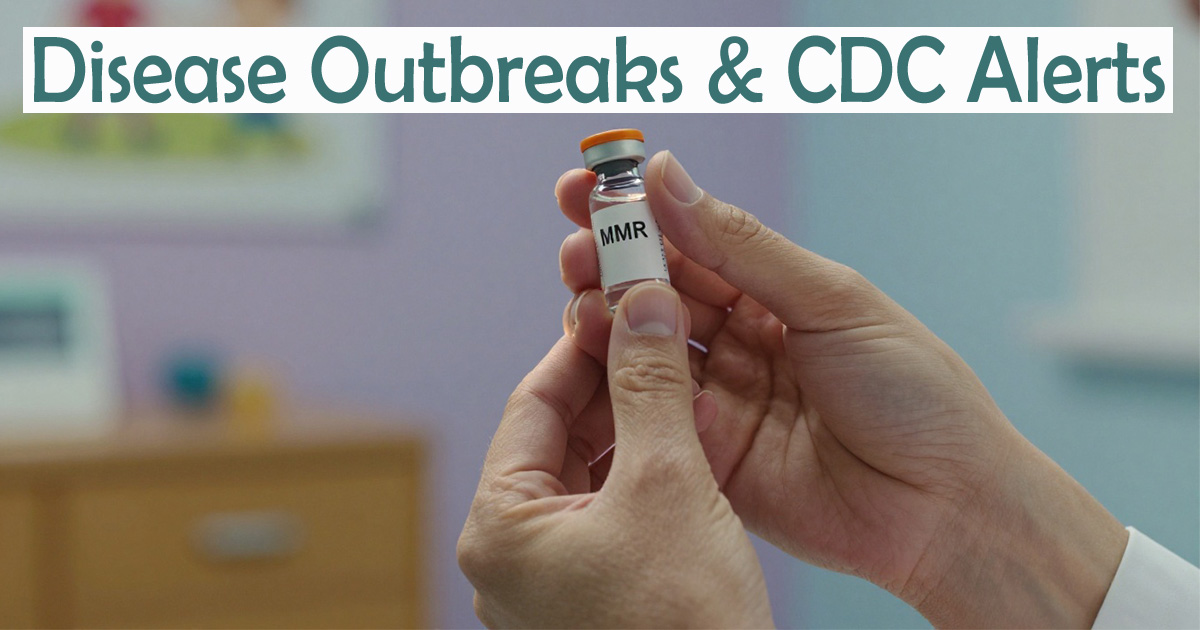
Disease Outbreaks & CDC Alerts – Measles Cases Are Climbing
The CDC’s measles count this year is already shoving against last year’s full total. We’re only a few months in. I stared at the bulletin and thought: this is not fine. Over 92% of the infections are in people who skipped the vaccine. South Carolina and Utah carry the worst of it now, though smaller clusters flare elsewhere.
One dose of MMR offers decent protection. But two doses—properly spaced—push that shield above 95%. The virus finds every gap. And measles will hollow out your immune memory, leaving a kid vulnerable to secondary infections for months. A previously healthy child can end up on a ventilator because measles pneumonia shredded their lungs. Some survive. Not all.
The CDC’s travel notices show measles climbing hard in dozens of countries. The United Kingdom, Indonesia, Cameroon, the list stretches on. The geography barely matters anymore. Low vaccination coverage is all the invitation it needs.
Why Outbreaks Keep Occurring
Disease Outbreaks & CDC Alerts

People hear “eliminated” and think “gone.” Not the same thing. Imported cases land with travelers every week. When they hit a community with low vaccination rates, it’s a match on dry grass.
Measles announces itself with a cough, low-grade fever, and pink eyes—exactly like a dozen other viral infections. The tiny white spots inside the cheeks, when they appear, are the giveaway. By then the patient’s been contagious for days. In a waiting room, one unvaccinated person can infect 90% of the susceptible people around them. That’s the basic reproductive rate, not hyperbole.
The CDC stance hasn’t shifted. Two MMR doses, the first at 12–15 months and the second at 4–6 years. Adults born after 1957 without proof of immunity should get at least one dose, especially ahead of any international travel. A blood titer can sort out your antibody status. I order those labs for teachers, healthcare workers, anyone crossing a border.
Disease Outbreaks & CDC Alerts : A Hantavirus Alert on a Cruise Ship
The CDC’s urgent Health Alert Network update flagged an Andes hantavirus outbreak tied to a cruise ship in the Atlantic. Sporadic cases of the Sin Nombre strain pop up in the rural West—fast, mean, frequently fatal respiratory illness. The Andes variant is different. It’s the only hantavirus known to spread person-to-person.

That changes everything about containment. Most hantaviruses jump from rodent droppings, urine, or saliva aerosolized when you sweep a dusty shed. Person-to-person transmission in a cruise ship’s shared ventilation and tight quarters makes an epidemiologist’s stomach drop.
No U.S. cases tied to the ship have surfaced yet. Health departments are watching returning passengers. The incubation period can stretch for weeks, so we’re in a silent waiting game. Early symptoms are maddeningly vague: fever, aching muscles, a dull pressure behind the breastbone. By the time the lungs flood, the decline is steep. There’s no specific antiviral. Supportive care is the whole playbook.
Should you cancel a cruise? Not because of this one alert. But I’d avoid any excursion that involves camping or sleeping in rural cabins with visible rodent droppings. Hand washing becomes an obsession. Andes virus is endemic to parts of Argentina and Chile—the CDC travel notices spell out where. (Risk runs on a gradient, not an on-off switch.)
Disease Outbreaks & CDC Alerts : Ebola Travel Advisories
The World Health Organization declared an emergency over a Bundibugyo strain Ebola outbreak in central Africa—Ituri, North Kivu, and South Kivu provinces in the Democratic Republic of the Congo, with spillover cases in Uganda. Bundibugyo is one of the less common Ebola species, but its mortality rate still sits in the gutting 30–40% range.
A U.S. doctor working in the outbreak zone was confirmed infected and evacuated. That single event triggered enhanced airport screenings at Washington-Dulles and Atlanta, tightened travel restrictions, and the quiet undercurrent of worry among infectious disease specialists about whether the containment blueprints from 2014 will hold.
For someone reading this in Albuquerque or Ann Arbor, the direct risk from Ebola is vanishingly small. The virus is not airborne. It spreads through direct contact with infected body fluids. The U.S. healthcare system is better hardened now—better PPE, better isolation units, faster diagnostics—than it was a decade ago.
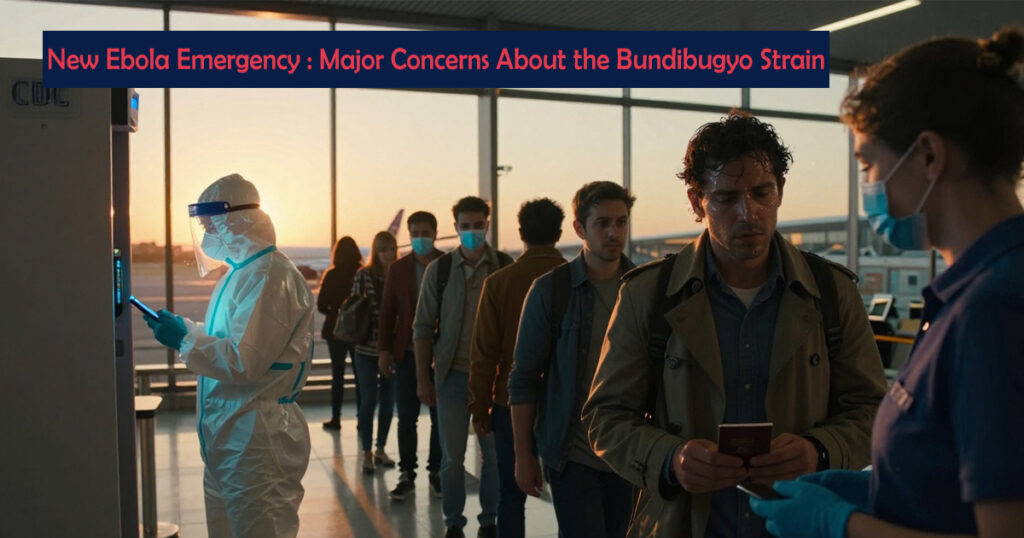
But the travel notices are real. The CDC puts the DRC at Level 3: Reconsider Nonessential Travel. Uganda sits at Level 1 for now, though that could shift fast. If you have family in those regions or are planning humanitarian work, check the State Department’s advisories and review evacuation logistics. And don’t hide a fever from screeners. If you’ve been anywhere near an Ebola-affected zone, body aches and a temperature need immediate, honest medical attention.
Disease Outbreaks & CDC Alerts : Practical Steps
Disease Outbreak News (DONs)|All Hazards Public Health Events
Check your family’s vaccine records. Not just measles. Polio boosters matter if you’re traveling—dozens of countries are dealing with circulating poliovirus right now, per the CDC. Meningitis vaccine for a college-bound kid. Hepatitis A and typhoid if you’re a foodie heading somewhere with dubious water. These are five-minute phone calls that can kill a real risk.
For hantavirus, the advice is about cleaning behavior. Before you sweep out a shed, garage, or cabin, spray the area down with a bleach solution. Don’t stir dust dry. Wear gloves and an N95 mask if you spot rodent droppings. Unsexy, inexpensive steps that actually work.
For Ebola, sign up for the State Department’s Smart Traveler Enrollment Program if you’re going abroad. It lets embassies reach you when things go sideways. And if you develop a fever after travel, say so. That’s the whole job.
The incubation window for that cruise ship hantavirus stretches up to six weeks. We’ll know by mid-summer whether the ventilation carried more than just salt air.
Know more About : Federal Health Policy Changes: 9 Powerful Impacts on Patients










Post Comment