7 Powerful Facts About Avian Influenza (H5N1): Alarming Rise Explained
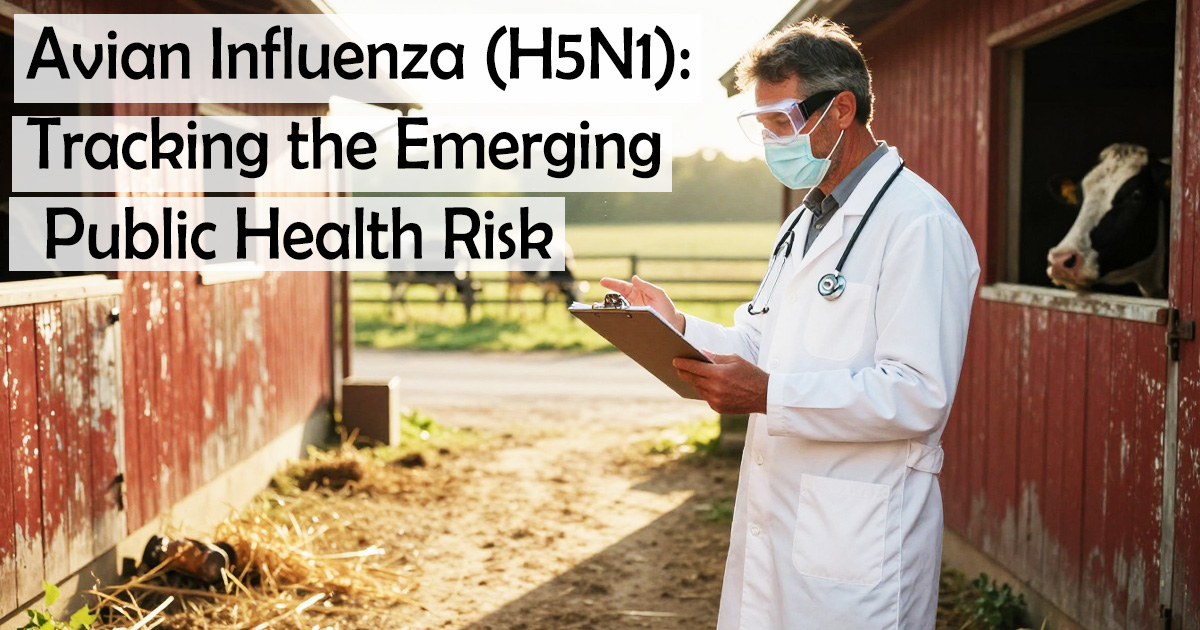
Avian Influenza (H5N1): Tracking the Emerging Public Health Risk
The CDC says the risk to the general public from Avian Influenza (H5N1) bird flu is still low. Fine. That’s true in the narrow sense — you are not going to catch it from a grocery cart or a coffee shop. But low risk is a label that obscures an extraordinary development: a virus that spent decades as a poultry problem has set up shop in American dairy cows. And cows, as it turns out, are not supposed to get bird flu at all. That abrupt jump, documented first in 2024, is the kind of thing that makes epidemiologists get very quiet and very busy.
Seventy-one human cases have been tallied in the United States since February 2024. Seven of those were flagged incidentally through routine flu surveillance — people who likely never knew they had H5N1. The other 64 were found because health officials were actively looking, testing farmworkers with animal exposure.
So the virus is moving through people, mostly on farms, mostly as conjunctivitis or a mild flu, and mostly unnoticed unless someone goes hunting for it. For the general public, the risk remains near zero. For everyone watching the evolution of Avian Influenza (H5N1), the series of small jumps from birds to mammals to humans over the past two years is more unsettling than the official risk level suggests.
H5N1 in Dairy Cattle
The dairy cow spillover linked to Avian Influenza (H5N1) should not have happened. Avian influenza viruses are adapted to bind receptors that are plentiful in the guts of birds, not the respiratory tracts of mammals. Cows were not on anyone’s bingo card as a host. Yet the clade 2.3.4.4b virus, which has been decimating wild bird populations worldwide, found a foothold in U.S. dairy herds. By early 2026, infections were documented across multiple states, and the virus was showing up in milk — raw milk especially, where live virus can survive.
This changes the risk arithmetic for Avian Influenza (H5N1). Wild birds can deposit virus into a pasture or water source, and a cow becomes an amplifying host, potentially exposing farmworkers and other animals daily. The virus is already in more than 50 mammal species, from foxes to sea lions. Cattle, though, are a different caliber of concern because they live in huge numbers, in close contact with people, and their milk gets shipped across the country. A long-term bovine reservoir gives H5N1 a stable platform for reassortment — swapping genes with other flu viruses — and for accumulating mutations that could enhance mammalian transmission.
Avian Influenza (H5N1) : How a Bird Virus Finds a Human Host
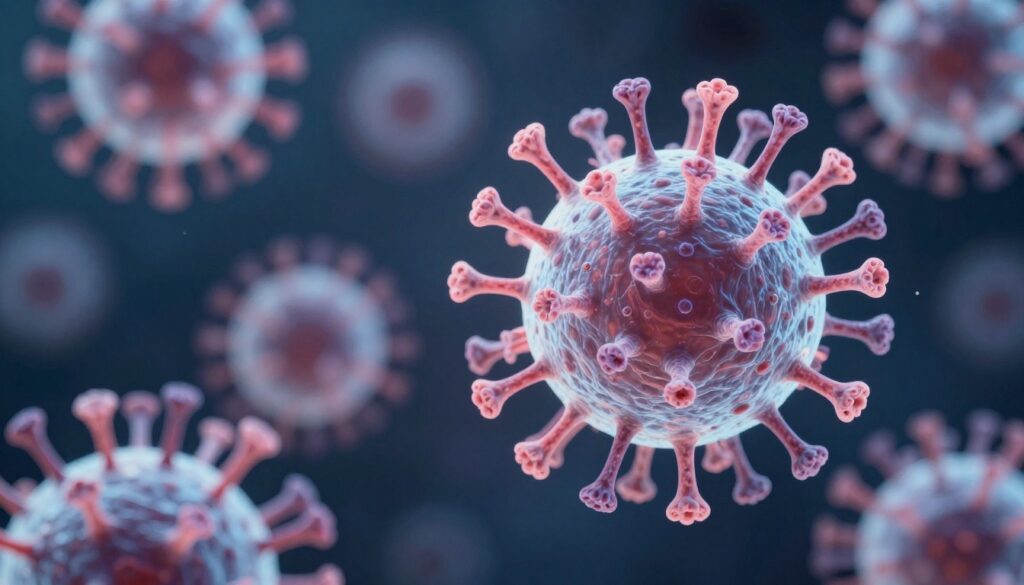
Bird flu and human flu don’t mix easily because they target different sialic acid receptors. Avian viruses prefer α2,3-linked receptors, which in people are tucked deep in the lungs and in the eyes. Human-adapted flu viruses go for the α2,6-linked receptors that carpet our upper airways. That receptor mismatch is why Avian Influenza (H5N1) so often presents as conjunctivitis: the virus gets into the eye, where α2,3 receptors are accessible, and causes a raging pink eye before it has a chance to go anywhere else. If it reaches the lower lungs, the result can be severe viral pneumonia.
The switch from bird to efficient human spread requires a suite of genetic changes that alter the hemagglutinin protein to favor those upper-airway receptors. Scientists studying Avian Influenza (H5N1) also track polymerase mutations — PB2 E627K and D701N are two of the most concerning — that let the virus replicate better at mammalian body temperatures. These mutations have been spotted in animal samples and sporadic human cases. None yet have produced sustained person-to-person transmission. But every infected cow, cat, or farmhand is another lottery ticket for the virus. The larger the number of mammalian infections, the more likely the right combination of mutations emerges.
Severity in Humans
There’s a tired line I hear a lot: bird flu doesn’t really affect people. That’s wrong. Among the cases documented since 2003, roughly one in two people with a confirmed Avian Influenza (H5N1) infection did not survive. The true fatality rate is almost certainly lower — mild cases are missed, and the denominator is therefore larger than the official tally suggests — but even a heavily adjusted rate would put this among the deadlier respiratory viruses.
The current U.S. cases have been mild, with one death in Louisiana and a critically ill teenager in Canada as sharp reminders that severity can vary dramatically by genotype and host. The virus hasn’t settled on a consistent pattern in humans, and that’s exactly what makes its behavior so hard to predict.
What Public Health Is Watching
Agencies monitoring Avian Influenza (H5N1) are tracking three signals: the breadth of animal spread, the genetic drift of the virus, and any human case without animal contact.
On animals: over 50 mammal species infected, with dairy cows now the most economically significant. India’s backyard poultry sector has been flagged as a potential spillover hotspot, but the U.S. dairy situation is equally worrying because of the sheer density of human-cow interactions.
If cattle become a long-term reservoir, the virus could reassort with endemic swine or human flu strains and gain attributes that neither source strain possessed.
On genetics: the mutations that alter receptor preference and polymerase activity are the main targets. There is also monitoring for neuraminidase changes that would render oseltamivir (Tamiflu) less effective. Drug-resistant strains are rare so far, but the sampling is not universal.
The CDC’s surveillance efforts for Avian Influenza (H5N1) rely on testing people with flu-like symptoms and animal exposure, plus broad sequencing of circulating flu strains. A novel H5N1 genome turning up in an individual with no known animal contact would be the trigger for a more aggressive response. Until then, the official risk level remains low — and that’s a fair judgment based on the absence of human-to-human transmission. I think it also underplays how thoroughly this virus has rewritten the rulebook on what avian flu can infect.
India’s public health risk from the emerging zoonotic bird flu (H5N1) transmission from backyard flock: a call for people-centric actions for improved sustainable development goals
Practical Steps Now
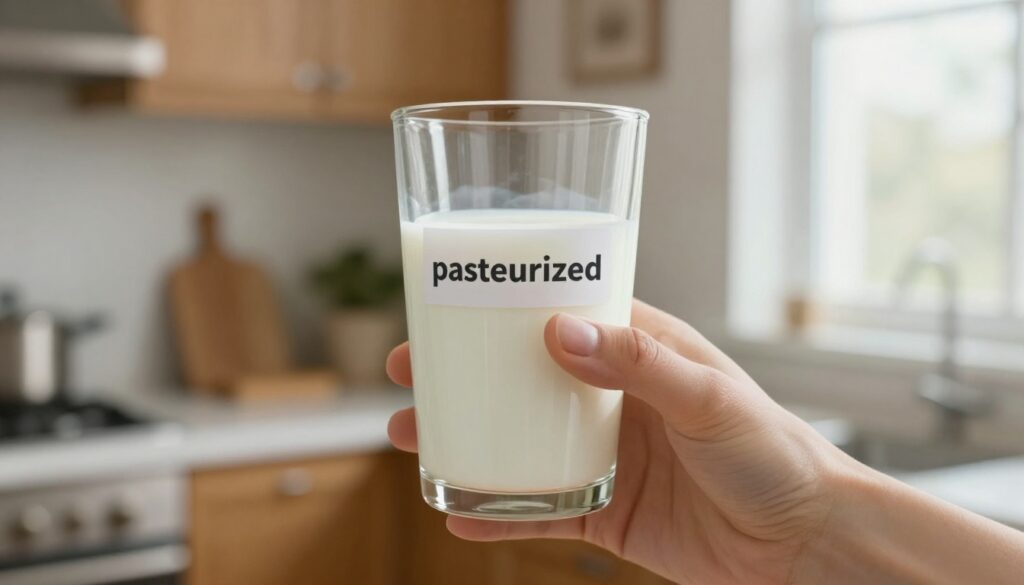
For the vast majority of people, Avian Influenza (H5N1) does not require immediate lifestyle changes beyond the ordinary good sense of not drinking raw milk. Pasteurization inactivates the virus, and that’s a century-old food safety practice, not a panic measure. Raw milk from infected cows has contained live virus, and a few farmworkers got sick after direct exposure.
If you work with poultry or dairy cattle, wear protective gear: gloves, goggles, and a mask are the CDC’s recommendations, and they exist because eye infections and mild respiratory cases have happened when people skipped the goggles. Don’t handle sick birds without protection, and if you keep backyard chickens, keep your face away from them — the warning sounds absurd, but close contact has led to infections. The seasonal flu shot won’t stop H5N1, but it reduces the chance of co-infection with a human flu strain inside a single person, which is how reassortment gets a foothold.
If you develop a fever, cough, and red eyes after being around animals, see a doctor and mention the exposure. Antivirals are effective when started early. And if all that sounds like a lot of worry for something that hasn’t broken loose yet, it is. The virus has spent two years in a holding pattern — plenty of mammal infections, no sustained human transmission.The question that keeps surveillance networks on edge is whether the next genetic sequence from a routine flu swab in an emergency room will be the one that changes that.
For that reason, Avian Influenza (H5N1) remains one of the most closely watched emerging public health threats in the world today.











Post Comment