Alzheimer's
best dementia mimics alzheimer's review, dementia mimics alzheimer's, dementia mimics alzheimer's 2026, dementia mimics alzheimer's guide, dementia misdiagnosis, frontotemporal dementia vs alzheimer's, how to diagnose dementia mimics alzheimer's, lewy body dementia symptoms, memory loss not alzheimer's, normal pressure hydrocephalus, reversible dementia causes, vascular dementia, what causes dementia symptoms
Carolyn Stinnett
0 Comments
Dementia Mimics: Conditions Often Misdiagnosed as Alzheimer’s
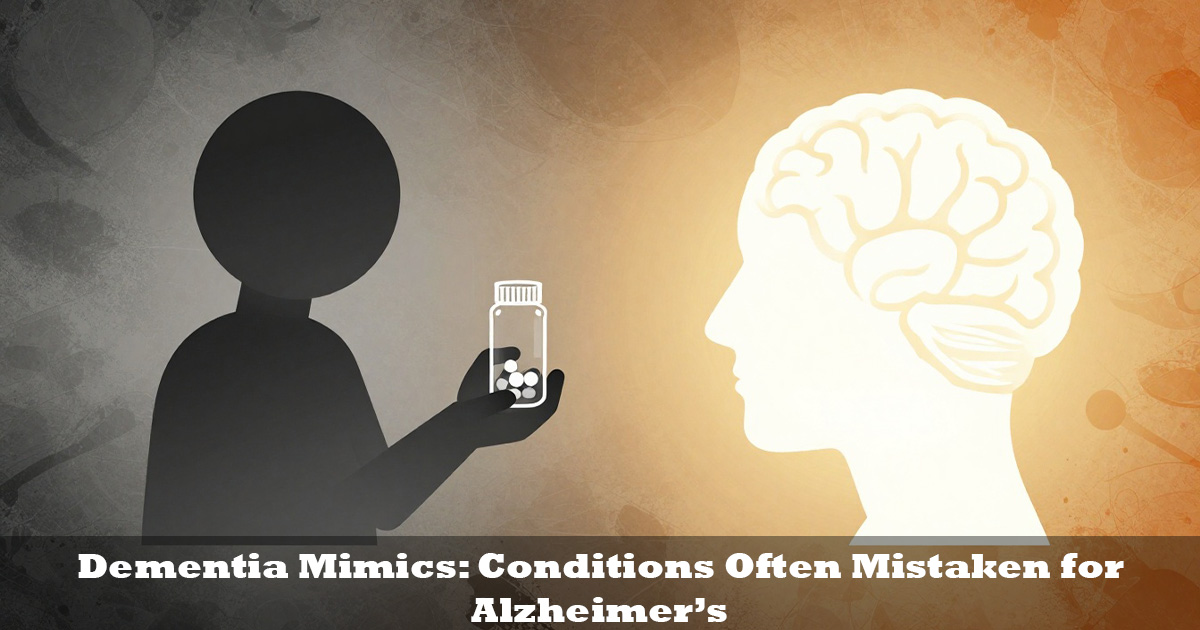
many families, these symptoms immediately trigger one frightening thought: Alzheimer’s disease.
But here’s something many people don’t realize—Dementia Mimics are surprisingly common. Not every case of memory loss or cognitive decline is caused by Alzheimer’s. In fact, thousands of people each year receive an Alzheimer’s diagnosis only to discover later that another condition was responsible for their symptoms.
Some of these conditions are progressive neurological diseases. Others are completely treatable and, in certain cases, even reversible.
This is why obtaining an accurate diagnosis is so important. A rushed conclusion can lead to unnecessary medications, delayed treatment, and years of avoidable decline.
In this article, we’ll explore the most common Dementia Mimics, understand how they differ from Alzheimer’s disease, and learn what families can do when memory problems begin to appear.
What Are Dementia Mimics?
Dementia Mimics are medical conditions that produce symptoms similar to Alzheimer’s disease but arise from entirely different causes.
These conditions may affect memory, thinking, language, behavior, judgment, or daily functioning. Because the symptoms overlap significantly with Alzheimer’s, many patients are initially misdiagnosed.
The challenge is that cognitive decline is not exclusive to Alzheimer’s. Numerous neurological, metabolic, psychiatric, and vascular disorders can create a nearly identical picture.
Understanding these alternatives is essential because treatment options and outcomes can vary dramatically.
Why Alzheimer’s Is Often Misdiagnosed
Diagnosing cognitive disorders is complex.
Many healthcare appointments are brief, and symptoms may appear similar on the surface. A patient reporting forgetfulness and confusion may quickly receive an Alzheimer’s diagnosis without undergoing comprehensive testing.
However, the timeline of symptoms often tells a different story.
Questions such as these can reveal important clues:
- Did personality changes appear before memory problems?
- Were hallucinations present early?
- Did symptoms worsen suddenly after a stroke?
- Is the person taking medications known to affect cognition?
These details often point toward Dementia Mimics rather than Alzheimer’s disease.
Common Dementia Mimics That Resemble Alzheimer’s
1. Lewy Body Dementia
Lewy body dementia is one of the most frequently overlooked conditions mistaken for Alzheimer’s.
Unlike Alzheimer’s, memory problems are not always the earliest symptom.
Instead, patients may experience:
- Visual hallucinations
- Sleep disturbances
- Acting out dreams
- Fluctuating alertness
- Parkinson-like movement problems
For example, someone may repeatedly see animals or people that are not actually present. They may also shout, kick, or thrash during sleep.
These symptoms often appear months or even years before significant memory decline develops.
2. Frontotemporal Dementia (FTD)
Among younger adults, frontotemporal dementia is one of the most important Dementia Mimics to recognize.
This condition primarily affects the frontal and temporal lobes of the brain.
Early signs often include:
- Personality changes
- Socially inappropriate behavior
- Loss of empathy
- Poor judgment
- Language difficulties
A previously polite individual may suddenly become impulsive or indifferent to others. Family members frequently notice behavioral changes long before memory issues become obvious.
FTD commonly begins in people between their 50s and 60s, making it distinct from typical Alzheimer’s disease.

3. Vascular Dementia
Vascular dementia occurs when reduced blood flow damages parts of the brain.
Unlike Alzheimer’s, which usually progresses gradually, vascular dementia often follows a “stepwise” pattern.
A person may remain stable for months and then suddenly experience noticeable decline after a stroke or vascular event.
Common symptoms include:
- Difficulty planning tasks
- Poor concentration
- Slowed thinking
- Confusion
- Mood changes
Brain imaging frequently reveals evidence of previous strokes or extensive blood vessel damage.
4. Mixed Dementia
In reality, many older adults do not fit neatly into one diagnostic category.
Mixed dementia involves a combination of brain abnormalities, often including:
- Alzheimer’s-related changes
- Vascular damage
- Other neurodegenerative processes
Research has shown that many patients diagnosed with Alzheimer’s during life are later found to have multiple forms of brain disease.
This overlap can accelerate cognitive decline and complicate treatment decisions.
5. Parkinson’s Disease Dementia
Parkinson’s disease dementia can look remarkably similar to Alzheimer’s, but the order of symptoms is different.
In Parkinson’s disease dementia:
- Tremors usually appear first
- Movement problems develop early
- Cognitive symptoms emerge years later
Patients often experience:
- Slow thinking
- Attention difficulties
- Visual-spatial problems
- Executive function deficits
When motor symptoms clearly precede memory loss by several years, Parkinson’s disease dementia becomes a more likely diagnosis than Alzheimer’s.
6. Normal Pressure Hydrocephalus (NPH)
Normal pressure hydrocephalus may be one of the most important Dementia Mimics because it is often treatable.
This condition occurs when cerebrospinal fluid accumulates within the brain’s ventricles.
The classic symptom triad includes:
- Walking difficulties
- Urinary incontinence
- Cognitive decline
Many families assume these symptoms represent advanced Alzheimer’s disease.
However, brain imaging can reveal enlarged ventricles that strongly suggest NPH.
With surgical treatment involving a shunt, some patients experience dramatic improvements in mobility and cognition within weeks.
Because the condition is potentially reversible, recognizing it early is critical.
7. Medication Side Effects and Vitamin Deficiencies
Sometimes the explanation is much simpler than a neurodegenerative disease.
Certain medications can significantly impair cognition, especially in older adults.
Examples include:
- Antihistamines
- Bladder medications
- Sedatives
- Some antidepressants
Even common over-the-counter sleep aids can contribute to confusion and memory problems.
Vitamin deficiencies can have similar effects.
Severe vitamin B12 deficiency may cause:
- Memory loss
- Mood changes
- Difficulty concentrating
- Nerve damage
In some cases, correcting the deficiency leads to substantial improvement.
Reversible Causes of Cognitive Decline
One of the most encouraging facts about Dementia Mimics is that some are entirely reversible.
Conditions that may imitate dementia include:
Thyroid Disorders
An underactive thyroid can cause:
- Brain fog
- Fatigue
- Depression
- Memory problems
Once hormone levels are corrected, symptoms often improve significantly.
Depression
Severe depression can impair concentration and memory so profoundly that it resembles dementia.
Healthcare providers sometimes refer to this as “pseudodementia.”
Treating the underlying depression frequently restores cognitive function.
Infections
Certain infections can affect the brain and nervous system.
Examples include:
- HIV
- Neurosyphilis
- Chronic inflammatory conditions
Proper testing helps identify these treatable causes.
Autoimmune Disorders
Autoimmune inflammation affecting the brain can produce rapid cognitive decline.
Unlike Alzheimer’s disease, these conditions may respond to medications that reduce immune system activity.

How Doctors Differentiate Dementia Mimics from Alzheimer’s
A thorough evaluation goes far beyond a simple memory test.
Detailed Medical History
Doctors need to understand:
- When symptoms began
- How quickly they progressed
- Which symptoms appeared first
Family members often provide valuable observations that patients may not notice themselves.
Neurological Examination
Physical examination may reveal:
- Tremors
- Balance problems
- Abnormal reflexes
- Eye movement abnormalities
These clues help narrow the diagnosis.
Brain Imaging
MRI scans can identify:
- Strokes
- Tumors
- Brain shrinkage patterns
- Enlarged ventricles associated with NPH
Imaging is often essential for distinguishing Alzheimer’s from other conditions.
Blood Testing
A comprehensive workup should include screening for:
- Vitamin B12 deficiency
- Folate deficiency
- Thyroid disorders
- Infectious diseases
- Metabolic abnormalities
These tests can uncover treatable explanations for cognitive decline.
Neuropsychological Testing
Detailed cognitive assessments evaluate:
- Memory
- Attention
- Language
- Executive function
- Problem-solving ability
Different disorders produce unique patterns of impairment that specialists can recognize.
What Families Should Do When Symptoms Appear
Watching a loved one struggle with memory loss can be frightening.
However, panic is rarely helpful.
Instead, take a structured approach:
Keep a Symptom Timeline
Document:
- When symptoms started
- Changes in behavior
- Medication adjustments
- Significant medical events
This information can greatly assist specialists.
Bring a Complete Medication List
Include:
- Prescription drugs
- Over-the-counter medications
- Vitamins
- Herbal supplements
Medication-related cognitive problems are more common than many people realize.
Request Comprehensive Testing
Ask about:
- Brain MRI
- Blood work
- Neuropsychological evaluation
- Specialist referral
A complete assessment helps rule out reversible Dementia Mimics before settling on an Alzheimer’s diagnosis.
Seek a Second Opinion
If concerns remain unresolved, another specialist may provide a different perspective.
An accurate diagnosis can significantly influence treatment options and quality of life.












Post Comment