BINL
Healthcare Affordability Crisis
American Heart Association, cardiovascular disease costs, coverage gap, drug price hikes, financial toxicity, health insurance coverage, health policy, healthcare affordability crisis, Medicaid cuts, Medicaid expansion, medical debt, patient assistance programs, prescription drug costs, public health, rural healthcare
Carolyn Stinnett
0 Comments
Healthcare Affordability Crisis: 7 Shocking Impacts on Families
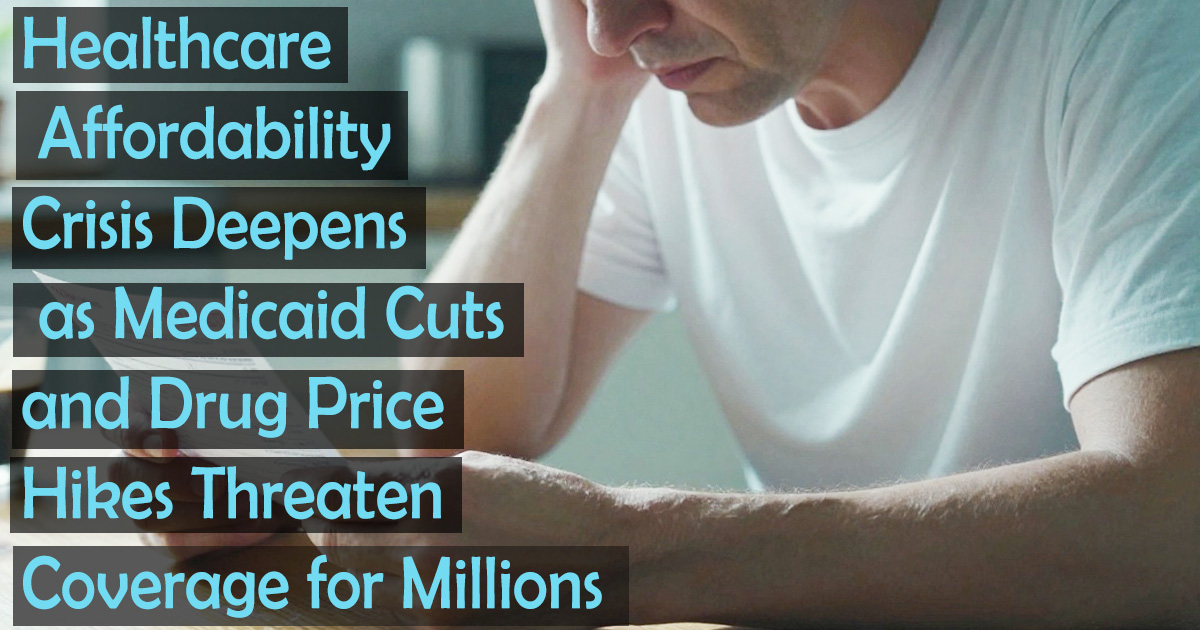
Healthcare Affordability Crisis Deepens as Medicaid Cuts and Drug Price Hikes Threaten Coverage for Millions
Americans are doing the math at kitchen tables. It’s not pretty. The numbers that matter now aren’t co-pays and deductibles. They’re rent, groceries, a prescription that costs more than a car payment. This is the reality of the Healthcare Affordability Crisis, and it is getting harder for millions of families every single month.
Two forces are making that calculation impossible for millions. States are tightening Medicaid eligibility, pushing people off the rolls for paperwork reasons. At the same time, pharmaceutical companies are hiking list prices on hundreds of drugs by double digits, with no sign of stopping. The Healthcare Affordability Crisis is no longer a warning—it is a lived experience.
This is not a hypothetical problem for wonks and think tanks. It’s a slow-rolling disaster hitting working families, rural hospitals, and emergency rooms that were already stretched thin. The Healthcare Affordability Crisis is now one of the defining economic and social challenges in the country.
The money drain
Total U.S. health care spending is now closing in on $5 trillion a year. The American Heart Association warns that within a decade it could consume 20 percent of the country’s entire economic output. And cardiovascular disease alone, they project, may see costs quadruple by 2050.
These aren’t abstractions—they’re wiped-out savings accounts, skipped preventive care, catastrophic strokes that arrived because someone couldn’t afford their blood pressure medication. This is how the Healthcare Affordability Crisis quietly turns into a national emergency.
Medical debt is already one of the leading triggers for personal bankruptcy in the United States, a distinction we don’t share with other wealthy nations. The Healthcare Affordability Crisis is not just about rising prices—it is about financial survival.
States pull back the safety net
Medicaid was supposed to catch people when they fall. In several states, the floor is being pulled out from under them. The Healthcare Affordability Crisis is deepening as eligibility rules become stricter and access becomes harder.
Work requirements, monthly reporting rules, and aggressive redetermination processes are cutting people loose. If you earn too much for traditional Medicaid but too little to afford a marketplace plan, you’re stuck. That’s the coverage gap, and it is one of the most painful parts of the Healthcare Affordability Crisis.
This gap is especially cruel in the ten states that still haven’t expanded Medicaid under the Affordable Care Act. The AHA has singled out Mississippi, pointing to rural communities where farmers, veterans, and small-business owners are uninsured and hours away from the nearest specialist.

Expanding Medicaid there would keep local hospitals open and catch disease early. Tightening access does the opposite: it guarantees that patients will eventually land in the emergency department, where the bill is astronomical and the damage has already been done. This cycle is a core driver of the Healthcare Affordability Crisis in rural America.
Canada’s Healthcare Transformation Emerges as One of the Most Important Long-Term Economic Stories
Drug prices keep climbing
While states cut, drug companies hike. The Healthcare Affordability Crisis is also being fueled by rising prescription costs across the board.
In the first quarter of this year, hundreds of widely prescribed medications saw list price increases well into the double digits. Insulin remains obscenely expensive for many despite public outrage. Inhalers, blood thinners, cancer therapies—the price tag for a single month’s supply can top a thousand dollars.
For someone who’s uninsured or underinsured, that’s not a medical decision, it’s an impossible financial one. People skip doses, stretch prescriptions, and end up far sicker. This is where the Healthcare Affordability Crisis becomes a health crisis in the most literal sense.
It’s a vicious circle that feeds on itself: higher prices lead to sicker patients, which drives up costs for everyone, deepening the Healthcare Affordability Crisis even further.
The working myth
There’s a stubborn narrative that Medicaid largely serves people who don’t work. It’s false. And misunderstanding this only worsens the Healthcare Affordability Crisis.
Most adults on Medicaid who can work, do work. They’re in jobs that don’t offer insurance—child care, retail, home health, farming. The program also covers kids, pregnant women, and people with disabilities.
A recent AHA poll showed that 84 percent of voters across party lines believe it’s important for the government to make sure all Americans have affordable health coverage. That’s not a fringe position—it reflects how deeply the Healthcare Affordability Crisis is felt across political and geographic lines.
Even in politically conservative areas, closing the coverage gap has broad support when it’s framed as a practical step, not a partisan one. The advisory’s core ideas—low cost-sharing for preventive care, shared accountability, smart investment in public health—aren’t radical. They’re what any functioning system would do to address the Healthcare Affordability Crisis.

The fallout on the ground
When coverage vanishes and prices spike, people get creative in awful ways. The Healthcare Affordability Crisis shows up in everyday survival choices.
They cut pills in half. They pretend chest pain is just indigestion. They wait until the toothache is so bad they’re in the ER at 2 a.m. These are not rare cases anymore—they are becoming routine outcomes of the Healthcare Affordability Crisis.
Community health centers report a surge in patients who used to have Medicaid and now show up hoping for a sliding-scale fee. Some navigators say it’s worse than before the ACA, because people got a taste of regular care and then had it snatched away.
The shame people feel about medical debt runs deep. But the responsibility does not belong to them. It belongs to a system that spends more than any other country and still leaves working families one diagnosis away from bankruptcy. That is the heart of the Healthcare Affordability Crisis.
Mississippi lawmakers are debating expansion again this session. In the meantime, the nearest labor and delivery unit for one rural county is 45 miles away. Women in labor make that drive every week.
Conclusion
The Healthcare Affordability Crisis is not a distant policy issue—it is a daily struggle shaping how Americans live, delay care, and manage survival. From Medicaid cuts to rising drug prices, every layer of the system is tightening at once.
Until structural reforms address both coverage gaps and pharmaceutical pricing, the Healthcare Affordability Crisis will continue to deepen, affecting not just health outcomes but the financial stability of millions of households across the country.











Post Comment