How Protein and Muscle Growth Work Together: Complete Guide

How Much Protein Do You Need for Muscle Growth?
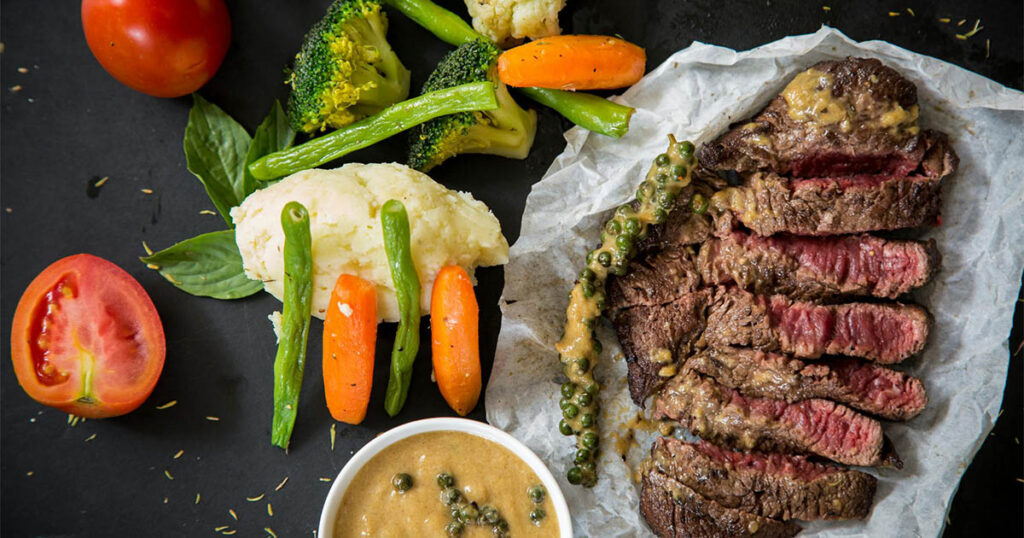
Discover how protein and muscle growth work together. Learn the right intake, best sources, and timing to boost strength and results.
Introduction: The Unsung Hero of Muscle Building
Walk into any gym, and you’ll hear one word over and over again — protein. People discuss it in the locker room, follow it in meal plans, and see it prominently displayed on supplement tubs. Behind all the hype, there’s a simple truth: protein plays a central role in how your body builds, repairs, and maintains muscle.
If you want to sculpt a lean body, perform at a higher level, or keep your strength as you age, understanding protein is essential. Many people know they should “eat more protein,” but they don’t understand why it matters, how much they need, or when it’s most effective. This guide explains everything clearly — without the fluff.
Why Protein Is the Foundation of Muscle Building
Every time you train, your muscles face controlled stress. Lifting weights, pushing resistance bands, or even doing push-ups creates tiny tears in your muscle fibers. This might sound damaging, but it’s actually a good sign. Those tears are signals telling your body to adapt and grow.
To repair the damage, your body needs amino acids — the building blocks of protein. When you eat protein-rich foods, your digestive system breaks them down into amino acids. These amino acids enter your bloodstream and travel to your muscles. Think of them as skilled builders arriving at a construction site. If enough show up, the job gets done well.
When your diet lacks high-quality protein, the opposite happens. Recovery slows, strength gains stall, and in some cases, you may even lose muscle. Protein doesn’t just fix what’s broken — it activates muscle protein synthesis (MPS), the process that builds new muscle tissue. MPS competes with muscle protein breakdown (MPB). To grow, MPS must consistently stay ahead of MPB. The right amount of protein at the right time makes that possible.
The Science of Muscle Growth: What’s Actually Happening
Muscle growth, or hypertrophy, follows a precise sequence. First, mechanical tension during exercise stimulates your muscle fibers. This minor, controlled damage activates satellite cells, which then fuse with existing fibers. By adding new nuclei, they enable the fibers to grow stronger and larger.
Next comes recovery. Over several hours, your body uses amino acids to rebuild the damaged fibers. If amino acids are available, the repair is smooth and efficient. If they’re not, the process slows, and your hard work doesn’t fully pay off.
Finally, through repeated cycles of training, recovery, and good nutrition, your muscles adapt. They become visibly bigger and functionally stronger. This doesn’t happen overnight — it’s the result of consistent effort over time.
Research repeatedly shows that protein intake is one of the most potent factors for hypertrophy. Carbs give you energy to train. Fats support hormone balance. Protein repairs and builds. Nothing else replaces that role.
Timing Protein Intake: More Than Just “How Much”
Most people focus on the amount of protein they consume in a day. That’s smart — total intake is the main factor in muscle growth. But timing can give you an extra edge.
The period immediately before and after your workout is often referred to as the “anabolic window.” During this window, your muscles are more sensitive to nutrients. Eating a protein-rich meal one to two hours before training ensures that amino acids are circulating while you work out. This reduces breakdown.
After training, consuming protein within 30 to 60 minutes boosts MPS and speeds up recovery. Missing this window isn’t the end of the world. It’s a range, not a strict deadline. As long as you eat enough protein across the day and spread it out evenly, you’ll still make progress. Still, prioritizing protein around workouts is a simple way to recover better and grow faster.
How Much Protein Do You Really Need?
There’s no single number that works for everyone. Your protein needs depend on your age, activity level, body composition goals, and lifestyle.
- Sedentary adults: 0.8 g per kg of body weight per day (enough to prevent deficiency, not for growth)
- Active individuals: 1.2–1.6 g per kg per day
- Strength or hypertrophy training: 1.6–2.2 g per kg per day
For example, someone who weighs 70 kg (154 lbs) and trains regularly should aim for 110–150 grams of protein daily. Splitting this across three to five meals helps your body use it more effectively.
Older adults often need protein at the higher end of the range because of anabolic resistance — their bodies respond less efficiently to protein. People trying to lose fat while keeping muscle should also prioritize protein, even if calories are reduced.
Eating more than you need won’t give unlimited muscle gains. Once you meet your daily requirement, your body uses the extra protein for energy or stores it as fat. Consistency matters more than going overboard.
Choosing the Right Protein Sources
Protein quality makes a difference.

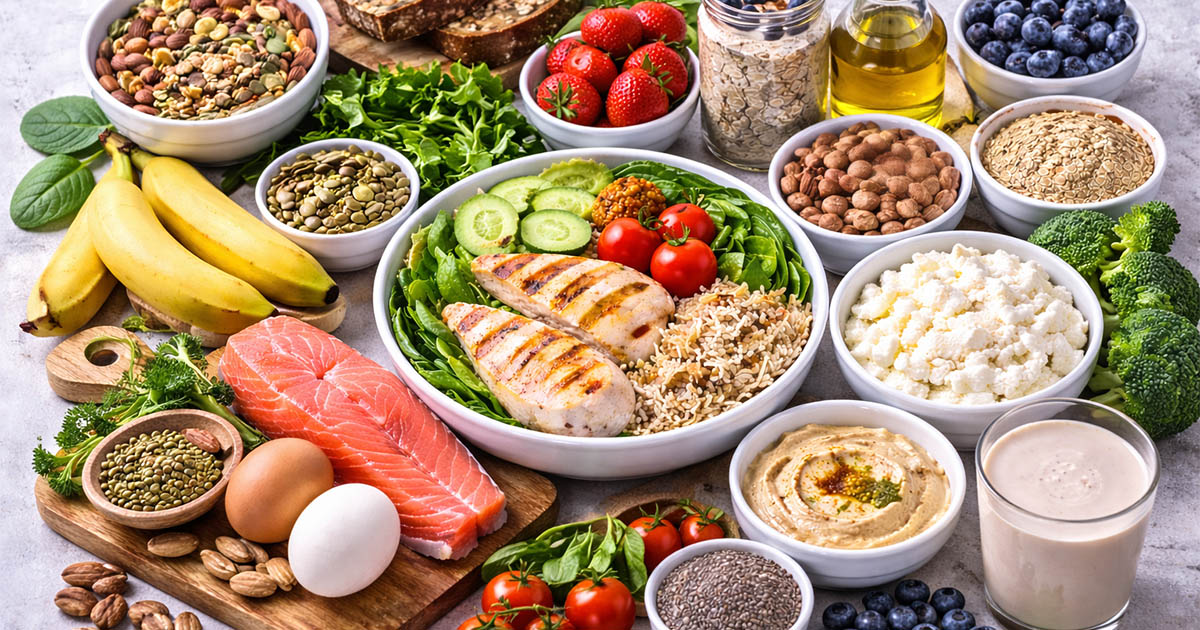
- Animal-based proteins — chicken, fish, eggs, lean beef, and dairy — are complete. They contain all nine essential amino acids and are easily absorbed. Whey protein, in particular, is fast-digesting and high in leucine, which strongly stimulates MPS.
- Plant-based proteins can work just as well if you combine them smartly. Rice with beans, lentils with quinoa, or tofu with grains create a complete amino acid profile. Foods like tempeh, edamame, chickpeas, chia seeds, and high-quality plant-based protein powders can easily be incorporated into a balanced diet.
The goal isn’t to obsess over one “perfect” source. A varied diet gives your body everything it needs to recover and grow.
Common Protein Mistakes That Sabotage Progress
Even with the proper knowledge, people often slip up. Here are frequent mistakes to avoid:
- Not eating enough: Many beginners, especially women, underconsume protein without realizing it.
- Poor timing: Skipping pre- or post-workout meals slows recovery.
- Over-relying on supplements: Shakes are convenient but shouldn’t replace real food.
- Uneven distribution: Loading most of your protein at dinner isn’t ideal. Spread it throughout the day.
- Ignoring calorie balance: Cutting calories too hard without adjusting protein can lead to muscle loss.
Protein’s Role Beyond Muscles
Protein builds more than just muscle. It forms your skin, hair, nails, enzymes, and many hormones. It supports your immune system, carries oxygen in your blood, and maintains fluid balance in your cells.
When you don’t eat enough protein, your body uses what it has for these vital functions first. Muscle growth takes a back seat. That’s why poor protein intake can silently hold back your fitness results.
More Than Protein: The Bigger Picture
Muscle growth relies on more than nutrition.
- Progressive overload: Gradually increase your training challenge to stimulate growth continually.
- Caloric intake: Building muscle requires a significant amount of energy. A moderate surplus gives your body what it needs to grow.
- Sleep and recovery: Growth hormone peaks during deep sleep. Recovery happens when you rest, not just when you train.
- Hydration: Water supports the transport of nutrients and muscle function. Even slight dehydration affects performance.
When these elements line up with smart protein habits, your results can skyrocket.
Practical Tips to Get Protein Right
- Calculate your needs using your weight and goals.
- Distribute protein evenly throughout the day.
- Include protein around workouts for better recovery.
- Prioritize whole foods, and use shakes for convenience.
- Adjust as needed if your activity or goals change.
Conclusion: Protein as the Catalyst for Growth
Protein isn’t just another nutrient on a label. It’s the cornerstone of building muscle. It fuels repair, supports new tissue growth, and ensures that your training efforts pay off.
When you understand how protein works and apply that knowledge with consistent habits, you set your body up for success. Real progress happens when smart nutrition meets regular training and recovery. Protein is the spark that makes that engine run.
Habits and Lifestyle Upgrades for More Energy: 9 Proven Ways to Recharge Naturally











Post Comment