Parkinson’s Disease: Life After the Reveal — Acceptance & Hope

Life After the Reveal: Acceptance, Advocacy, and Awareness
Discover Sue Goldie’s brave journey with Parkinson’s disease—from years of silence to powerful advocacy inspiring others to speak and find hope.
What Causes Parkinson’s Disease?
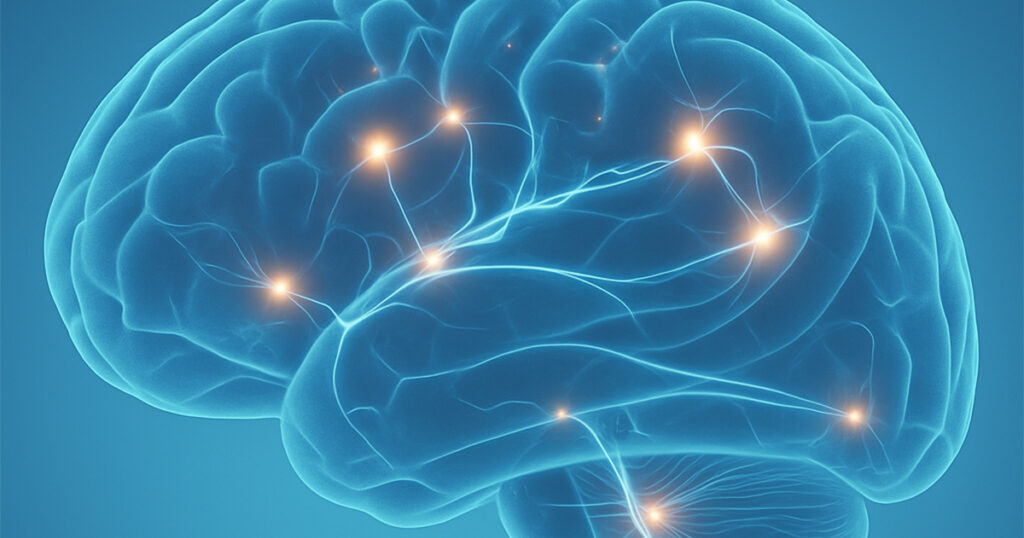
Understanding Parkinson’s Disease: More Than Just Tremors
Parkinson’s Disease is often recognized by its most visible symptom—tremors. Yet for those who live with it daily, the condition reaches far deeper. It is a chronic, progressive neurological disorder that affects movement, coordination, and sometimes even mood and cognition.
Inside the brain, dopamine-producing neurons in the substantia nigra begin to die off. Dopamine acts as a chemical messenger that allows signals to travel smoothly between nerve cells. When dopamine levels drop, muscles tighten, movements slow, and balance falters.
But beyond the biological explanation lies the personal journey—how people redefine themselves amid uncertainty. For many, living with Parkinson’s Disease means renegotiating independence, identity, and even hope.
Sue Goldie, a Harvard researcher and global-health leader, learned this lesson firsthand. Her diagnosis upended her sense of control, forcing her to face not only a medical condition but also society’s perception of weakness.
Why Sue Goldie Chose to Keep Her Diagnosis Private
When Sue Goldie first received her diagnosis, she reacted not with denial but with deliberation. She analyzed her situation like a scientist—gathering data, weighing risks, predicting outcomes. Yet emotion eventually outweighed logic.
She chose silence. For four years, only her closest circle knew she had Parkinson’s Disease. “I didn’t want my illness to become my identity,” she told The New York Times. She feared the subtle shift that happens when colleagues begin to speak more slowly to you, or when friends replace curiosity with concern.
The irony wasn’t lost on her: she had spent decades advocating for public-health transparency, yet now she hid her own health. But for Goldie, privacy was protection—protection of dignity, reputation, and normalcy.
Still, secrecy comes at a cost. What begins as self-preservation can morph into self-isolation. And in that isolation, even the strongest minds start to waver.
The Emotional Burden of Hiding a Diagnosis
Each morning, Sue rehearsed control. She practiced her lectures to minimize tremors, clasped her hands to steady them, and silently counted breaths to regulate her voice. To the outside world, she remained poised, but internally, every interaction required calculation.
“It’s like living two lives,” she later said. “One everyone sees, and another you’re constantly trying to conceal.”
This duality echoes across the Parkinson’s community. People describe the exhaustion of masking symptoms, the fear of being pitied, and the dread of losing professional credibility. Studies show that nearly half of individuals newly diagnosed with Parkinson’s Disease delay disclosure because of stigma.
The silence can deepen anxiety and depression—conditions already linked to changes in dopamine and serotonin pathways. Thus, hiding the Disease doesn’t just weigh on the mind; it can worsen the very symptoms one hopes to suppress.
The Turning Point: When Silence Became a Story
Sue Goldie’s breaking point arrived quietly. One day, after a lecture, a student approached to thank her for discussing vulnerability in leadership. The irony hit her—she was preaching openness while living in secrecy.
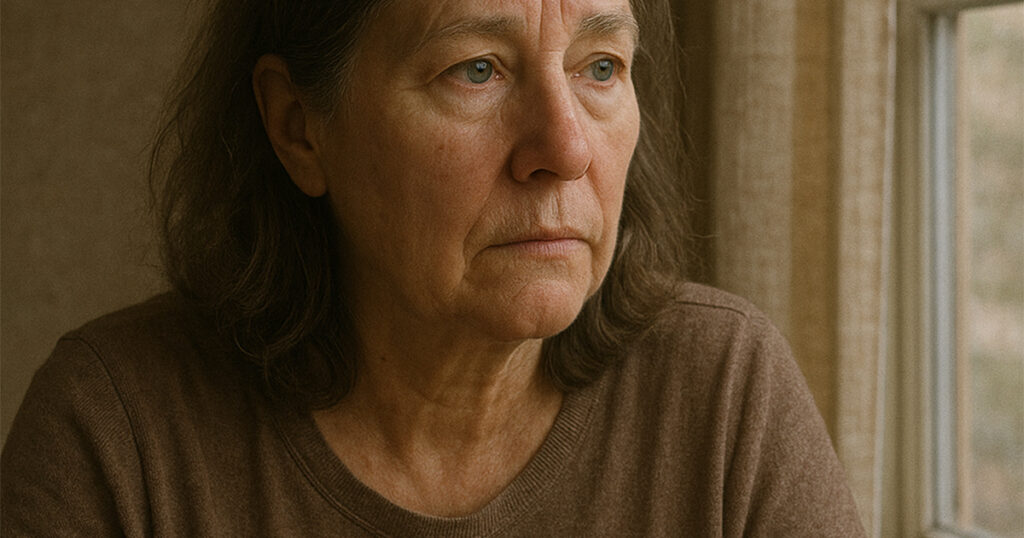
Soon after, she contacted a journalist and offered unprecedented access to her life. A New York Times reporter followed her through medical appointments, teaching sessions, and reflective moments at home. Cameras caught not just tremors but triumphs—the way she steadied a mug, the smile she offered a student, the resilience in her eyes.
By revealing her journey, Goldie transformed vulnerability into education. “If we don’t talk about Parkinson’s,” she said, “we let misunderstanding win.”
The Reporter Who Helped Tell Her Story
The journalist expected to chronicle decline; instead, he found evolution. Goldie’s narrative wasn’t tragedy—it was transformation. Through months of observation, he captured a woman balancing intellect and imperfection, learning to coexist with uncertainty.
When the story ran, responses flooded in. Readers with chronic illnesses wrote to say they finally felt seen. Some admitted they had never told their families about their own diagnoses until that day. One letter read, “Your honesty gave me permission to breathe again.”
Goldie realized that storytelling itself was medicine—an antidote to shame.
Life After the Reveal: Acceptance, Advocacy & Awareness
Coming forward didn’t cure Parkinson’s Disease, but it freed her from its emotional cage. She began speaking at conferences about patient empathy and scientific communication. She collaborated with neurologists to develop global guidelines for care.
Her advocacy grew from personal truth: “I can’t stop the tremors,” she said, “but I can shake up perceptions.”
Through her voice, she redefined what professionalism looks like with illness. No longer performing perfection, she modeled authenticity—a trait her students began to admire even more.
Rebuilding Daily Routines and Relationships
Adapting to life with Parkinson’s Disease meant embracing patience. Mornings became slower rituals: stretching, medication, deep breathing. She measured success not by speed but by steadiness.
Physical therapy helped her relearn posture; occupational therapy taught her new ways to type, write, and cook—exercise classes designed for Parkinson’s improved her balance and confidence.
Relationships also transformed. Friends who once kept a polite distance began showing up with humor and loyalty. “They stopped treating me as fragile,” she laughed. “Now they just tease me when I spill coffee.”
Vulnerability had built stronger connections than perfection ever did.
Breaking the Stigma Around Parkinson’s Disease
Stigma remains one of the most disabling aspects of Parkinson’s Disease. Many still associate it solely with old age or weakness. Yet statistics show more than 10 million people worldwide live with the condition, including athletes, artists, and executives.
Goldie’s openness challenged those assumptions. In interviews, she emphasized that intelligence and capability don’t vanish with a diagnosis. “My brain still works,” she quipped, “it just shakes things up a bit.”
Her humor helped disarm fear—a reminder that laughter can coexist with loss.
Misconceptions That Still Persist
- It’s just tremors. In reality, Parkinson’s involves rigidity, fatigue, speech difficulty, and mood changes.
- Only older people get it. Early-onset cases appear in people as young as 30.
- It always progresses the same way. Symptoms vary widely; no two journeys are identical.
- Treatment stops working. Modern therapies, including deep-brain stimulation and continuous dopamine infusions, extend quality of life for decades.
Education remains the bridge between ignorance and empathy.
The Science and Search for a Cure
Behind every personal story lies a global scientific effort. Researchers are decoding the genetic and environmental triggers of Parkinson’s Disease, exploring how misfolded alpha-synuclein proteins damage neurons.
Experimental treatments aim to regenerate lost cells using stem-cell transplants. Gene therapies seek to correct faulty pathways. Meanwhile, clinical trials are testing neuroprotective drugs to slow progression.
Sue Goldie, though not a neurologist, follows this research closely. She believes public trust in science grows when patients participate in it. “We are not just subjects,” she says. “We are partners in discovery.”
Hope today looks different from decades ago. While there’s still no cure, the pace of innovation—and the human stories driving it—offers genuine optimism.
How Technology and Support Networks Are Changing the Journey
Digital tools are transforming care. Smartwatches record tremor intensity; apps remind patients to take medication; telehealth allows specialists to monitor progress remotely. Artificial intelligence now predicts symptom fluctuations, giving doctors data-driven insight.
Equally vital are communities. Online forums connect people across continents. Local Parkinson’s walks raise awareness while funding research. Peer mentors coach newly diagnosed individuals through fear and frustration.
Goldie often volunteers in these spaces, mentoring others. She calls it her “second career”—one that pays in purpose, not paychecks.
The Role of Exercise and Mindfulness
Among all interventions, exercise remains a cornerstone of managing Parkinson’s Disease. Aerobic activity boosts dopamine production; stretching preserves flexibility. Boxing programs, dance classes, and tai chi sessions designed for Parkinson’s have shown measurable improvements in mobility and mood.
Sue embraces movement not as therapy but as celebration. “When I move,” she says, “I remember that I’m alive.”
She complements physical exercise with mindfulness practices—short meditations that quiet the mind when the body refuses to cooperate. “Parkinson’s teaches patience,” she explains. “You can’t rush your hands into stillness, but you can breathe your heart into calm.”
Family, Friendship & the Power of Empathy
Illness rarely affects only one person. Sue’s family had to learn a new rhythm, too. Her husband adapted household routines; her children adjusted to her slower pace. Yet their compassion deepened. Family dinners became moments of shared gratitude rather than rushed conversation.
Friends rallied, organizing walks for Parkinson’s Disease research and surprising her with handwritten notes when her speech tired her out. In return, she offered them the gift of perspective: the reminder that health is fragile and presence is priceless.
Empathy, she discovered, isn’t about fixing—it’s about witnessing. Simply having someone sit beside you during tremors can ease the fear they bring.
A Message of Strength and Hope for Others Living with Parkinson’s Disease
No two journeys look alike. Some days, Sue feels nearly symptom-free; others demand surrender. But through every fluctuation, she clings to intention.
“I may move slower,” she often says, “but I see more.”
Her story teaches that thriving with Parkinson’s Disease is less about conquering symptoms and more about cultivating grace—learning to live fully in a moving body.
She continues to mentor others, proving that sharing one’s truth can be an act of service. “We can’t control how long the road is,” she says, “but we can decide how brightly we walk it.”
Living with Grace: Turning Struggle into Strength
Illness, paradoxically, made Sue stronger. It stripped away illusions of control and left behind clarity. She now measures success not in accolades but in authenticity.
By stepping into the spotlight, she permitted others to follow. Thousands of readers, students, and colleagues saw that a diagnosis doesn’t end a life’s purpose—it can redefine it.
Her legacy is more than academic—it’s human. She embodies the lesson that courage is not the absence of fear but the decision to speak despite it.
Final Thoughts: From Silence to Strength
“From Secret to Spotlight” is not just one woman’s memoir—it’s a reflection of every hidden battle. It reminds us that illness does not erase brilliance, and that transparency can transform fear into fellowship.
Sue Goldie’s journey shows that awareness begins with honesty. When people living with Parkinson’s Disease share their experiences, they light paths for others stumbling in the dark.
In a world that prizes perfection, her story invites us to value authenticity. Because sometimes, the most powerful movement isn’t the one we see—it’s the quiet shaking that inspires others to stand tall.
For more information: These Doctors Have a Bold Plan to Eradicate Parkinson’s Disease—and It Starts in Your Home
AI Meets Parkinson’s: How New Grants Are Driving Breakthrough Research













Post Comment