Emerging Heart-Healthy Fats : That Are Positively Replacing Olive Oil in 2026

Why Consumers Are Looking Beyond Olive Oil in 2026
The Great Lipid Evolution: Why 2026 is the Year We Look Beyond Olive Oil
For decades, the dark glass bottle of Extra Virgin Olive Oil (EVOO) has been the undisputed monarch of the healthy kitchen. It was the “liquid gold” of the Mediterranean, backed by the landmark PREDIMED study and championed by every cardiologist from London to Los Angeles. To suggest that anything could rival it felt like nutritional heresy.
But as we move through 2026, the conversation is shifting. We aren’t seeing a “dethroning” of olive oil, but rather a long-overdue expansion of the royal court. A new category of Emerging Heart-Healthy Fats is moving from the fringes of health food stores into the mainstream pantry.
The drivers behind this shift aren’t just trendy marketing. They are rooted in a more sophisticated understanding of smoke points, the rise of “precision nutrition,” and a global demand for sustainability that olive groves—increasingly stressed by climate change—can no longer meet alone. Today, we are discovering that the heart doesn’t just need one type of fat; it thrives on a diverse lipid profile that incorporates ancestral wisdom and modern biotechnology.
The Limits of the Mediterranean Monoculture
To understand why Emerging Heart-Healthy Fats are gaining ground, we have to look at the limitations of our old favorite. Olive oil is spectacular for low-to-medium heat and raw applications. However, its smoke point—the temperature at which the oil begins to burn and create acrid, pro-inflammatory compounds—is relatively low.
As home cooking has evolved to include high-heat techniques like air-frying, wok-searing, and rapid roasting, olive oil has often been used in ways that actually negate its benefits. Furthermore, while olive oil is rich in monounsaturated fats (MUFAs), it is relatively low in the specific long-chain Omega-3s and rarer Omega-7s that modern research now identifies as critical for arterial elasticity and systemic inflammation.
In 2026, the “one-size-fits-all” approach to dietary fat is dead. We are now in the era of the “Functional Fat Pantry.”
1. Avocado Oil: The High-Heat Powerhouse
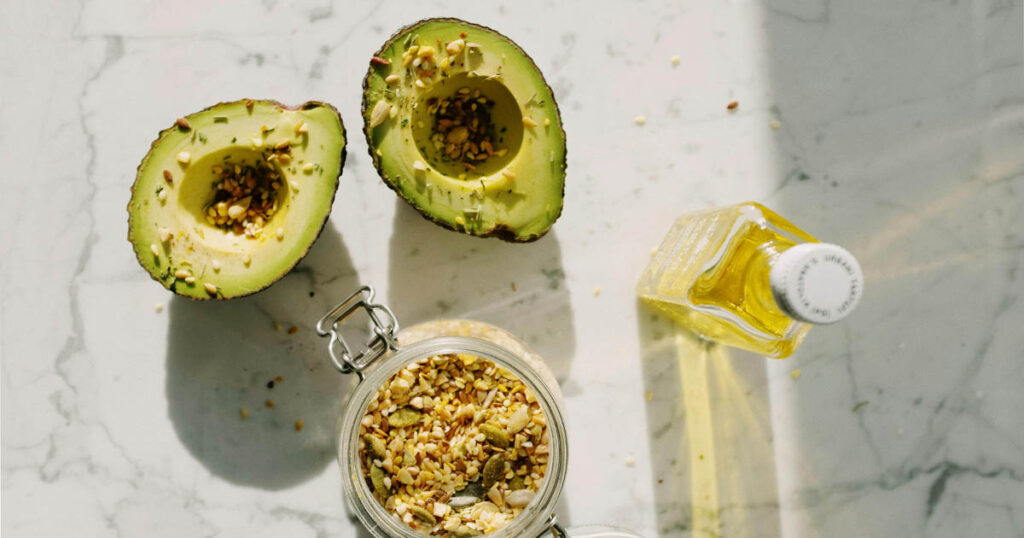
If olive oil has a direct competitor for the title of “pantry staple,” it is avocado oil. In the early 2020s, it was a luxury item; today, it is a foundational component of the Emerging Heart-Healthy Fats movement.
The primary appeal of avocado oil is its physics. With a smoke point of up to 520°F (270°C), it allows for high-heat cooking without the risk of lipid oxidation. When you sear a steak or roast vegetables at high temperatures in olive oil, you risk creating polar compounds that can actually irritate the lining of the heart. Avocado oil solves this.
Nutritionally, it mimics olive oil’s high MUFA content but adds a unique benefit: it significantly enhances the absorption of carotenoids (like beta-carotene and lutein) from the vegetables you’re cooking. It’s not just a fat; it’s a delivery vehicle for heart-protective antioxidants.
2. Algae-Derived Omega Oils: The Sustainable Frontier

Perhaps the most significant of all Emerging Heart-Healthy Fats in 2026 is algae oil. For years, we were told to eat salmon for EPA and DHA (the “holy grail” of heart fats). But the ocean’s fish stocks are dwindling, and heavy metal contamination is a rising concern.
The secret the industry finally admitted? Fish don’t make Omega-3s. They get them from eating algae.
By going straight to the source, algae-derived oils provide a vegan, carbon-neutral, and highly concentrated dose of heart-supportive lipids. These oils are now being formulated not just as supplements, but as culinary finishing oils. They represent a major leap in “future-proofing” our cardiovascular health without destroying marine ecosystems. For the consumer concerned about the planet as much as their pulse, algae oil is the clear winner.
3. Walnut and Macadamia Oils: The Brain-Heart Connection

We often talk about heart health in a vacuum, but the vascular system that feeds the heart also feeds the brain. This is where nut-based Emerging Heart-Healthy Fats have carved out a niche.
Walnut oil is one of the few plant oils rich in Alpha-Linolenic Acid (ALA). While the conversion of ALA to DHA in the body is modest, studies in 2025 and 2026 have highlighted walnut oil’s ability to improve endothelial function—the ability of your blood vessels to dilate and contract.
Macadamia nut oil, on the other hand, is a rare source of Palmitoleic acid (an Omega-7). This “hidden” fat is being studied for its ability to increase insulin sensitivity. Since metabolic health and heart health are inextricably linked, macadamia oil has become a favorite for those managing “Metabolic Syndrome,” providing a buttery flavor that makes heart-healthy eating feel less like a chore and more like a gourmet experience.
4. Sea Buckthorn: The Omega-7 Dark Horse
If you had asked a nutritionist about Sea Buckthorn a decade ago, they might have mentioned skincare. In 2026, it is recognized as a potent internal tonic. It is a flagship among Emerging Heart-Healthy Fats because of its sheer density of bioactive compounds.
Sea buckthorn oil is a “whole-fruit” oil, containing a complex matrix of vitamins E and K, phytosterols, and the aforementioned Omega-7s. In the context of cardiovascular wellness, Omega-7s act as “lipokines”—molecules that signal the body to stop storing fat and start burning it, while simultaneously calming inflammation in the arteries. Because of its intense flavor and orange hue (thanks to high carotenoids), it’s used more like a functional “shot” or a vivid salad accent than a frying medium.
5. Black Seed Oil (Nigella Sativa): Ancestral Wisdom Validated
One of the most fascinating trends of 2026 is the return to “ancient” Emerging Heart-Healthy Fats. Black Seed Oil, famously found in the tomb of Tutankhamun, has moved from the apothecary’s shelf to the cardiologist’s radar.
The star of black seed oil is thymoquinone. This compound is a powerhouse for reducing oxidative stress. Modern trials have shown that a small daily dose can help modulate blood pressure and improve the LDL-to-HDL cholesterol ratio. It’s a perfect example of how the “new” fats of 2026 are often just very old fats that we finally have the technology to validate.
The Science of “Oil Rotation”
The most significant change in 2026 isn’t just which oils we use, but how we use them. The “Olive Oil Only” dogma has been replaced by the “Rotation Strategy.”
Think of it like a workout. You wouldn’t just do bicep curls every day and expect total body fitness. Similarly, relying solely on olive oil leaves gaps in your nutritional profile. By rotating through different Emerging Heart-Healthy Fats, you ensure your body receives:
- Diverse Antioxidants: From the polyphenols in olive oil to the thymoquinone in black seed oil.
- Optimal Fatty Acid Ratios: Balancing the MUFAs of avocado with the Omega-3s of algae and walnuts.
- Heat Integrity: Protecting your food from carcinogenic oxidation by choosing the right smoke point for the job.
Sustainability: The Hidden Heart Metric
We cannot discuss Emerging Heart-Healthy Fats without addressing the environment. In 2026, “Health” includes the health of the planet. Olive production has faced devastating “heat domes” in Spain and Greece over the last few years, leading to skyrocketing prices and decreased quality.
This has accelerated the search for more resilient sources. Avocado trees, while water-intensive, are being managed with better irrigation tech. Algae can be grown in closed-loop systems on land that isn’t suitable for agriculture. By diversifying our fat intake, we take the pressure off any one ecosystem, ensuring that “heart-healthy” doesn’t come at the cost of “Earth-healthy.”
Personalized Nutrition: Your DNA and Your Fat
The rise of at-home genetic testing has also bolstered the popularity of Emerging Heart-Healthy Fats. We now know that some people (those with certain FADS1 or FADS2 gene variants) are “poor converters” of plant-based omegas. For these individuals, a standard olive oil diet might leave them deficient in critical long-chain fats.
These people are now being directed toward algae oils or specific nut oils that bypass these genetic bottlenecks. In 2026, your “pantry” is increasingly dictated by your “bloodwork.”
How to Build Your 2026 Heart-Healthy Pantry
If you are looking to integrate these Emerging Heart-Healthy Fats into your life, don’t throw away your olive oil. Instead, curate a “Lipid Library”:
- The Workhorse: Avocado Oil. Keep it by the stove for all searing, roasting, and sautéing.
- The Gold Standard: Extra Virgin Olive Oil. Keep it in a cool, dark place. Use it for low-heat pasta sauces and dipping sourdough.
- The Nutrient Booster: Algae or Walnut Oil. Keep these in the fridge (they are delicate!). Drizzle them over finished dishes like a liquid supplement.
- The Functional Finisher: Black Seed or Sea Buckthorn. Treat these as medicinal accents—a teaspoon in a morning smoothie or over a savory yogurt bowl.
Conclusion: A Multi-Faceted Future
The narrative of heart health has matured. We have moved past the “fat is bad” era of the 1990s and the “only olive oil is good” era of the 2010s. In 2026, we recognize that the human heart is a complex engine that requires a variety of high-quality fuels to run at peak efficiency.
Emerging Heart-Healthy Fats represent the best of this new era. They offer us the chance to eat more flavorfully, cook more safely, and support our bodies with a precision that was impossible just a decade ago.
The heart loves variety. It loves resilience. And as we embrace these new oils, we aren’t just changing our recipes—we are changing the way we nourish our future.
The next time you reach for a bottle of oil, ask yourself: What does my heart need today? Is it the high-heat protection of avocado? The deep-sea omegas of algae? Or the ancestral protection of black seed? In 2026, the choice is yours, and the options have never been better.
Also read for more information : 17 Incredibly Heart-Healthy Foods
Read next on Lifenurt : Hidden Sugar Shockers: 10 ‘Healthy’ Foods That Spike Insulin Instantly
Digital Fatigue Metabolism: 7 Ways Screen Overload Quietly Slows Weight Loss












Post Comment