Insects, Parasites, and Heart Failure: The Full Story of Chagas
Why Doctors Fear the Silent Spread of Chagas Disease Nationwide
Chagas disease, spread by the kissing bug, is now found in 32 U.S. states. Learn about its symptoms, risks, and why the CDC warns it may be endemic. Introduction: A Silent Parasite Creeping Into the U.S.
When most people think of deadly diseases, they picture global pandemics, highly contagious viruses, or foodborne illnesses splashed across the news. Few would guess that one of the most overlooked health threats in the United States comes from a tiny insect known as the “kissing bug.” This small, nighttime biting parasite carrier has quietly spread across 32 states, infecting thousands of people without their knowledge. The disease that transmits Chagas disease may sound like an obscure condition confined to Latin America. But according to the CDC and leading infectious disease experts, Chagas has already taken hold in the U.S. in ways far more alarming than most Americans realize.
Unlike diseases that spark sudden outbreaks, Chagas creeps silently. Most who carry it don’t know until years later, when symptoms escalate from mild fever to catastrophic heart failure. Today, experts estimate over 300,000 people in the U.S. may be living with the disease, with only a tiny fraction aware of it. Even more concerning, the CDC has warned that Chagas should be considered “endemic” in the United States, meaning it is no longer just an imported illness, but one with a constant, growing presence here at home.
This is the full story of Chagas disease, from how it spreads, to the states most affected, to the long-term risks that make it a ticking health time bomb.
What Exactly Is Chagas Disease?
Chagas disease is caused by a parasite called Trypanosoma cruzi (T. cruzi), a microscopic organism transmitted primarily through the bite of triatomine insects, more commonly known as kissing bugs. These insects feed on blood and often bite humans on the face, hence their nickname. The real danger, however, comes not from the bite itself but from what happens afterward.
Here’s how infection occurs:
- A kissing bug bites, typically around the mouth or eyes, while its victim sleeps.
- After feeding, the bug defecates on the skin near the bite.
- If the person scratches or rubs the itchy spot, the parasite-laden feces enter the body through the wound, mucous membranes, or even the eyes.
- From there, the parasite travels through the bloodstream, beginning an infection that can last for decades.
This unusual method of transmission makes Chagas disease tricky to prevent and even trickier to detect. Unlike mosquito-borne illnesses like malaria, which often trigger acute symptoms quickly, Chagas infection can linger unnoticed for years.
The Kissing Bug: America’s Unlikely Vector
The kissing bug (scientifically known as a triatomine insect) is native to the Americas. For decades, it was primarily a concern in rural areas of Central and South America, where mud-brick housing made easy hiding spots for the insects. But as climate patterns shift and populations move, the insects have established themselves well beyond their historic ranges.
In the U.S., kissing bugs have been confirmed in 32 states, stretching far beyond the southern border regions where they were once most common. Warm, humid environments make them thrive, but even temperate states have now reported sightings.
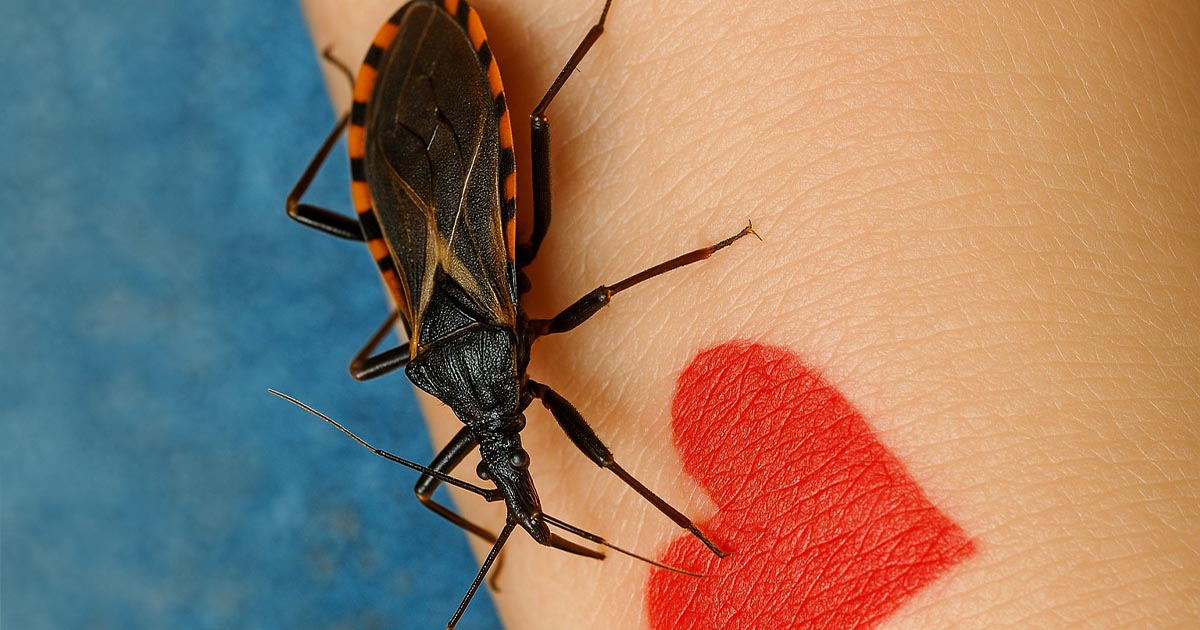
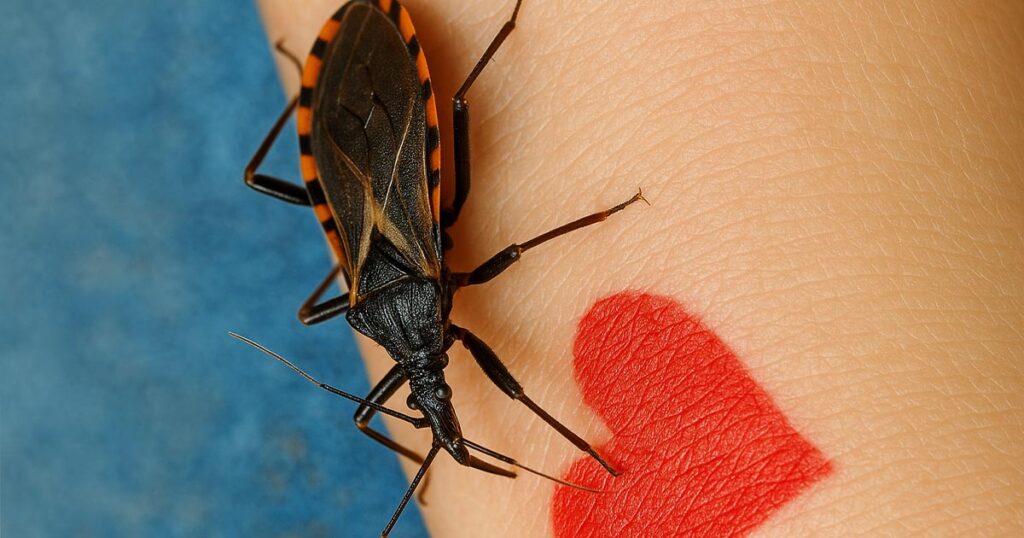
The bug itself looks harmless at first glance, a flat, dark insect with orange or red markings along its edges. But behind its unassuming appearance lies a vector capable of transmitting a disease with devastating consequences.
The Hidden Numbers: How Many Are Infected?
According to UCLA Health and CDC estimates, more than 300,000 people in the United States could already be infected with Chagas disease. Alarmingly, less than 2% of them know it.
Some of the most startling statistics include:
- Los Angeles County, California: Approximately 45,000 people may be infected with Chagas disease.
- Texas, Arizona, and Louisiana: High numbers of confirmed insect presence and rising infection cases.
- Nationwide: Hundreds of thousands of undiagnosed infections, making Chagas one of the most under-recognized public health concerns in the U.S.
Why so many undiagnosed cases? The answer lies in how silently the parasite operates. Symptoms may not appear until years after infection, and when they do, they often mimic common conditions, such as fatigue, headaches, or stomach issues. By the time more severe complications develop, the disease may already have damaged the heart or digestive system.
Symptoms: From Mild Fatigue to Heart Failure
Chagas disease has two major phases: acute and chronic.
Acute Symptoms (first weeks to months after infection):
- Fever
- Fatigue
- Body aches
- Loss of appetite
- Diarrhea or vomiting
- Swelling near the bite site
One tell-tale symptom is severe swelling of the eyelid (known as Romaña’s sign), considered a hallmark of acute Chagas infection.
Chronic Symptoms (years or decades later):
- Heart palpitations
- Enlarged heart (cardiomegaly)
- Heart rhythm abnormalities
- Heart failure or sudden cardiac arrest
- Enlarged esophagus or colon, leading to digestive problems
Between 20% and 30% of those infected eventually develop these chronic complications. In many cases, the first “symptom” that alerts doctors to Chagas is a life-threatening heart event.
The States Most Affected
While the kissing bug has been documented in 32 states, human Chagas infections have so far been confirmed in eight key states:
- California
- Texas
- Louisiana
- Arizona
- Mississippi
- Missouri
- Arkansas
- Tennessee
Meanwhile, cases in animals, including dogs, raccoons, and opossums, have been identified in even more states, such as New Mexico, Oklahoma, Nebraska, Alabama, Georgia, Florida, South Carolina, North Carolina, Kentucky, Virginia, and Maryland.
The spread in animal populations signals that the parasite is establishing reservoirs in local ecosystems, raising the likelihood of more human infections.
Why the CDC Now Considers It “Endemic”
The CDC has recommended that Chagas disease be classified as “endemic” in the U.S. In public health terms, “endemic” refers to a disease that has a constant presence in a specific area.
Until recently, most U.S. Chagas cases were thought to be imported from Latin America. However, mounting evidence suggests that domestic transmission is occurring, particularly in southern states. With more than 300,000 infections and confirmed bug populations across much of the country, Chagas can no longer be dismissed as a foreign disease.
This shift matters because it changes how health officials prioritize prevention, testing, and treatment. If Chagas is endemic, then local doctors, hospitals, and policymakers must prepare for long-term management, not just rare isolated cases.
The Challenge of Diagnosis
One of the greatest dangers of Chagas disease is its invisibility.
- Few people are tested: Routine screenings for Chagas are not common in the U.S.
- Symptoms mimic other conditions: Fatigue, digestive issues, or heart palpitations can be mistaken for more common ailments.
- Testing isn’t straightforward: Accurate diagnosis often requires specialized blood tests that aren’t widely available.
For immigrants from Latin America, where Chagas has long been a health concern, awareness may be higher, but many still face barriers to healthcare access. Meanwhile, most U.S.-born residents have never even heard of the kissing bug, let alone its risks.
Treatment: What Options Exist?
Currently, two main drugs can treat Chagas disease: benznidazole and nifurtimox. Both are anti-parasitic medications effective at clearing the infection if given early. However:
- They work best in the acute phase (shortly after infection).
- They are less effective once chronic complications (like heart damage) have developed.
- They can cause significant side effects, making patient monitoring essential.
For chronic Chagas, treatment focuses on managing symptoms, particularly cardiac care for patients who develop arrhythmias, heart enlargement, or heart failure. In advanced cases, pacemakers, defibrillators, or even heart transplants may be required.
Prevention: Protecting Against the Kissing Bug
Because there is no vaccine for Chagas disease, prevention primarily focuses on limiting exposure to kissing bugs.
Practical prevention strategies include:
- Sealing cracks and gaps in walls, windows, and roofs to prevent insects from entering.
- Keeping outdoor lights to a minimum, as they attract bugs.
- Avoid sleeping in structures where bugs are common, such as poorly sealed cabins or sheds.
- Using insect screens and bed nets in areas with higher bug populations.
- Regularly checking pets, as dogs can serve as hosts and bring the insects indoors.
Public health awareness campaigns are critical, since many people in at-risk regions don’t realize the bugs are present in their states.
Why Chagas Is So Dangerous: The Time Bomb Effect
Unlike diseases that announce themselves quickly, Chagas plays the long game. Someone bitten in their teens may not develop heart problems until their 40s or 50s. By then, the parasite may have irreversibly damaged their heart muscle.
This prolonged incubation makes it both difficult to detect and devastating in its eventual impact. It also explains why experts call Chagas a “silent killer.”
The time bomb effect is why the CDC’s warnings are so urgent. Without awareness, testing, and early intervention, thousands may face preventable heart failure in the coming decades.
Public Health Implications: A Growing American Epidemic?
With climate change, migration, and increased awareness, experts expect Chagas cases to continue rising in the U.S. For hospitals already dealing with heart disease, the nation’s leading cause of death, an influx of Chagas-related cardiac patients could add enormous strain.
Additionally, blood banks must remain vigilant. The parasite can also spread through blood transfusions, organ transplants, and from mother to child during pregnancy. This makes proper screening protocols critical.
If unaddressed, Chagas could quietly become a significant public health burden in the U.S., on par with better-known chronic illnesses.
Also read: https://www.mayoclinic.org/diseases-conditions/chagas-disease/symptoms-causes/syc-20356212
Conclusion: Shining a Light on a Hidden Threat
The story of Chagas disease in the U.S. is not just about an insect bite; it’s about awareness, prevention, and timely action. For too long, the disease was dismissed as a concern exclusive to Latin America. Today, with the CDC recognizing it as endemic, it’s clear that the U.S. must confront this reality.
The challenge lies in overcoming invisibility. Chagas doesn’t make headlines like pandemics do, yet its impact can be just as severe. For the hundreds of thousands already infected and the millions at risk, education and early detection are the best defenses.
The kissing bug may be minor, but the disease it carries has the power to reshape how America thinks about infectious disease. And unless more light is shed on this hidden epidemic, the cost will be measured in damaged hearts and lost lives.













Post Comment