Chagas Disease Creeps Into California: What You Need to Know
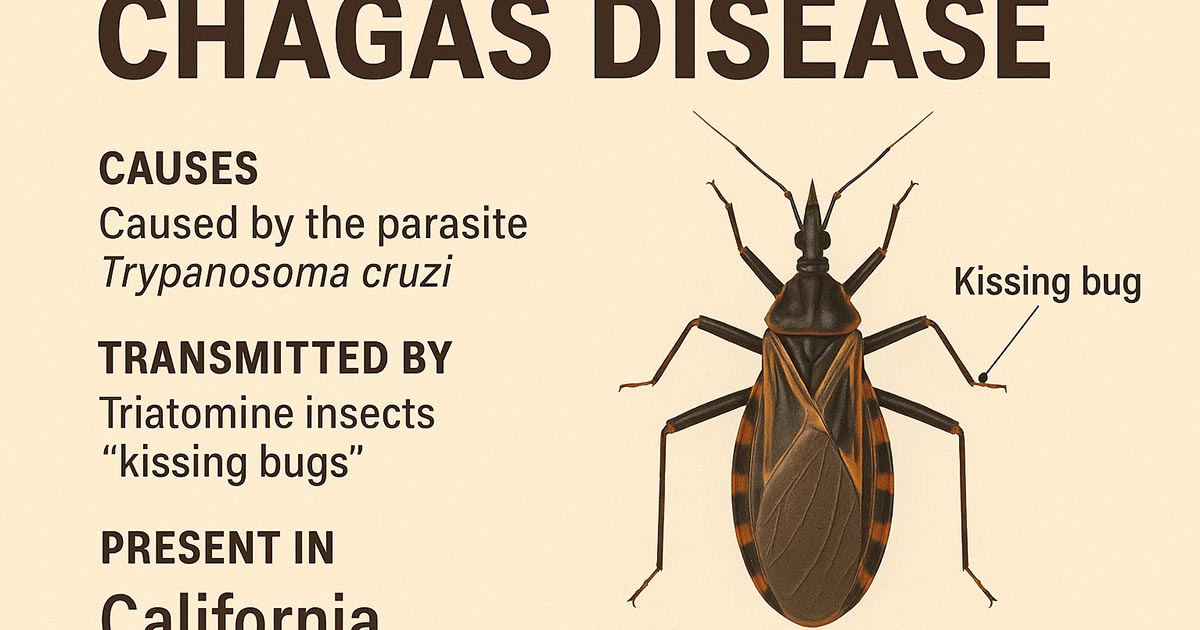
Chagas Disease: The Deadly Secret Lurking in California’s Backyards
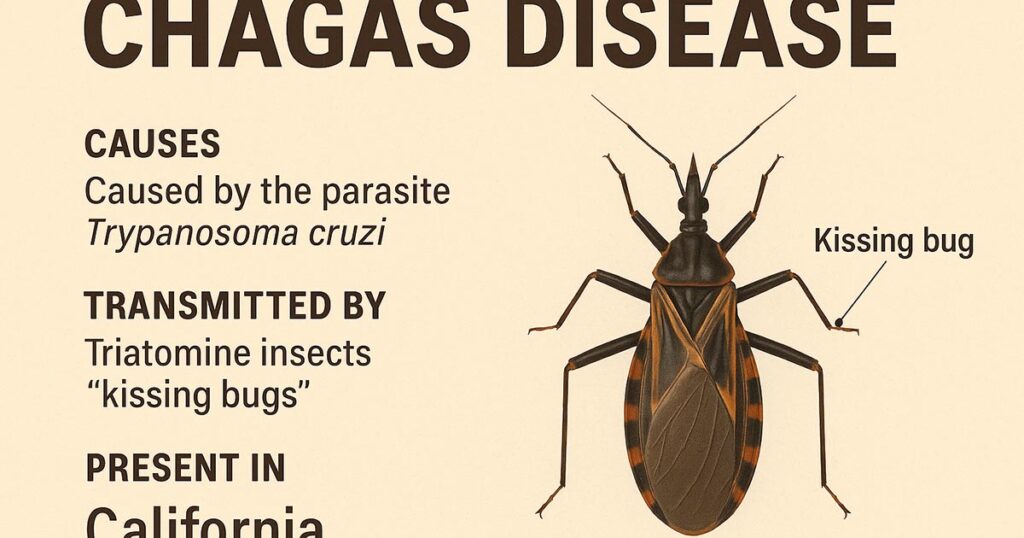
Kissing bugs are spreading Chagas disease in California. Discover symptoms, risks, and how to protect yourself and your family.
Introduction: A Hidden Parasite Finds New Ground
Chagas disease has been described as a “silent killer” lurking mainly in parts of Latin America. Caused by a tiny parasite known as Trypanosoma cruzi, the illness spreads through the bite of an insect with a deceptively gentle nickname, the “kissing bug.”
Once thought to be a distant concern, the disease has now firmly arrived in the United States, with California becoming one of the most vulnerable states. While many Californians have never even heard of Chagas disease, health experts estimate tens of thousands may already be infected, and the majority don’t even know it.
So how did this parasite creep into the Golden State? What risks do kissing bugs pose to California residents, and what steps can be taken to stay safe? Let’s dive deep into the science, history, and public health concerns surrounding this unsettling disease.
What Exactly Is Chagas Disease?
Chagas disease is a parasitic illness caused by Trypanosoma cruzi. It primarily spreads when infected triatomine insects, commonly called “kissing bugs,” bite humans. Unlike mosquitoes, which transmit parasites through their saliva, kissing bugs carry T. cruzi in their feces. When they feed on a person’s blood, usually around the face, they often defecate near the wound. If the feces are accidentally rubbed into the bite site, eyes, or mouth, the parasite can enter the body.
This transmission method is both sneaky and effective. Once inside, the parasite multiplies, travels through the bloodstream, and may eventually invade major organs, particularly the heart and digestive system.
The disease has two main phases:
- Acute phase (weeks to months): Often goes unnoticed, but may cause fever, swelling near the eye (Romaña’s sign), rash, or fatigue.
- Chronic phase (years to decades): About 20–40% of infected people develop severe complications, including heart disease, heart failure, or digestive issues such as an enlarged esophagus or colon.
Because the early stage is subtle, people can carry the parasite for decades without symptoms, only to face sudden, life-threatening complications later in life.
The Kissing Bug: California’s New Unwanted Guest
Triatomine insects are found across the Americas, but California is home to multiple species, including Triatoma protracta, Triatoma rubida, and Triatoma sanguisuga. Of these, T. protracta is the most common and has been recorded across the state, from rural deserts to woodland foothills.
Key Facts About Kissing Bugs in California:
- They are most active in warmer months (spring through early fall).
- They hide in cracks of homes, barns, and woodpiles, as well as near animal nests.
- Wildlife such as raccoons, skunks, and opossums act as natural reservoirs of T. cruzi.
- Infection rates among kissing bugs in California are as high as 55% in certain areas, meaning that over half of them may carry the parasite.
Unlike mosquitoes, kissing bugs don’t swarm in cities. They are more often encountered in rural or semi-rural environments. But as California’s population expands into wildlife habitats, human-bug encounters are becoming more frequent.
How Widespread Is Chagas Disease in California?
The numbers may surprise you. While Chagas disease has traditionally been associated with countries like Brazil, Mexico, and Bolivia, California has quietly become one of the U.S. hotspots for the illness.
Estimates and Facts:
- Between 70,000 and 100,000 people in California may already be living with Chagas disease.
- Most of these infections have historically been linked to travel or migration from Latin America.
- However, locally acquired cases are now confirmed, meaning some Californians contracted the disease without leaving the state.
- The Bay Area, Los Angeles, and San Diego have documented both imported and local cases.
The troubling reality is that most people with Chagas disease are undiagnosed. A person could live decades without realizing they’re infected until heart failure or arrhythmia suddenly appears.
Symptoms to Watch For
Because the disease has two phases, symptoms vary.
Acute Phase Symptoms (Early Infection):
- Fever and fatigue
- Swelling at the bite site or one eyelid
- Headache and muscle aches
- Rash
- Loss of appetite
Chronic Phase Symptoms (Years Later):
- Irregular heartbeat
- Shortness of breath
- Swelling of the legs or abdomen
- Difficulty swallowing or chronic constipation
- Heart failure or sudden cardiac arrest
These delayed complications are what make Chagas disease so dangerous; it can remain invisible for years and then strike when it’s too late for easy treatment.
Why California Is at Risk
Several factors explain why California is particularly vulnerable to kissing bug disease:
- Climate: California’s warm and dry climate provides an ideal habitat for kissing bugs.
- Wildlife reservoirs: Large populations of raccoons, skunks, coyotes, and other mammals carry the parasite, fueling the transmission cycle.
- Housing conditions in rural areas: Cracks in walls, outdoor sheds, and wood storage provide hiding spots for bugs.
- Migration and travel: California’s close ties to Latin America mean higher numbers of imported cases, which can complicate detection.
- Lack of awareness: Many doctors and residents are unfamiliar with the disease, leading to underdiagnosis.
Chagas Disease vs. Other Vector-Borne Threats
Californians are no strangers to insect-borne illnesses. West Nile virus, Lyme disease, and Zika have all made headlines in the past two decades. But Chagas disease differs in several ways:
- It is chronic and lifelong if untreated.
- It often leads to severe cardiac complications, not just mild symptoms.
- It has low public awareness, so many at-risk individuals don’t get tested.
This combination makes Chagas uniquely dangerous.
How Chagas Disease Is Diagnosed
Testing is relatively straightforward but not widely practiced. Blood tests can detect antibodies to T. cruzi. Because no single test is perfectly accurate, the CDC recommends at least two different antibody tests to confirm infection.
In California, testing is available through specialized labs; however, not all healthcare providers are aware of the need to order it, especially for patients who don’t report travel to Latin America. This is one of the most significant barriers to identifying local cases.
Treatment Options
Two drugs are currently approved for treating Chagas disease:
- Benznidazole
- Nifurtimox
Both are antiparasitic medications that work best in the early stages of infection. They can eliminate or reduce the parasite load, slowing or preventing progression to chronic disease.
However:
- They are less effective once organ damage has set in.
- Side effects can be significant, requiring close monitoring.
- Access can sometimes be limited, though the U.S. Food and Drug Administration has approved both drugs for use.
For people already in the chronic phase, treatment focuses on managing complications such as arrhythmias, pacemaker implantation, or heart transplantation in severe cases.
Prevention Tips for Californians
While the overall risk of acquiring Chagas disease in California remains relatively low compared to Latin America, prevention is still crucial.
Home Protection
- Seal cracks and gaps in walls, doors, and windows.
- Install and maintain window screens.
- Keep outdoor lights away from sleeping areas since bugs are attracted to light.
Outdoor Safety
- Avoid sleeping in areas where kissing bugs are common without protective nets.
- Store firewood away from the home and clear brush where bugs hide.
- Keep chicken coops, dog kennels, and other animal sleeping areas clean.
Pet Awareness
- Dogs and cats can also be infected and act as reservoirs for the parasite.
- Have pets tested if they exhibit symptoms of heart disease.
General Awareness
- Educate your family about what kissing bugs look like.
- If you find one, don’t crush it with your bare hands. Please place it in a container and contact local vector control authorities.
Why Chagas Disease Matters Beyond Health
Chagas disease is not just a medical concern; it also carries significant social and economic consequences.
- Healthcare costs: Advanced cardiac treatment for chronic Chagas patients can run into hundreds of thousands of dollars.
- Workforce impact: Chronic illness can reduce productivity and shorten life expectancy.
- Public health systems: A rise in undiagnosed cases can strain California’s healthcare infrastructure.
Raising awareness now could prevent a much larger crisis later.
Public Health Response in California
So far, California health agencies have focused on awareness campaigns and surveillance. However, experts argue that more needs to be done, including:
- Routine screening for at-risk populations.
- Educating healthcare providers to recognize symptoms.
- Improved vector control in rural communities.
- Funding for research into vaccines or better treatments.
The CDC has also classified Chagas as a neglected tropical disease in the U.S., highlighting the urgent need for more attention.
Personal Stories: Chagas in California
Many of the documented cases in California come from individuals who lived everyday, healthy lives until sudden heart problems revealed an underlying infection. For example:
- A Bay Area man in his 50s collapsed from heart failure, only to later discover Chagas had been silently damaging his heart for decades.
- In Southern California, a woman undergoing routine blood donation was informed that her sample tested positive for T. cruzi. She had never left the U.S.
These stories highlight the hidden nature of the disease and the importance of testing, even in populations not considered “at risk.”
Looking Ahead: The Future of Chagas in California
Chagas disease isn’t likely to disappear anytime soon. With warming temperatures, expanding human populations encroaching on wild habitats, and persistent underdiagnosis, the parasite is expected to continue spreading slowly in California and other southern U.S. states.
The key question is whether public health agencies, doctors, and residents will recognize the threat in time to prevent a surge of undiagnosed cases leading to heart disease decades later.
Reference : https://www.pharmacytimes.com/view/what-pharmacists-should-know-as-chagas-disease-circulates-in-the-us
Conclusion: Stay Aware, Stay Safe
Chagas disease may not be on every Californian’s radar, but it should be. With tens of thousands potentially infected, local transmission confirmed, and kissing bugs widely present, this is no longer just a foreign concern.
The good news? Awareness and early testing make a huge difference. By understanding the risks, taking preventive measures, and pushing for better healthcare screening, Californians can reduce the impact of this stealthy parasite.
So the next time you hear the words “kissing bug,” remember: it’s more than just an odd insect. It’s a public health challenge creeping into California, one that requires knowledge, vigilance, and action.
Also read : https://lifenurt.com/post.php?post=3336&action=edit













Post Comment