Breaking: Major Blood Pressure_1 Medication Recall Hits the U.S. — Here’s What You Need to Know
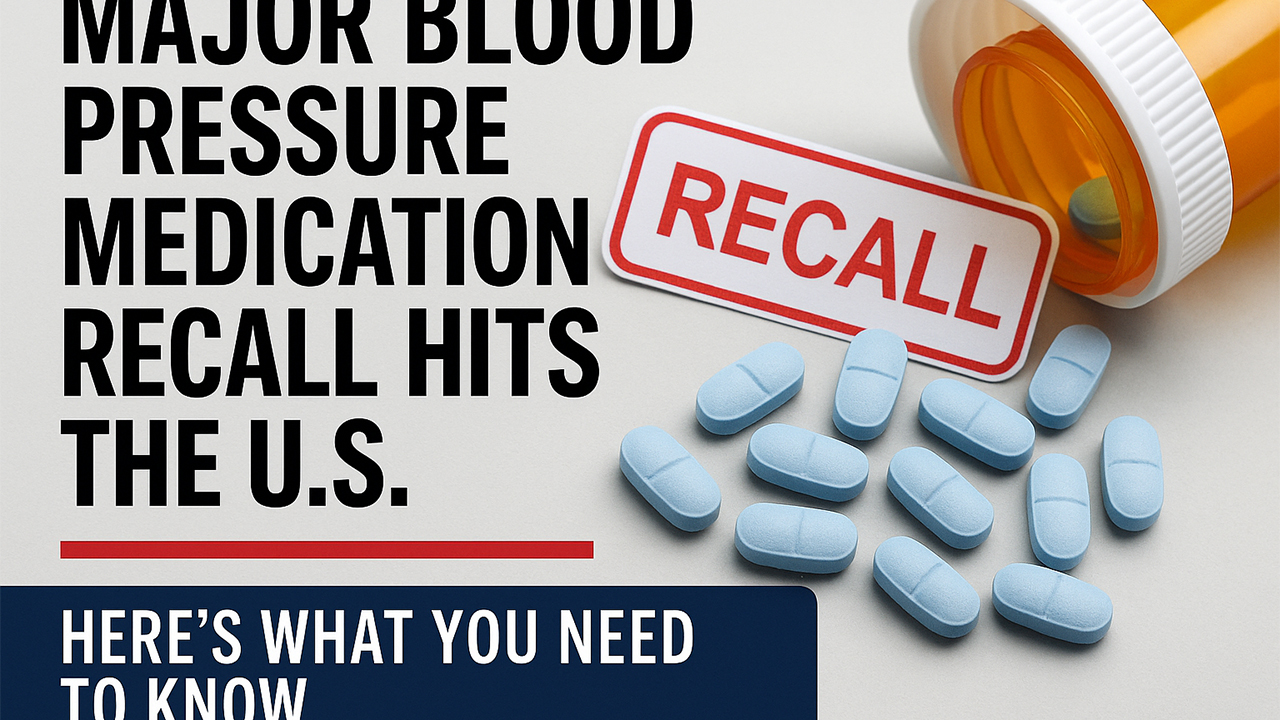
Breaking news: The FDA recalls over 580,000 bottles of blood pressure medication due to a cancer-causing chemical. Learn key facts, risks, and patient advice.
Introduction — The FDA Recall That Shocked America
In late October 2025, the U.S. Food and Drug Administration (FDA) announced a massive recall affecting over 580,000 bottles of blood pressure medication. The reason? A dangerous cancer-causing impurity was found during routine quality testing. This revelation has sent shockwaves through the medical community and left millions of patients asking one urgent question: “Am I at risk?”
Blood pressure medication, used daily by tens of millions of Americans, is among the most prescribed drug categories in the country. When safety concerns arise in such a widely used treatment, the effects ripple far beyond hospitals and pharmacies. Patients depend on these pills to manage life-threatening conditions like hypertension and heart disease. Suddenly, the very medication meant to protect them is under suspicion.
Let’s explore what happened, which drugs are involved, and what every patient should do next.
Understanding the Chemical Contamination
What Triggered the Urgent Recall
According to the FDA, routine laboratory testing detected the presence of N-nitroso-quinalapril, a nitrosamine impurity known to increase cancer risk with long-term exposure. Nitrosamines can form during manufacturing or storage, particularly when certain solvents or reactants are misused. These impurities are the same types that were discovered in contaminated batches of valsartan and losartan several years ago.
The discovery immediately triggered a Class II recall, which means the product may cause temporary or medically reversible adverse effects — or, in rare cases, a serious health threat with prolonged use.
How Many Bottles Were Affected
The recall includes over 580,000 bottles of medication sold under various generic labels nationwide, manufactured between June 2023 and May 2025 by multiple pharmaceutical companies. Retailers, including major pharmacy chains, began pulling the affected lots within 24 hours of the FDA announcement.
Why Nitrosamine Contamination Happens
Pharmaceutical experts indicate that nitrosamines are not intentionally added to medications but can form during chemical reactions between solvents and active ingredients, especially in high temperatures or humidity. Poor storage and outdated manufacturing processes can heighten the risk of contamination.
In short, it’s not just a single company’s problem — it’s a systemic issue in the global drug supply chain, especially when production is outsourced to multiple sites.
Which Blood Pressure Medications Are Impacted

Brand Names and Lot Numbers to Watch
The FDA has recalled several generic versions of quinapril and quinapril HCl/hydrochlorothiazide combinations from the following companies:
– Lupin Pharmaceuticals
– Aurobindo Pharma USA
– Solco Healthcare
– Accord Healthcare
Specific lot numbers can be found on the FDA’s official recall page.Patients can match the lot number on their pill bottle label to confirm whether their pills are affected.
How to Identify If Your Medicine Is Part of the Recall
- Check the lot number printed on your prescription bottle or packaging.
- Compare it with the FDA’s published list or your pharmacy’s recall notice.
- If your bottle matches, do not continue taking the medication without consulting your doctor.
- Return the product to the pharmacy or follow official disposal instructions.
What to Do If You Have the Recalled Product
Patients should not stop medication abruptly without medical guidance, as this can cause a dangerous spike in blood pressure. Instead:
- Call your doctor or pharmacist immediately for an alternative prescription.
- Ask whether switching to another ACE inhibitor or ARB is safe for you.
- Report the product through the FDA MedWatch reporting system if you’ve experienced side effects.
Expert and FDA Reactions
FDA’s Official Statement
The FDA emphasized that it remains committed to ensuring drug safety and transparency. In its October 2025 statement, the agency noted that manufacturers are expected to follow updated testing methods to detect nitrosamine impurities at extremely low levels.
“Patient safety is our highest priority,” the statement read. “While the risk from short-term exposure is low, we urge patients to contact their healthcare providers to discuss ongoing treatment options.”
What Medical Experts Are Saying
Dr. Lisa Torres, a pharmacology professor at Johns Hopkins University, called the recall “a wake-up call for tighter manufacturing controls.” She noted that nitrosamine contamination has appeared repeatedly across several drug classes — from blood pressure pills to diabetes treatments — suggesting a deeper quality-control challenge.
“This isn’t about one bad batch,” Torres explained. “It’s about the way our global supply chains operate. Every step — from raw materials to packaging — carries potential risk if oversight lapses.”
Impact on Patients and Trust
Patients often rely on generics to make life-saving medications affordable. But repeated recalls erode confidence. According to a 2025 survey by the American Heart Association, nearly 1 in 3 hypertensive patients expressed anxiety about their prescription quality. This fear can lead to non-adherence, meaning patients skip or stop taking medication — ironically increasing the risk of stroke or heart attack.
What Patients Should Do Next
Steps to Safely Dispose of Recalled Medication
If your medication is affected:
- Do not flush it down the toilet.
- Bring it to a take-back site — most pharmacies and police stations participate in FDA-approved programs.
- If no program is nearby, mix the pills with unappealing household trash (like coffee grounds) in a sealed bag before discarding.
Safer Alternatives Recommended by Doctors
Doctors recommend switching to unaffected classes such as lisinopril, enalapril, or certain ARBs like losartan (Kazano) — provided they are verified as safe. Pharmacists also stress that patients must not self-substitute drugs without professional advice, as each class works differently on the cardiovascular system.
How to Report Adverse Effects
If you suspect health issues related to recalled medicine:
- File a report at FDA MedWatch.
- Include the brand name, lot number, and symptoms you experienced.
- Reports help identify new patterns of contamination and protect future patients.
Broader Impact on the Pharmaceutical Industry
Recurring Quality-Control Issues
This is not the first recall linked to nitrosamine contamination. Since 2018, the FDA has investigated similar problems in blood pressure, diabetes, and antacid drugs. Many cases trace back to manufacturing plants in India, China, and Southeast Asia, where third-party suppliers provide raw ingredients.
Regulatory audits are frequent, but lapses still occur. In a globalized supply chain, one slight chemical deviation can affect millions of pills worldwide.
Stricter Oversight and New FDA Guidelines
The agency has introduced stricter limits on nitrosamine presence — measured in nanograms per day — and requires routine testing of active pharmaceutical ingredients (APIs). Manufacturers must also submit updated risk assessments under the new Control of Nitrosamine Impurities Guidance (2024).
Economic Fallout for Drug Makers
Publicly traded pharmaceutical firms often face stock volatility after recalls. In this case, early reports show that Lupin Pharmaceuticals’ U.S. subsidiary lost 4.6% of its market value within 48 hours. Lawsuits could follow if patients allege harm or emotional distress. Some analysts predict new class-action filings before year-end.
Public Reaction and Media Coverage
Widespread Concern on Social Media
On X (formerly Twitter), patients posted photos of pill bottles, asking for clarification. Hashtags like #BPRecall and #FDADrugAlert trended nationwide for two days straight. Influential health journalists used platforms such as TikTok and Instagram to simplify complex recall notices for general audiences.
Pharmacies and Healthcare Systems Respond
Major pharmacy chains — including CVS, Walgreens, and Walmart — quickly posted recall details online and began contacting affected customers via text and email. Healthcare systems encouraged patients to bring medication bottles to on-site recall clinics, where pharmacists verified lot numbers and issued replacements.
This rapid, transparent communication helped prevent panic while maintaining public trust.
The Hidden Cost of Repeated Drug Recalls
Beyond the immediate health threat, frequent recalls carry emotional and financial consequences. Patients lose faith not only in a brand but in the entire medical supply chain. Doctors spend additional time verifying lot numbers and writing new prescriptions. Insurers process replacement claims. Each recall consumes valuable healthcare resources.
Experts estimate that contamination-related recalls have cost the pharmaceutical sector over $2 billion globally since 2020.
Long-Term Safety Reforms Needed
Analysts recommend the following steps to restore confidence:
- Real-time chemical testing during production, not just post-distribution checks.
- AI-assisted quality control systems capable of detecting minute chemical anomalies.
- Transparent supply-chain documentation, so consumers can trace where active ingredients originate.
- Higher penalties for manufacturers that repeatedly fail safety inspections.
Global Implications
Nitrosamine contamination is not exclusive to the United States. European and Asian regulators have issued parallel recalls for antihypertensive and diabetes medications since 2019. The World Health Organization (WHO) has called for a unified global database of recalls, allowing countries to share information instantly.
In 2025, international cooperation became more crucial than ever. Modern medicines cross borders long before reaching patients. When one batch fails, the entire global trust network is tested.
Patient Advocacy and Education
Advocacy groups like the American Heart Association (AHA) and Public Citizen Health Research Group urge the public to stay informed rather than fearful. They remind patients that the FDA recall system exists precisely to prevent harm.
These organizations also promote patient education campaigns, explaining what terms like Class I, II, and III truly mean. Awareness turns anxiety into action — empowering patients to verify, ask questions, and demand accountability.
How to Stay Updated on Future FDA Drug Recalls
- Subscribe to the FDA’s official email alerts for recall notifications.
- Bookmark the FDA Recalls Database.
- Check regularly with your pharmacy or healthcare provider for updates.
- Follow credible health news outlets like Healthline, CNN Health, and Medical News Today.
Staying proactive ensures you’ll never miss a recall that could affect your safety.
Final Thoughts — Staying Informed and Protected
The Blood Pressure Medication Recall of 2025 is more than a manufacturing mishap — it’s a reminder that patient safety must remain the top priority in modern medicine. Every tablet carries trust, and when that trust breaks, it must be rebuilt with transparency, oversight, and innovation.
Patients should remember: not every recall means panic. Instead, it signals a system working as intended — catching dangers before they cause widespread harm. If you’re taking blood pressure medication, speak with your doctor, verify your batch, and stay updated through credible channels.
Awareness is the first step toward protection. In a healthcare landscape where millions depend on daily medication, knowledge isn’t just power — it’s prevention.
For more information: Estimated Cancer Risks Associated with Nitrosamine Contamination in Commonly Used Medications
3 Breakthrough Findings in Huntington’s Disease Treatment and Brain Health













Post Comment