6 Mindless Snacking Triggers You Don’t Notice — Why You Eat Without Real Hunger
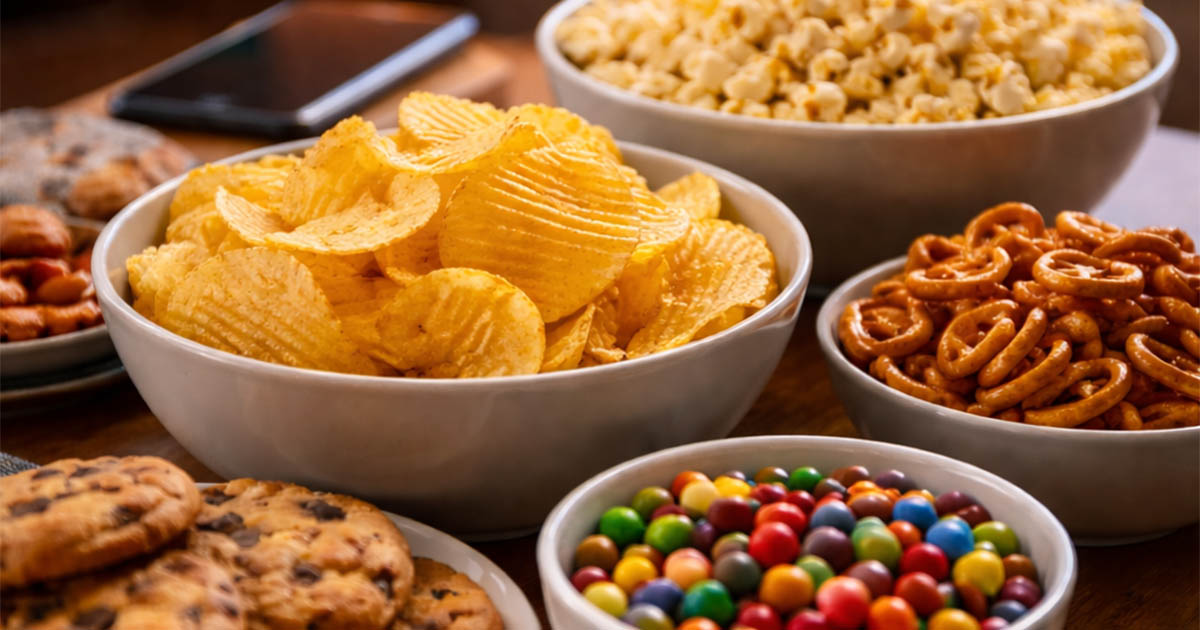
Why Mindless Snacking Happens Without You Realizing
Why Mindless Snacking Happens Without You Realizing — The Hidden Psychology Behind Automatic Eating Habits

Mindless eating rarely begins with true physical hunger. Instead, it develops slowly and quietly through emotional cues, environmental influences, and deeply ingrained routines that operate beneath awareness. These subtle forces act as Mindless Snacking Triggers, gently nudging behavior in the background until reaching for food becomes automatic rather than intentional. Many people find themselves snacking while working, scrolling on their phones, relaxing in the evening, or even moments after finishing a meal, without ever stopping to question why the urge appeared in the first place.
For most individuals, the real problem isn’t the snack itself — it’s the unconscious behavior pattern behind it. The brain is wired to seek comfort, reward, and stimulation, especially during moments of fatigue, emotional strain, or boredom. When these states arise, the mind searches for relief, and food becomes the fastest and most accessible option. Over time, these associations deepen, forming recurring habits that guide behavior automatically, even when the body does not actually need fuel.
Understanding Mindless Snacking Triggers is not about restriction, guilt, or self-criticism. Instead, it is about awareness — recognizing when eating is driven by emotion, habit, or environment rather than genuine appetite. Once a person learns to observe these patterns, the automatic cycle begins to loosen. Snacking shifts from impulse-based reaction to conscious, intentional choice, and that small shift can transform both eating habits and emotional well-being.
This comprehensive guide explores the deeper psychology behind unconscious eating, explains how everyday experiences shape behavior, and breaks down six major influences that quietly reinforce Mindless Snacking Triggers. By understanding how these patterns develop, you gain the tools to interrupt them, rebuild a healthier relationship with food, and reconnect with your true hunger signals.
The Science of Automatic Eating — Why Awareness Fades During Routine Behavior

Human behavior is heavily shaped by repetition. When a person repeatedly performs the same action in the same environment, the brain eventually stores that behavior as a habit. Once a behavior becomes habitual, it requires very little conscious effort to repeat — which is efficient for survival, but challenging when the habit involves unnecessary or emotional eating.
Neurologically, habits form through a loop of cue, behavior, and reward. The cue may be stress after work, sitting on the couch at night, or seeing food nearby. The behavior becomes snacking, and the reward is comfort, distraction, or pleasure. Each time the loop repeats, neural pathways strengthen, making it easier and faster for the brain to trigger the same response again.
Over time, many of these responses evolve into Mindless Snacking Triggers. The person may no longer notice the cue at all — only the behavior that follows. For example, someone might automatically open the kitchen cabinet when they enter the house, even if they just eaten. Another person may reach for snacks whenever they feel overwhelmed, without realizing that stress, not hunger, activates the urge.
This lack of awareness is not a sign of weakness or lack of discipline. It is simply the brain doing what it is designed to do — conserve effort by automating familiar patterns. The challenge arises when those automated patterns conflict with health goals, emotional balance, or long-term well-being.
The good news is that habits can be rewired. Once a trigger becomes visible, it loses much of its hidden power. By observing what triggers the urge to eat, a person can pause, question the impulse, and choose a different response.
1. Emotional Micro-Stress — The Silent Driver of Comfort Eating
Stress does not always appear as an intense or overwhelming experience. In many cases, it shows up as a series of small, barely noticeable tension points: unfinished tasks, social pressure, mild frustration, mental overload, or daily responsibilities building in the background. These subtle emotional waves can quietly activate Mindless Snacking Triggers, prompting the brain to seek quick relief.
When stress hormones rise, the body becomes more sensitive to reward-seeking behavior. Food — especially sweet, salty, or high-energy snacks — delivers quick comfort and emotional soothing. Even when a person is not consciously aware of feeling stressed, the nervous system may still register that discomfort and respond through eating.
This is why many people find themselves snacking after work, during emotionally charged conversations, or while dealing with deadlines. The snack isn’t about hunger — it is a coping mechanism. Recognizing emotional micro-stress helps create separation between feelings and food, allowing healthier forms of relief such as breathing exercises, movement, rest, or supportive self-talk.
2. Boredom and Low Mental Engagement — When Food Becomes Stimulation
Unlike stress-based eating, boredom-based snacking emerges when the brain lacks stimulation. Humans are wired to seek activity, engagement, and curiosity. When the environment feels dull or repetitive — such as sitting through slow work hours, waiting in between tasks, or scrolling without purpose — the mind begins searching for something rewarding to focus on.
In these moments, Mindless Snacking Triggers turn food into a source of entertainment rather than nourishment. The act of eating provides sensory stimulation: flavor, texture, and movement. The brain perceives this as “something to do,” and the behavior continues even when appetite is absent.
Breaking boredom-based eating involves adding meaningful stimulation rather than relying solely on willpower. Short walks, engaging conversations, creative tasks, hydration, or simple stretches can satisfy the brain’s need for engagement without resorting to automatic snacking.
3. Screen Distraction — How Multitasking Disconnects Hunger Awareness
Modern life encourages constant multitasking. People often eat while watching television, scrolling social media, gaming, or working at their computers. While it may feel efficient, this divided attention interrupts the brain’s ability to track fullness and bodily sensations.
During distracted eating, Mindless Snacking Triggers become especially strong because external stimulation pulls awareness away from internal signals. The hand continues to reach for food long after the body has had enough, simply because attention is absorbed elsewhere.
Research consistently shows that distracted eating leads to higher calorie intake, weaker memory of food consumed, and stronger cravings later in the day. Re-engaging with the eating experience — even for a few moments — helps restore connection to satiety cues and reduces reliance on autopilot behavior.
4. Environmental Cues — How Surroundings Shape Eating Decisions
Behavior is powerfully influenced by the environment. The layout of the kitchen, the visibility of snacks, and the accessibility of food can all reinforce Mindless Snacking Triggers without a person realizing it. An open jar of treats, food left on countertops, or snacks in snack drawers within easy reach increases the likelihood of eating simply because the items are present.
Conversely, small environmental adjustments can dramatically reduce unnecessary snacking. Storing food out of sight, organizing cabinets, placing healthier options in visible locations, and separating living areas from eating spaces help interrupt automatic behavior. When the environment supports intention, the brain no longer defaults to unconscious eating as easily.
5. Fatigue and Sleep Disruption — When the Body Seeks Quick Energy
Sleep plays a central role in appetite regulation. When a person is tired, the body produces more hunger-stimulating hormones and fewer satiety-supporting ones. As a result, cravings increase, impulse control decreases, and high-calorie foods feel more appealing.
In these conditions, biological changes strengthen Mindless Snacking Triggers. Nighttime cravings, late-evening grazing, and frequent energy-seeking snacks become more common — not because the body truly needs more food, but because it is trying to compensate for low energy and alertness.
Improving sleep quality, going to bed earlier, and supporting recovery can significantly reduce fatigue-driven eating. When the body is rested, hunger patterns stabilize, and emotional resilience improves, making intentional eating far easier.
6. Habit-Loop Routines — When Behavior Becomes Linked to Specific Moments
Over time, repeated actions connect certain moments or environments with eating. Sitting down to watch TV, taking a break at work, finishing dinner preparations, or returning home after errands may all gradually become associated with food — even when hunger is not present.
These context-based habits evolve into long-term Mindless Snacking Triggers. The routine itself signals the brain that it is “snack time,” regardless of physical need. Because these habits feel natural and familiar, they are often the most difficult patterns to recognize and change.
Breaking habit-loop routines requires replacing the behavior, not simply removing it. Mindful substitutes such as tea, movement, journaling, conversation, or creative activities fulfill the ritual without reinforcing the old pattern.
Reclaiming Control — Building Awareness and Mindful Choice
The key to weakening Mindless Snacking Triggers is not forceful restriction but gentle observation. Instead of reacting immediately to a craving, pause for a moment and ask: Am I physically hungry, emotionally triggered, tired, or simply following a habit? This short reflection interrupts automatic behavior and allows space for intentional decision-making.
Developing awareness does not mean eliminating snacks altogether. It simply means choosing them consciously rather than unconsciously. Some cravings may represent genuine hunger — and honoring real hunger is a healthy, necessary part of nourishment. The goal is not avoidance, but alignment between eating and physical need.
Practical strategies include slowing down while eating, placing food on a plate instead of eating from containers, reducing distractions, organizing the environment thoughtfully, and practicing emotional coping skills that do not depend on food.
Over time, these intentional actions weaken Mindless Snacking Triggers and strengthen self-trust. Eating becomes a supportive, balanced behavior rather than an automatic response to stress, boredom, or routine.
Conclusion — Awareness Turns Autopilot Eating Into Intentional Living
Unconscious eating does not happen by accident — it develops gradually through emotional conditioning, environmental influence, biological changes, and repeated habits. By understanding and recognizing Mindless Snacking Triggers, you gain the ability to step out of automatic behavior and reconnect with your true hunger signals.
Awareness transforms impulse into choice. Instead of reacting to stress, fatigue, or environment, you learn to pause, reflect, and respond with intention. With practice, the influence of Mindless Snacking Triggers fades, and a healthier, more mindful relationship with food begins to take shape — one built on balance, self-awareness, and long-term well-being.
Also read for more information : 13 Science-Backed Tips to Stop Mindless Eating
Read next on Lifenurt : 7 Science-Backed Weight Management Tips for Sustainable Results














Post Comment