Johnson & Johnson Expands Oncology Arsenal With $3.05B Halda Therapeutics Purchase
Why Johnson & Johnson Targeted Halda Therapeutics
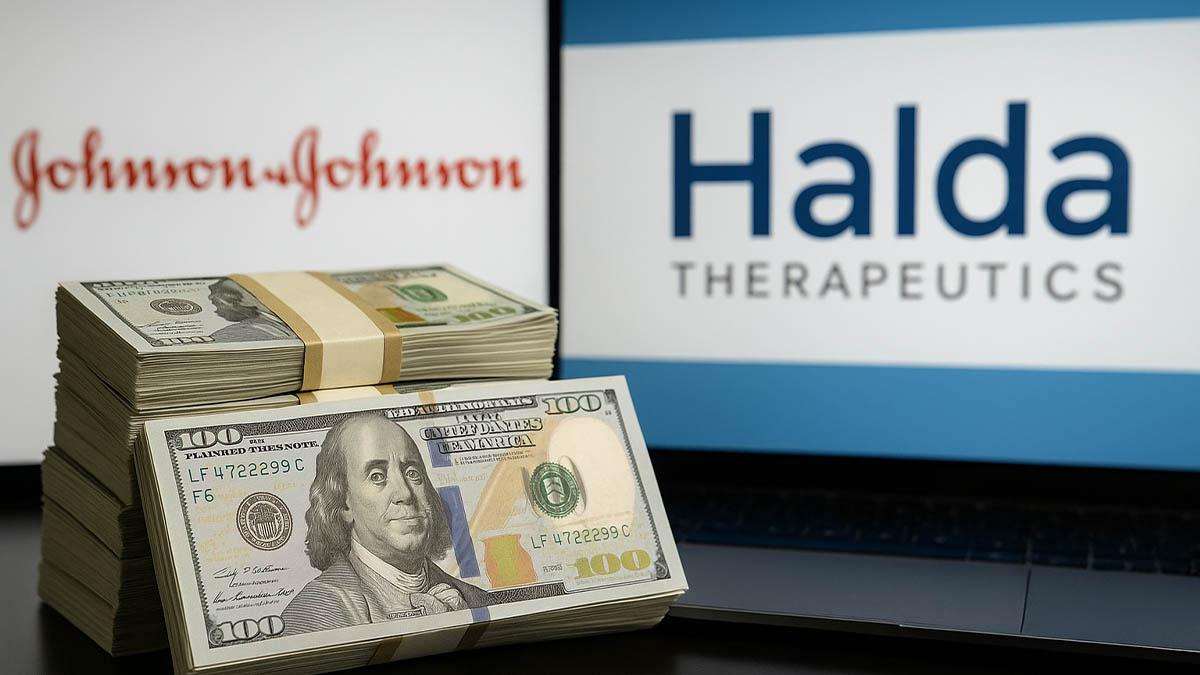
The global race to develop next-generation cancer treatments had taken a significant turn with Johnson & Johnson’s blockbuster acquisition of Halda Therapeutics. In a deal valued at $3.05 billion, this move marks one of the most ambitious expansions of J&J’s oncology portfolio to date. As precision medicine reshapes the pharma landscape, the acquisition signals J&J’s determination to remain a dominant force in cancer innovation.
In this extensive analysis, we explore why the Johnson & Johnson Halda Therapeutics deal represents far more than another biotech buyout—it is a strategic leap toward the future of oncology.

Why Johnson & Johnson Targeted Halda Therapeutics
Johnson & Johnson’s interest in Halda Therapeutics didn’t emerge overnight. The pharma industry has been inching toward targeted therapies for years, but Halda’s breakthrough RIPTAC (Regulated Induced Proximity Targeting Chimeras) platform offered something genuinely transformative.
The Johnson & Johnson Halda Therapeutics partnership immediately caught attention because RIPTAC technology allows researchers to target cancer-related proteins previously considered “undruggable.” These innovative molecules work by forcing harmful proteins and healthy cellular machinery into proximity, triggering degradation of the cancer-driving protein.
This type of targeted protein degradation is one of the hottest areas in oncology—fast, selective, and capable of tackling diseases that traditional drugs fail to treat. For J&J, the acquisition delivers not just a promising drug candidate but a platform with multi-cancer potential.
Inside the $3.05 Billion Oncology Mega Deal
The acquisition is structured to maximize long-term scientific and commercial gain. Johnson & Johnson paid a hefty upfront fee, signaling its confidence in Halda’s clinical trajectory.
While financial details beyond the headline figure remain confidential, analysts note that the Johnson & Johnson Halda Therapeutics deal suggests the biotech’s internal research has generated compelling early data. This investment mirrors the broader trend of big pharma aggressively acquiring smaller firms with platform technologies rather than single-asset pipelines.
Johnson & Johnson clearly sees Halda’s RIPTAC science as a cornerstone for its oncology growth over the next decade.
How RIPTAC Technology Strengthens J&J’s Cancer Pipeline
At the heart of this acquisition is RIPTAC technology—a groundbreaking therapeutic strategy that could redefine drug development. Classical cancer drugs work by inhibiting specific proteins, but they often struggle against resistance or fail to affect specific cancer-causing proteins.
Halda’s approach is more direct and more powerful. RIPTAC molecules essentially force the destruction of specific cancer proteins, bypassing many traditional limitations.
Here’s why this matters to J&J:
1. Targets the “Undruggable”
Many cancers rely on proteins that evade conventional inhibitors. RIPTACs offer access to an entirely new class of therapeutic targets.
2. Reduces Drug Resistance
Because the cancer-driving protein is degraded—not just inhibited—the likelihood of resistance formation decreases significantly.
3. Multi-Indication Potential
The platform can be applied to multiple tumor types, making the Johnson & Johnson Halda Therapeutics acquisition a future-proof investment.
4. Complements J&J’s Existing Oncology Assets
J&J already leads in areas like prostate cancer with drugs like Erleada. RIPTAC technology could complement and expand existing clinical strategies.
What the Acquisition Means for Future Cancer Treatments
This acquisition is more than corporate strategy—it could change the trajectory of cancer treatment. RIPTAC therapies promise:
More Precision
Patients receive treatments tailored to specific protein interactions within their cancer cells.
Fewer Side Effects
By targeting only cancer-driving molecules, RIPTACs reduce collateral damage to healthy tissue.
Improved Outcomes
Drugs that degrade proteins rather than inhibit them have shown stronger and longer-lasting responses in early research.
For patients with tumors previously deemed incurable, the Johnson & Johnson Halda Therapeutics breakthrough could represent new hope.
J&J’s Long-Term Oncology Vision
Johnson & Johnson has made it clear: oncology is its top research priority. In recent years, the company has significantly increased its investments in precision medicine and advanced biologics.
The Halda acquisition aligns with J&J’s long-term strategy in several key ways:
Expanding Next-Generation Modalities
The company is actively pursuing modalities beyond traditional small molecules and antibodies.
Building a Platform, Not Just a Product
RIPTAC isn’t a single drug—it’s a scientific foundation that could produce dozens of new therapeutics.
Strengthening Market Leadership
With rising competition from companies like Amgen, Novartis, and AstraZeneca, the Johnson & Johnson Halda Therapeutics acquisition helps maintain J&J’s dominant position in oncology.
Why Halda Therapeutics Stood Out Among Biotech Startups
Leading experts in protein science founded Halda Therapeutics with a clear mission: to solve the “undruggable target” problem. The company’s strong scientific leadership, early promising molecules, and ambitious preclinical roadmap made it a standout candidate for partnership or acquisition.
Key differentiators included:
- A deep understanding of induced-proximity mechanistic chemistry
- A highly modular platform capable of designing multiple RIPTAC variations
- Strong early data showing selective degradation of cancer-driving proteins
- A talented scientific team with unique domain experience
For J&J, acquiring Halda wasn’t just about obtaining technology—it was also about securing the scientific minds behind it. This ensures continuity and future innovation within the Johnson & Johnson Halda Therapeutics program.
Industry Reactions and Market Implications
The acquisition instantly made waves across the biotech and pharma sectors. Analysts predict that this deal could trigger a new wave of acquisitions focused on targeted protein degradation technologies.
Market observers note the following implications:
1. Rising Valuations for Platform Biotechs
As big pharma hunts for scalable therapeutic technologies, valuations are expected to climb.
2. Increased Investment in Precision Oncology
RIPTACs and related technologies will attract more venture capital and research funding.
3. Competitive Pressure on Other Pharma Giants
Companies such as Pfizer, Merck, and Roche may seek similar deals to avoid falling behind.
The Johnson & Johnson Halda Therapeutics acquisition could become a landmark moment that shifts the global oncology landscape.
What This Means for Patients and Doctors
For clinicians, RIPTAC technology introduces a new category of therapeutic tools. It could help:
- Treat cancers that traditionally resist therapy
- Personalize treatment plans based on patient-specific protein interactions
- Reduce the need for high-toxicity chemotherapy regimens
- Offer new strategies for recurrent or metastatic cancers
Patients, especially those with cancers currently lacking targeted options, stand to benefit the most. The Johnson & Johnson Halda Therapeutics deal accelerates these innovations, bringing them closer to real-world use.
Conclusion: A Defining Moment in Cancer Innovation
The $3.05 billion acquisition of Halda Therapeutics by Johnson & Johnson represents a defining moment in modern oncology. By betting big on RIPTAC technology, J&J is positioning itself at the forefront of next-generation cancer therapy development.
This isn’t merely a financial transaction—it’s a scientific partnership that could reshape how cancer is treated over the next decade. With more precise therapies, fewer side effects, and solutions to previously untreatable cancers, the Johnson & Johnson Halda Therapeutics acquisition is a powerful signal that the future of oncology has arrived.
Patients, clinicians, and researchers will be watching closely as this collaboration unfolds. If the early promise holds, this may become one of the most impactful breakthroughs in recent medical history.
Heart Health Diet: Understanding Why 5 Diet Matters for a Stronger Heart














Post Comment