New Measles Surge in South Carolina_1-Canada’s Immunity at Stake

A rising measles outbreak in South Carolina sparks concern as Canada’s measles elimination status faces new threats. Learn how declining vaccination rates and cross-border risks could trigger a wider public health crisis.
The Growing Measles Crisis in South Carolina
Eight New Cases Detected in Spartanburg County: A Call for Urgent Action. South Carolina’s Department of Health and Environmental Control (DHEC) confirmed eight new measles cases in Spartanburg County within the past week, marking the largest cluster the state has seen in nearly a decade.
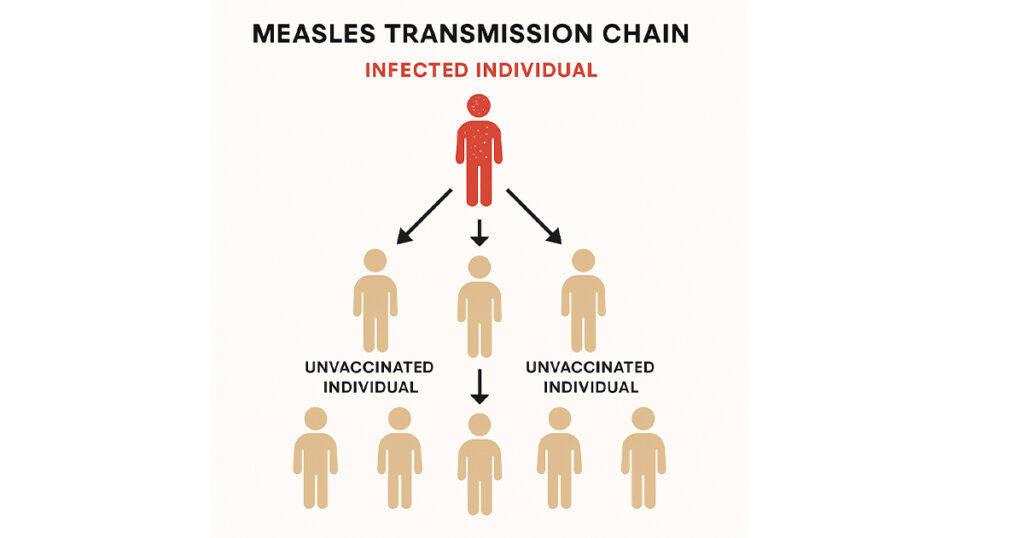
Health officials believe the outbreak originated from a single unvaccinated traveler who returned from an international trip earlier this month. Since then, the virus has spread rapidly through local schools and community centers.

How the Outbreak Spread Within 48 Hours
Epidemiologists traced the infection trail to several exposure sites, including a local daycare center and a church gathering where dozens of children were unvaccinated.
Because measles is one of the most contagious diseases known—capable of infecting up to 90% of unprotected people who come in contact with a carrier—the virus spread faster than containment teams anticipated.
Within 48 hours, emergency alerts were issued to nearby counties, urging residents to check their MMR vaccination records.
Local Health Officials Deploy Mobile Vaccination Units
In response, South Carolina deployed mobile vaccination units to schools and public areas to boost immunization coverage.
These mobile clinics aim to deliver free MMR shots, particularly to families in rural communities where vaccine access has historically been limited.
Dr. Martha Jenkins, a DHEC official, emphasized:
“We’re in a race against time. Every unvaccinated person we reach could prevent a chain of infections that threatens hundreds more.”
Canada’s Measles Elimination Status Under Threat
Why Canada’s ‘Measles-Free’ Status Is at Risk
For more than 20 years, Canada proudly held the World Health Organization’s measles-free certification, meaning no sustained transmission for 12 consecutive months.
That distinction, however, is now in jeopardy as imported cases and clusters appear in Ontario, Quebec, and British Columbia.
Public health experts warn that if community spread continues, Canada could lose its elimination status, a symbolic and epidemiological setback that reflects waning herd immunity.
Travel-Linked Infections Raise Cross-Border Concerns
Recent cases in South Carolina have heightened fears of cross-border transmission.
With millions traveling between the U.S. and Canada each month, even a handful of unvaccinated travelers can reignite dormant infections.
Experts point to global travel patterns as the invisible highway of infection—especially since measles can remain airborne for up to two hours in shared spaces such as airports, buses, and waiting rooms.
Public Health Agencies Race to Contain the Threat
Both the CDC (U.S.) and Health Canada have activated cross-border communication channels.
Emergency coordination includes real-time case tracking, public alerts, and data sharing on MMR vaccination rates across affected regions.
In Canada, local health units have intensified school immunization audits, ensuring children’s vaccination records are up to date before attending classes.
The Role of Vaccine Hesitancy
How Declining Vaccination Rates Fueled the Outbreak
South Carolina’s vaccination coverage among young children currently sits at 87%, below the 95% threshold required for herd immunity.
While this difference may seem small, it’s enough for measles—one of the world’s most infectious viruses—to thrive again.
Public health experts link this decline to online misinformation, vaccine fatigue following COVID-19, and religious exemptions that have steadily risen across multiple states.
Addressing Myths and Misconceptions About the MMR Vaccine
Misinformation remains a significant barrier to immunization. Some parents still fear long-debunked myths linking vaccines to autism or other disorders, despite overwhelming scientific evidence proving safety and efficacy.
Public health campaigns are now using trusted local voices, including pediatricians, church leaders, and teachers, to rebuild confidence in the MMR shot.
Symptoms, Risks, and Prevention
Recognizing the Early Signs of Measles
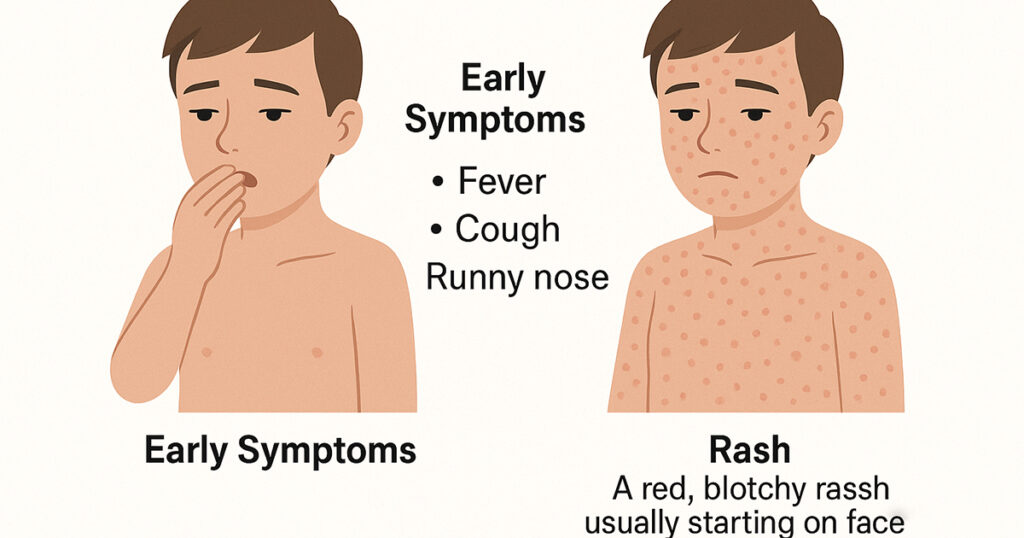
Early symptoms often mimic a common cold—fever, runny nose, and cough—but quickly progress to red eyes, white spots inside the mouth, and the signature rash spreading from face to body.
Severe cases can lead to pneumonia, brain swelling, or even death, especially in children under five and adults over 20, underscoring the grave risks posed by this disease.
How Quickly the Virus Spreads in Communities
Unlike many viruses, measles has an R-number of 12-18—meaning one person can infect up to 18 others.
That makes it ten times more contagious than COVID-19.
Without vaccination, outbreaks can explode in tight-knit or under-immunized communities within days.
Prevention Tips and Vaccination Guidelines: The Crucial Role of Vaccination in Measles Prevention.
Health authorities recommend:
- Two doses of the MMR vaccine for complete protection.
- The first dose is at 12–15 months, and the second between 4–6 years.
- Adults born after 1970 should check their immunization status.
- During outbreaks, unvaccinated contacts may receive post-exposure prophylaxis within 72 hours of exposure.
Global Implications of Regional Outbreaks
Why Experts Warn of a Potential North American Resurgence
Both the South Carolina and Canadian outbreaks signal a larger pattern: the erosion of herd immunity in high-income nations once thought to have eliminated measles.
Experts warn this could mark the start of a regional resurgence unless swift action is taken.
Dr. Theresa Tam, Canada’s Chief Public Health Officer, stated:
“Losing our measles elimination status is more than symbolic—it’s a sign of collective vulnerability.”
Lessons from Past Measles Surges and Containment Efforts
In 2019, the U.S. faced its worst measles outbreak in nearly 30 years, primarily in New York’s unvaccinated communities.
Swift containment and community engagement prevented permanent loss of elimination status—lessons both nations can apply today.
Public education, rapid contact tracing, and equitable vaccine access remain the three pillars of outbreak control. Community engagement, which fosters a sense of collective responsibility and encourages individuals to take preventive actions, is also crucial in this effort.
Final Thoughts — Protecting Public Health Together
How Individuals Can Help Stop the Spread
While government and health agencies play vital roles, individual responsibility remains the cornerstone of prevention.
Simple steps—like confirming your vaccination status, staying home when sick, and encouraging family members to get vaccinated—can make a collective difference. Remember, while government and health agencies play vital roles, individual responsibility remains the cornerstone of prevention. Each of us has a part to play in stopping the spread of measles.
The Urgent Need for Global Vaccine Cooperation
The measles crisis serves as a wake-up call for global collaboration.
As borders reopen and misinformation spreads faster than disease, nations must treat immunization as a shared defense, not a local choice.
Public health experts stress that the world’s progress against measles—once a near-eradicated disease—can only be preserved through solidarity, education, and trust in science.
For more information: Canada is poised to lose its measles elimination status. The US could, too
California Reports Severe Mpox Strain — Here’s How to Protect Yourself














Post Comment