Health Tips
cancer immunotherapy, cancer treatment innovation, cancer vaccine breakthrough, colon cancer vaccine, EnteroMix, FMBA Russia, glioblastoma vaccine, mRNA cancer vaccine, ocular melanoma vaccine, oncology breakthrough, personalized cancer vaccine, Russia cancer vaccine, Russian medical research, tumor regression
JyotiSE
0 Comments
Hope or Hype? The Truth About Russia’s Cancer Vaccine Breakthrough
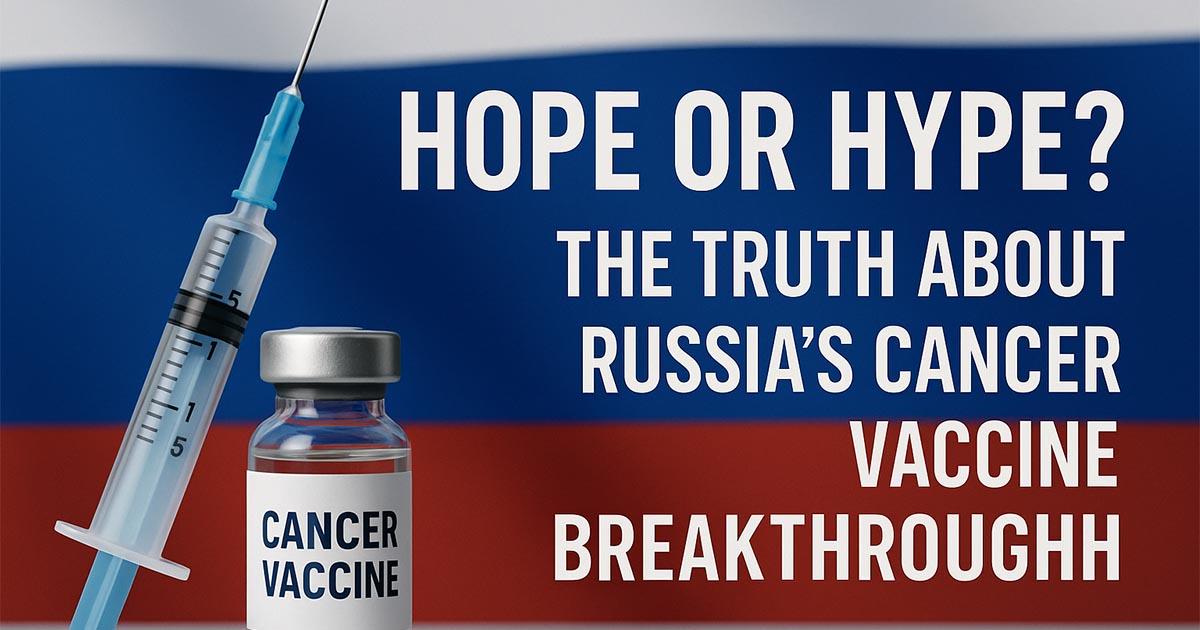
Russia’s Cancer Vaccine Shocks the World With ‘Perfect’ Results

Could Russia’s new cancer vaccine be the hope millions have been waiting for? Discover what Enteromix means for patients and the future of medicine.
Introduction: A New Dawn or Just Another Headline?
Cancer has long been the disease that humanity fears most, claiming millions of lives each year and defying even the most advanced medical technologies. Chemotherapy, radiation, and targeted drugs have extended survival for many, but a proper cure has always seemed just out of reach.
Now, Russia has stepped into the global spotlight with a bold claim: it has developed a cancer vaccine, EnteroMix, that not only prevents tumors but can also shrink existing ones. News outlets around the world erupted with headlines announcing “100% efficacy,” “tumor regression,” and “a new era in medicine.”
But as with any groundbreaking claim, one question lingers: Is this genuine hope or dangerous hype?
In this deep dive, we’ll unpack what EnteroMix really is, what Russian scientists have achieved so far, why experts urge caution, and how this development fits into the broader landscape of cancer research.
Part 1: The Global Burden of Cancer
Before understanding why this vaccine is such a significant development, we need to examine the scale of the problem.
- Cancer by the Numbers: According to the World Health Organization, nearly 10 million people die from cancer every year. It is one of the top two leading causes of death worldwide.
- Why It’s Hard to Cure: Unlike viral infections, cancer is not a foreign invader but a malfunction of our own cells. Treatments must attack tumors without destroying the body itself, a delicate balance often lost in chemotherapy’s toxicity.
- The Search for Immunity: Scientists have long dreamed of training the immune system to spot and eliminate cancer cells, just as it does viruses. Vaccines seemed like a logical path, but for decades, progress was painfully slow.
Russia’s announcement strikes at the heart of this challenge, promising a therapy that teaches the body to fight its own rogue cells.
Part 2: What Is EnteroMix?
EnteroMix is described as a personalized, mRNA-based cancer vaccine developed by Russia’s Federal Medical and Biological Agency (FMBA).
How It Works
- mRNA Technology: Similar to COVID-19 vaccines, EnteroMix delivers strands of messenger RNA that carry instructions for the immune system to recognize proteins unique to cancer cells.
- Personalization: Each patient’s tumor has a different genetic signature. EnteroMix is designed to be tailored to individual cancers, making it more precise than one-size-fits-all drugs.
- Immune Activation: Once injected, the vaccine should “teach” immune cells to attack tumors, preventing growth and, in some cases, shrinking existing ones.
Targeted Cancers
- Initial development is focused on colorectal cancer, one of the deadliest and most common cancers globally.
- Future versions are being prepared for glioblastoma (brain cancer) and ocular melanoma (a rare but deadly eye cancer).
This ambitious pipeline suggests that Russia sees EnteroMix not as a single treatment but as a platform to target multiple cancers.
Part 3: The Bold Claim of 100% Efficacy
The phrase that lit up global headlines was “100% efficacy.”
What Russia Reports
- Preclinical Success: In animal studies, tumors shrank dramatically—by 60–100% depending on the model.
- Early Human Trials: Russia has begun Phase I clinical trials with about 48 volunteers. Officials say the vaccine is safe and shows early signs of tumor regression.
The Reality Behind the Numbers
Here’s where caution is vital:
- Preclinical ≠ Clinical: Success in mice or lab models doesn’t guarantee success in humans. Many “miracle” therapies fail when tested in larger, more diverse patient groups.
- Phase I Goals: The first human trials are designed to test safety, not effectiveness. Even if tumors shrink in a handful of patients, that doesn’t mean the vaccine works broadly.
- 100% Claims Are Red Flags: In medical science, “100%” rarely exists. Cancer is highly complex, and even the best drugs don’t work for everyone.
In short, the claim makes headlines, but experts stress: we need data from larger trials before celebrating a cure.
Part 4: Lessons From History
Russia’s cancer vaccine is not the first of its kind.
- Oncophage (2008): Russia approved a personalized vaccine for kidney cancer called Oncophage. It generated excitement but was never widely adopted, partly because trials elsewhere did not confirm its effectiveness.
- HPV Vaccine Success: On the other hand, vaccines like Gardasil (for HPV) have proven that vaccines can prevent cancers, specifically cervical cancer, by blocking viral infections.
- Global Cancer Vaccine Trials: The U.S., Europe, and China are also experimenting with mRNA cancer vaccines, many in early phases. Moderna and BioNTech (COVID-19 vaccine pioneers) are among the leaders.
The lesson? Breakthroughs take time. Many fail, but a few eventually succeed.
Part 5: Expert Opinions—Cautious Optimism
Supporters Say:
- This could be a turning point in oncology, particularly given the rapid advancement of mRNA technology.
- Personalized vaccines align with the broader trend of precision medicine, tailoring treatment to each patient.
Critics Warn:
- Announcing “100% efficacy” before Phase II or III trials is misleading.
- Patients may raise false hopes, potentially seeking access to a treatment before its safety is proven.
- Political and nationalistic pride may push announcements ahead of the science.
In other words, EnteroMix could be revolutionary, but hype must not outrun evidence.
Part 6: The Politics of Medicine
Medical innovation doesn’t happen in a vacuum. Russia’s cancer vaccine is as much a geopolitical story as a scientific one.
- National Prestige: Just as Russia rushed to announce the first COVID-19 vaccine (Sputnik V), this cancer vaccine bolsters its image as a medical pioneer.
- Skepticism Abroad: Western experts recall that Sputnik V faced criticism for being approved before its full trials were completed. The same concern now shadows EnteroMix.
- Access & Free Distribution: Russia has said the vaccine will be available to patients free of charge. This raises questions about scalability, costs, and global availability.
In short, science, politics, and public relations are colliding once again.
Part 7: What This Means for Patients
If you or a loved one is battling cancer, announcements like this stir hope but also confusion.
Practical Realities
- Not Yet Globally Approved: Only Russian regulators are considering approval right now. International bodies like the FDA (U.S.) or EMA (Europe) will demand rigorous trials.
- Years Away From Widespread Use: Even if trials succeed, mass availability could take years.
- Complement, Not Replacement: Experts expect vaccines like EnteroMix to work in conjunction with traditional treatments, not to replace them.
Why You Should Stay Hopeful
- The vaccine approach itself is promising and may revolutionize treatment in the next decade.
- Global collaboration in cancer vaccine research is accelerating.
- Every successful trial moves the world closer to a breakthrough.
Part 8: The Bigger Picture—Cancer Vaccines Worldwide
Russia isn’t alone in the race. Around the world:
- Moderna & Merck are testing mRNA vaccines for melanoma.
- BioNTech has launched trials in pancreatic cancer.
- China is exploring combined vaccine-immunotherapy approaches.
EnteroMix adds Russia to this high-stakes race. The global impact could be enormous if even one succeeds.
Part 9: Hope vs. Hype—A Balanced View
So, is this a miracle or just a flashy announcement? The answer lies in the middle.
- Hope: Science is moving in the right direction. Cancer vaccines are no longer science fiction.
- Hype: Russia’s “100% efficacy” claim is premature and risks misleading the public.
- Reality: EnteroMix is an exciting candidate, but it’s still experimental. Until Phase II and III data are published in peer-reviewed journals, no one can declare victory.
Also read : Doubts remain over Russia’s anti-cancer vaccine
Conclusion: The Road Ahead
Cancer has humbled scientists for centuries, but humanity is closer than ever to making it a treatable and maybe one day curable disease.
Russia’s EnteroMix vaccine is a symbol of both extraordinary hope and the dangers of overstated hype. If the science holds, it could be remembered as the turning point when cancer stopped being a death sentence. If not, it will join the long list of therapies that promised more than they delivered.
For now, the truth lies in patience. The world must wait for the data, not the headlines.














Post Comment